Acipenser brevirostrum
Biology
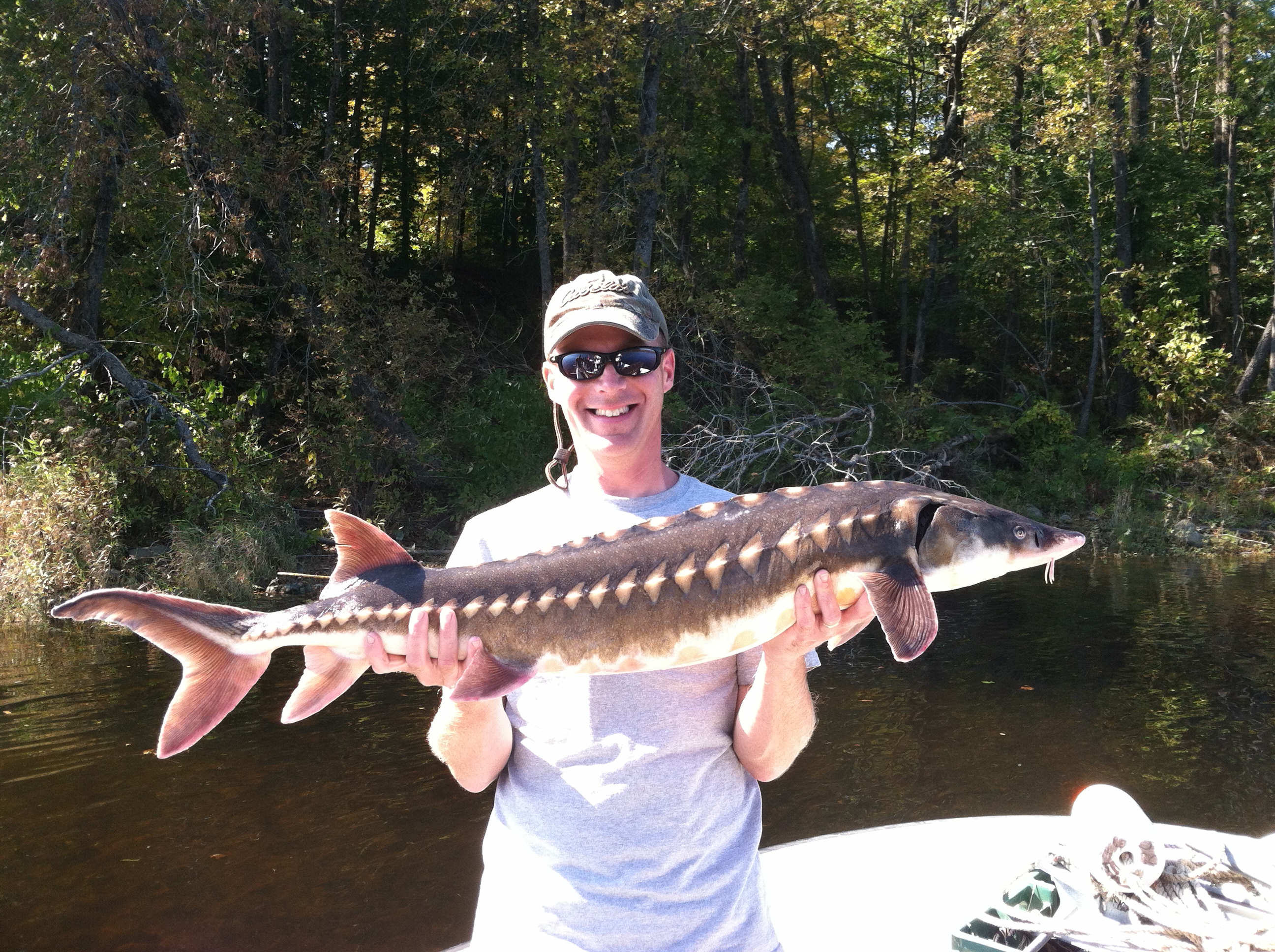
Shortnose Sturgeon are one of two species of sturgeon that are found in Maine waters. They are smaller than their cousin the Atlantic Sturgeon, reaching only about 4.5 feet long and 50 pounds at maturity. On average, Shortnose Sturgeon live to be about 30 years old but may live to be nearly 70.
Shortnose Sturgeon are found in rivers and coastal waters from Florida in the south to Atlantic Canada in the North. Shortnose Sturgeon are an estuary species, spending less time in the ocean than Atlantic sturgeon.
During the spring, Shortnose adults move upstream into freshwater from brackish water estuaries to spawn. After spawning, adults move back downstream to the estuary to feed. Many adults will migrate between coastal rivers. In Maine, spawning is known to occur in the Kennebec and Androscoggin rivers, but Shortnose Sturgeon can also be observed in the Penobscot, St. George, Medomak, Damariscotta, Sheepscot, Saco, Narraguagus, and Presumpscot rivers. It is common to see Shortnose Sturgeon jumping in these coastal rivers and bays during the summer months.
Popular places to watch Shortnose Sturgeon leaping (also called breaching) in Maine are along the waterfronts of the Kennebec River in Bath, Gardiner, Hallowell, and Augusta; the Penobscot River in Brewer and Bangor, or the Androscoggin River in Brunswick; or from the beaches of Scarborough and Saco.
Like Atlantic Sturgeon, Shortnose Sturgeon are bottom dwellers. They use specialized sense organs on their faces called “barbels” to locate invertebrates (insects, worms, mollusks, crustaceans) in the soft mud or sand on the bottoms of rivers and estuaries and use their mouth like a vacuum to suck up their meal.
Status and Management
Shortnose Sturgeon are listed as Endangered throughout their range, and face the same suite of threats as other sea-run fishes in Maine. Construction of dams cut Shortnose Sturgeon off from their spawning grounds, while dredging and other industrial activities created murky, poor quality water in rivers. Bycatch in commercial fisheries and warming climate conditions round out the list of key threats to the species.
There is no estimate of the historical population size of Shortnose Sturgeon, but Shortnose Sturgeon were often incidentally caught in the commercial Atlantic Sturgeon fishery. Heavy harvest of sturgeon for their eggs to produce caviar during the “Black Gold Rush” in the 1800s led to dramatic declines in populations along the Atlantic coast, including in Maine. Although catch records kept at the time did not distinguish between Atlantic and Shortnose sturgeon, 145 metric tons of sturgeon were harvested from the Kennebec River in 1851. All sturgeon populations crashed in a year.
Shortnose Sturgeon were considered heavily exploited by the late 1800s and were listed as endangered under the Endangered Species Preservation Act in 1967. Shortnose Sturgeon retained their endangered status when the Endangered Species Act went into effect in 1973.
If you catch a Sturgeon, let it go
Even though it is illegal to fish for Shortnose Sturgeon, they can be accidentally caught in fishing gear that is being used to target other species – including hook and line, gillnets, pound nets, and trawls. Bycatch remains a threat to the species. Shortnose Sturgeon are sometimes accidentally by Striped Bass fishermen, by Rainbow Smelt fishermen or in coastal net fisheries.
Practice safe catch & release following these steps, adapted from NOAA Fisheries:
-
Handle the fish quickly but carefully
-
Keep the fish underwater during handling as much as possible.
-
Before releasing, hold the fish underwater, and very gently move the tail fin back and forth to help water pass over the gills.
-
When the fish shows signs of increased activity and can swim away on its own power, release the fish and watch to make sure it stays underwater.
If the fish floats to the surface, make one additional attempt to recapture it; repeat steps 1-4.