Acipenser oxyrinchus oxyrinchus
Biology
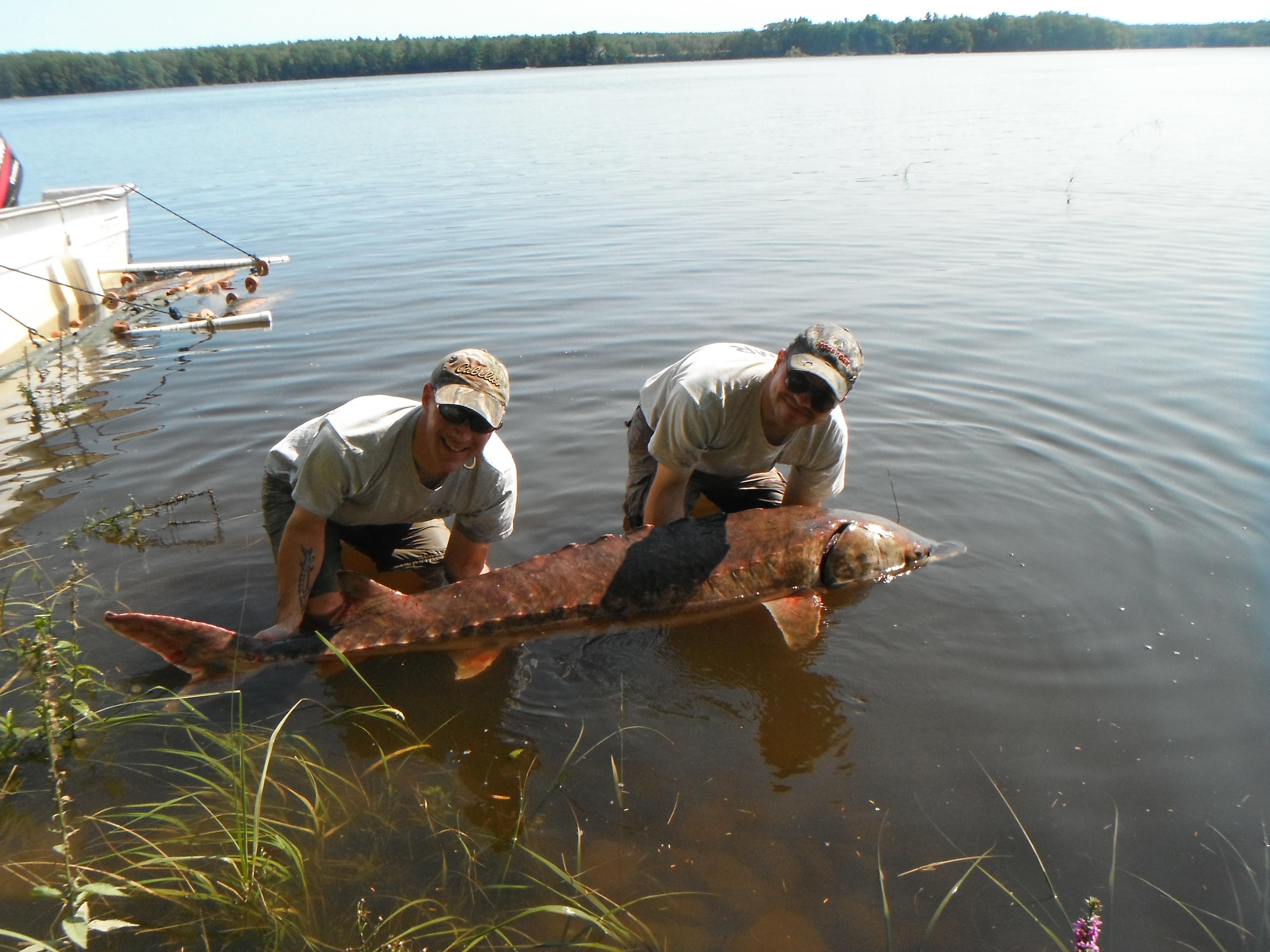
Atlantic Sturgeon are the largest of the Sea-Run fishes found in Maine, reaching lengths of 14 feet and weighing as much as 800 lbs. They are also long-lived, with fish aged to at least 60 years. Atlantic Sturgeon are found in rivers and coastal waters from Florida in the south to Atlantic Canada in the North and are divided into five Distinct Population Segments (DPS) based on geography and where they reproduce.
Like most of the Sea-Run species in Maine, Atlantic Sturgeon start their lives in freshwater. Adult Sturgeon generally return to their natal river (the river where they started life as an egg) to spawn. Currently, the only known spawning area for Gulf of Maine Atlantic Sturgeon Distinct Population is in the Kennebec River.
Atlantic Sturgeon arrive in the Kennebec River during the spring and move upstream to spawning areas for June and July. After spawning, adults move to feeding areas, either in the same river or another river along the coast. From June to September, Atlantic Sturgeon can be seen leaping from the water. Popular places to watch Atlantic Sturgeon leaping (also called breaching) in Maine are the waterfronts of Bath, Gardiner, Hallowell, Augusta, Brewer, Bangor and Brunswick. They can also be seen from the beaches of Scarborough and Saco.
Once the larvae hatch, they drift downstream into brackish waters, remaining in the estuary for one to five years before moving out into nearshore coastal waters. Juvenile Atlantic Sturgeon are long-distance travelers. Tracking studies conducted by University of Maine, DMR scientists, and other collaborators found Gulf of Maine Atlantic Sturgeon moving between coastal rivers of New England and traveling as far away as Virginia and Nova Scotia.
Despite their aerial acrobatics, Atlantic Sturgeon are bottom fish. They have comically small mouths on the bottom of their heads, and they use specialized sense organs on their faces, called “barbels”, to locate their prey in the soft mud or sand on the river bottom. They make meals of shrimp, baby crabs, worms, mollusks, sand lance and other bottom-dwelling fish.
Status & Management
The Gulf of Maine DPS of Atlantic Sturgeon is listed as Threatened under the US Endangered Species Act. The Carolina DPS, Chesapeake Bay DPS, New York Bight DPS, and South Atlantic DPS are all listed as Endangered.
The industrialization of rivers cut off Atlantic Sturgeon from their spawning grounds by the construction of dams, while dredging and other industrial activities impacted water quality through sedimentation and pollution. Atlantic Sturgeon were also heavily harvested for their eggs, which were packaged as high-quality sturgeon caviar. High fishing pressure during the “Black Gold Rush” in the 1800s led to dramatic declines in the sturgeon populations all along the Atlantic coast. The fishery collapsed shortly after 1851, when a record 145 metric tons of sturgeon were harvested from the Kennebec River.
Atlantic Sturgeon populations continued to decline range-wide after 1850 because of habitat loss and degradation, vessel strikes and entanglement in fishing gear. The Atlantic States Marine Fisheries Commission enacted a coastwide moratorium on sturgeon fishing in 1998. Federal listing under the US Endangered Species Act followed in 2012. New threats include warming temperatures in rivers, hotter sea temperatures in coastal waters and changes in river flow patterns.
In Maine, adult Atlantic Sturgeon are sometimes accidentally caught by anglers targeting Striped Bass, or even by people ice fishing for Rainbow Smelt in winter. Therefore, if you happen to accidentally catch an Atlantic Sturgeon by fishing, practice safe catch & release following these steps, adapted from NOAA Fisheries.