Microgadus tomcod
Biology
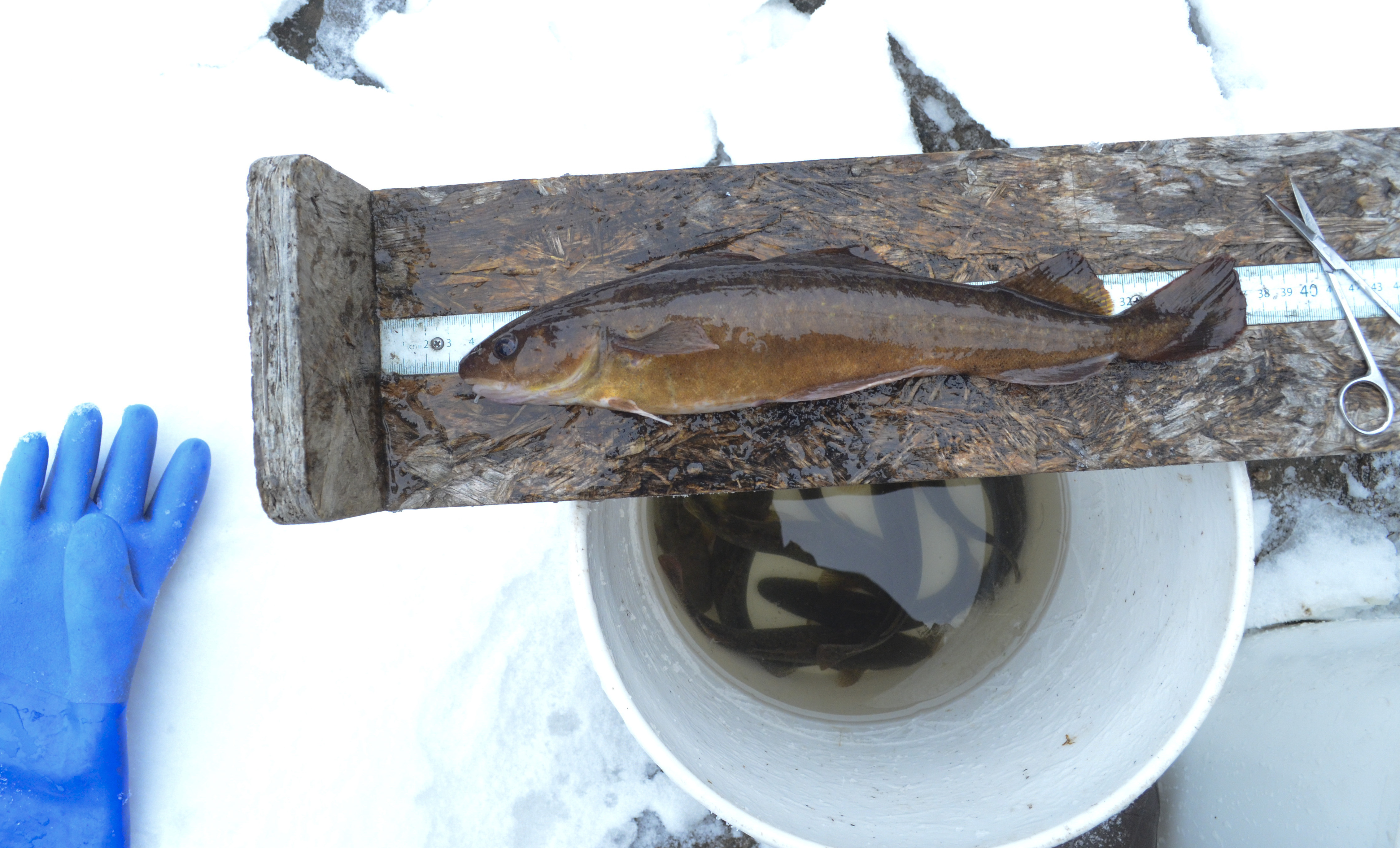
The Atlantic Tomcod (Microgadus tomcod) is also known as “tommy cod” for their resemblance to true cod, or “frost fish” for the anti-freeze-like proteins in their blood that keeps them from freezing during the winter. Tomcod are not only found here in Maine but also are found from Newfoundland and Labrador to as far south as Virginia.
Tomcod are anadromous (sea-run), however, they do not travel long distances between salt and fresh water such as American eels or Atlantic salmon. These small fish (9-12 inches) spend most of their life in estuaries and migrate into brackish or freshwater to spawn in the winter. Tomcod usually migrate into tidal stream mouths in October and November. Spawning occurs in shallow brackish or fresh water over gravelly or sandy bottom from November through February, peaking in January. Females deposit between 6,000-30,000 eggs that incubate for up to 30 days in water that is 30ºF to 43ºF. Newly hatched Tomcod remain in fresh or slightly brackish water for their first spring and summer, then migrate into estuaries. They are rarely found in waters more than 20 feet deep or more than one mile offshore.
Status and Management
Overfishing, exposure to pollutants, and barriers that prevent tomcod from reaching their spawning areas have led to declines in the tomcod population, which resulted in closure of the commercial fishery in the 1950s. Today, their population is considered stable but there is very little known about the current numbers of tomcod in Maine’s rivers and streams. Tomcod are often caught by anglers participating in Maine’s winter smelt fishery.