Morone saxatilis
Biology
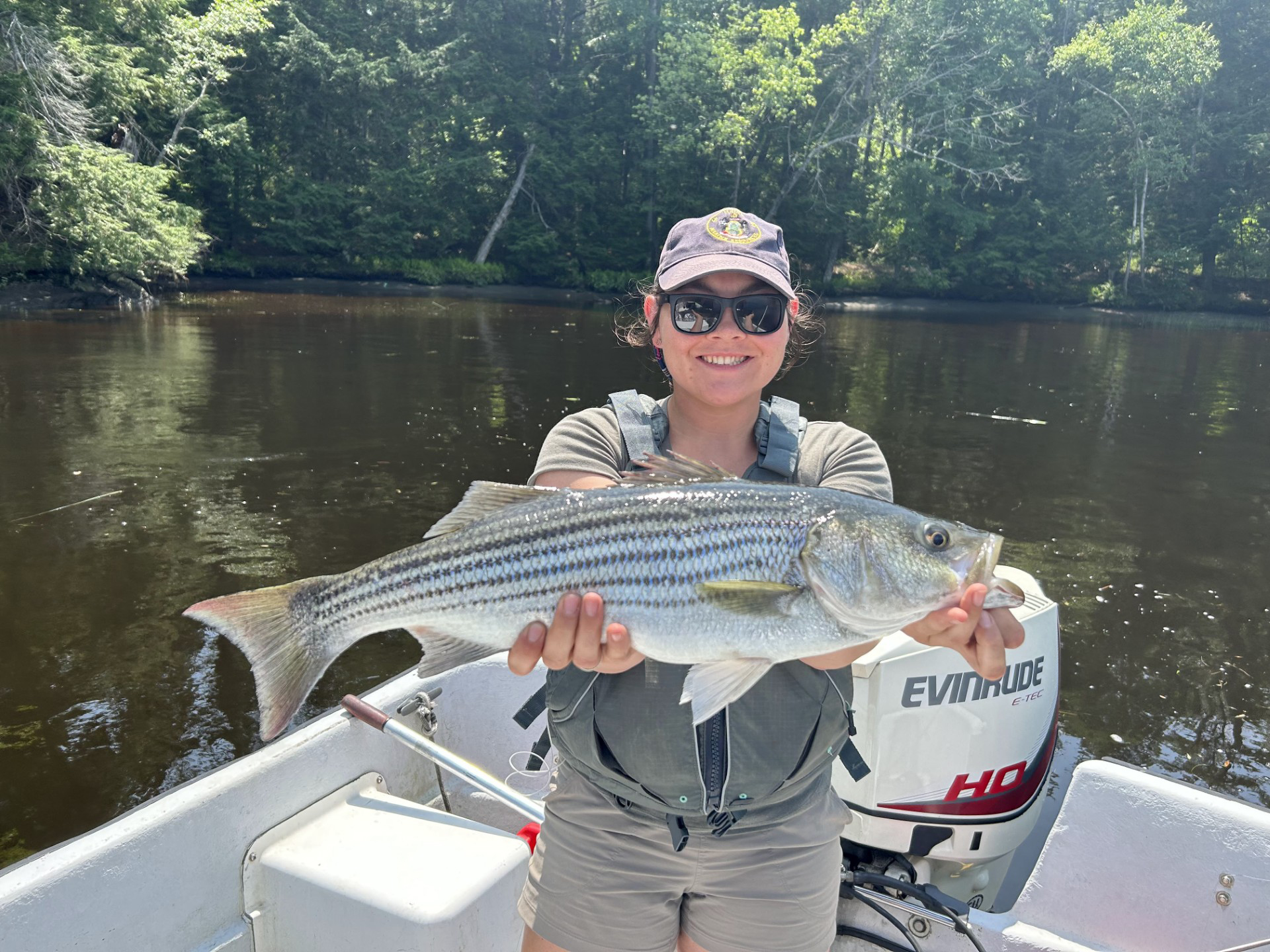
The Striped Bass (Morone saxatilis) is also known as “Bass”, “Rockfish”, “Striper”, or “Linesider”. They can be found along the East Coast from the St. Lawrence River in Canada to St. John’s River in Florida, and as far as West as Louisiana, with Maine as a relatively small portion of their range.
Striped bass are anadromous, born in freshwater but grow in the ocean. However, some individuals spend most of their adult lives in river or coastal estuaries, while others migrate north or south seasonally. Most striped bass caught in Maine, like all of New England, are from Chesapeake Bay2 but there is strong evidence that Maine has a small local spawning population of stripers in the Kennebec River1. The Maine Juvenile Striper Survey was developed to detect individuals of this population in the lower Kennebec and has been running since 1987.
Striped Bass can live up to 30 years and can grow up to 5 feet in length and weigh 77 pounds. Both long-distance and local striped bass start their yearly cycle by moving upstream into fresh to brackish water to spawn together. Peak spawning occurs at 65F. A single small female, 4-5 yrs in age, may lay up to 850,000 eggs; 20-30 year old females can lay up to 4 million eggs3. Males mature sooner at 2-3 yrs of age and are smaller.
Eggs float and must stay in the water column to develop for up to 3 days. Newly hatched Striped Bass drift downstream towards the estuary. Juveniles typically remain in estuaries for 2 to 4 years and then migrate out to the Atlantic Ocean.
After spawning, long-distance fish work their way up the East coast staying in 60-65F waters. Larger striped bass are the more likely to migrate long distances. In autumn, when northern waters start to cool, those same fish migrate back south to deeper overwintering areas.
Stripers are voracious predators on a variety of marine and freshwater animals. They follow schools of river herring upstream to falls, dams and fish ladders where multiple bass will harass and pick off stragglers. Striped Bass will sit at the entrance to fishways and eat blueback herring and alewife that try to enter to pass upstream. Stripers also eat eel, mackerel, crab, lobster and clam. They can be found in deep ocean waters, in river eddies, in estuaries, dozens of miles inland, and along shallow salt flats and beaches.
Status and Management
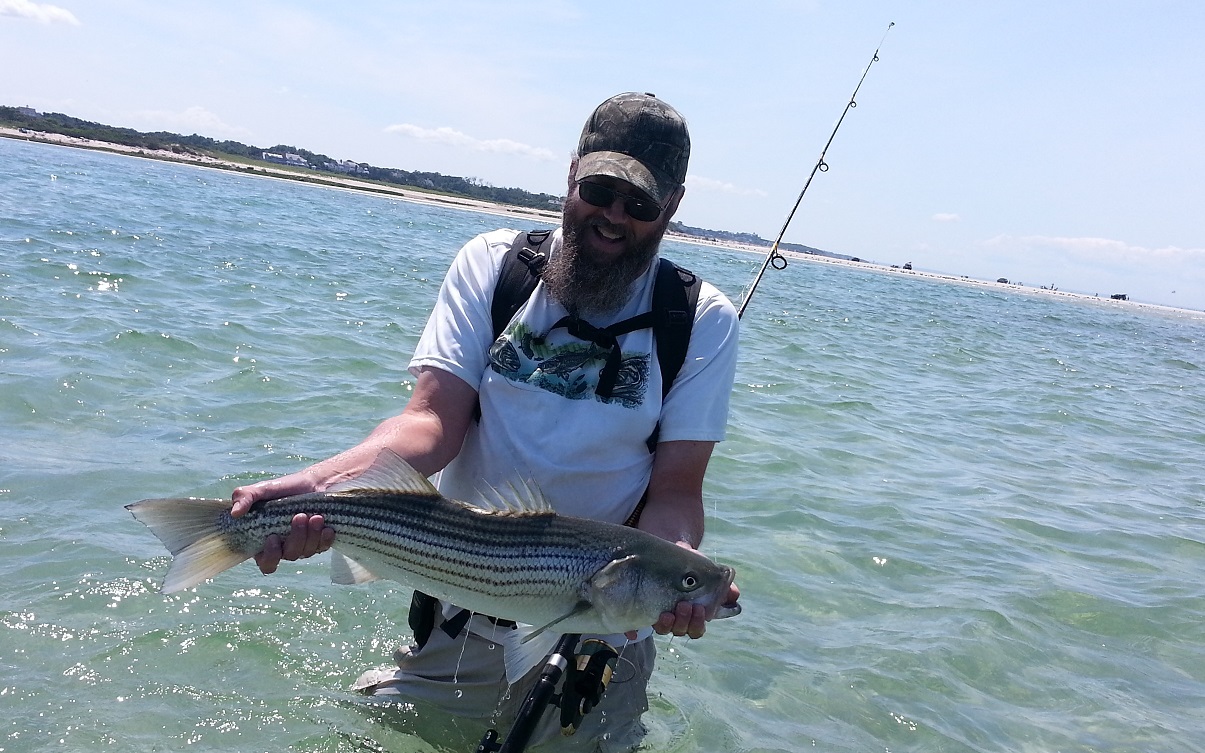
Managed under the Interstate Fishery Management Plan, striped bass support both vibrant recreational and commercial fisheries.
Recreational Fishing Regulations
Commercial Fishing Regulations