Osmerus mordax
Biology
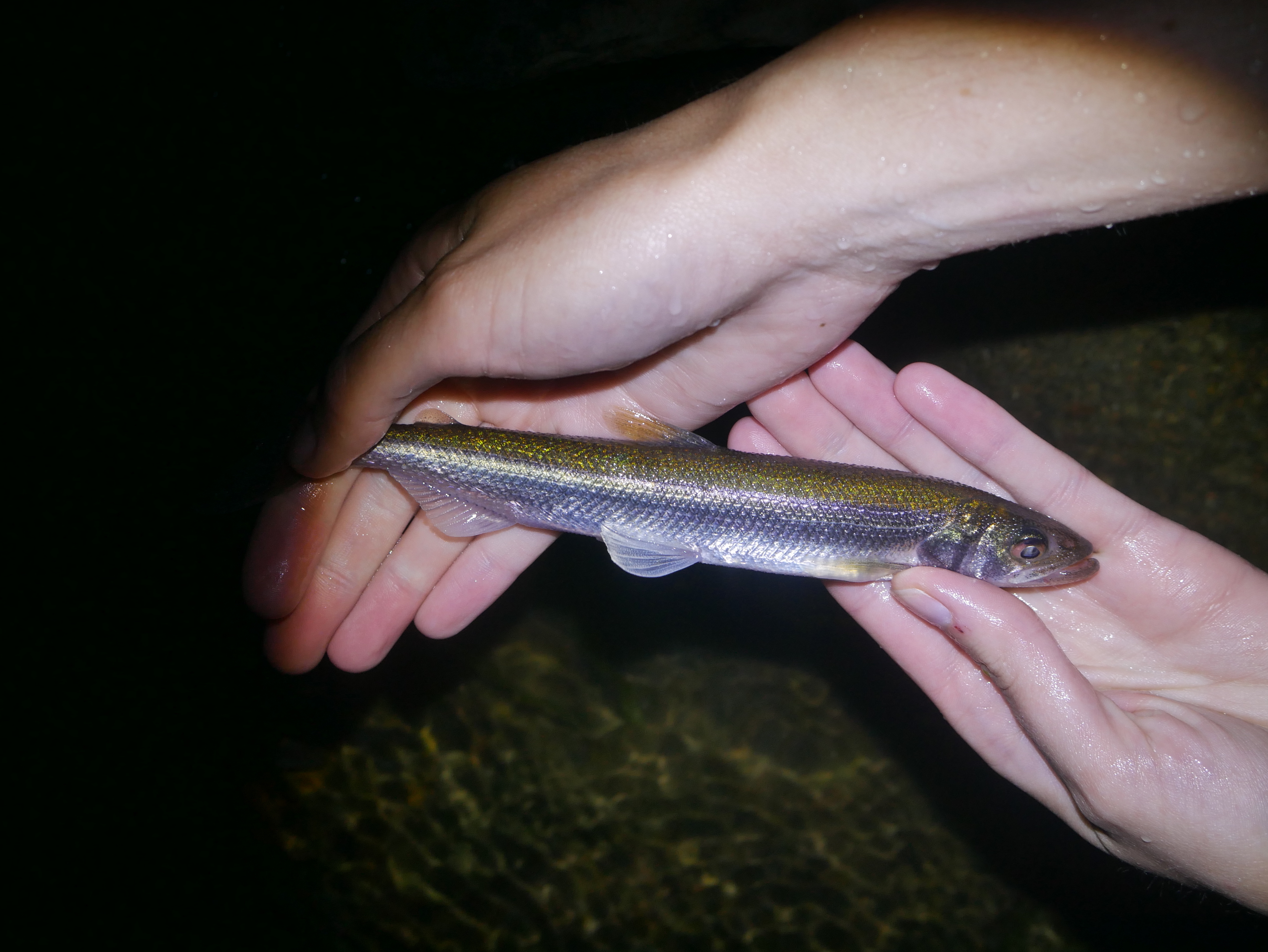
Rainbow Smelt are small (6-8”) slender fish distantly related to trout and salmon. All three have an adipose fin, a small fatty fin between the tail and dorsal fin. Smelt are notable for their cold water tolerance, like tomcod.
Maine’s Rainbow smelt live and reproduce in the coastal waters of the state where it is a native anadromous fish. Smelt range from Cape Cod Massachusetts to Atlantic Canada. They are temperature sensitive and thus are range limited by the temperatures found in the ocean, estuaries and freshwater tributaries where they live and spawn.
Smelt require freshwater access to lay and fertilize their eggs. In April and May smelt choose estuaries close to where the adult was spawned. They return to stream reaches with consistent freshwater flow over hard substrate just above head-of-tide, the maximum extent of the tide’s reach up a stream. Smelt are not very strong swimmers and thus are limited to waters below the first significant rapid.
Male smelt arrive on the spawning ground first and females arrive later. Both males and females can spawn multiple times in a season and may visit several neighboring estuaries while searching for a mate. Females can lay 40,000 – 50,000 eggs per spawning event that take 2 – 3 weeks to hatch. Their eggs are sticky and easy to find on a spring day as white dots on rocks in the margins of tidal streams. Once hatched, smelt larvae float on the tide in estuaries. Juveniles grow quickly and can sometimes grow to maturity in one year, however, most spawning adults are 2-4 years old.
Rainbow Smelt are popular prey for predators and voracious predators themselves. Smelt eat plankton and juvenile fish smaller than they are, including other smelt. In their native range smelt are prey for mackerel, tuna and striped bass, along with ambush predators like flounder.
Status and Management
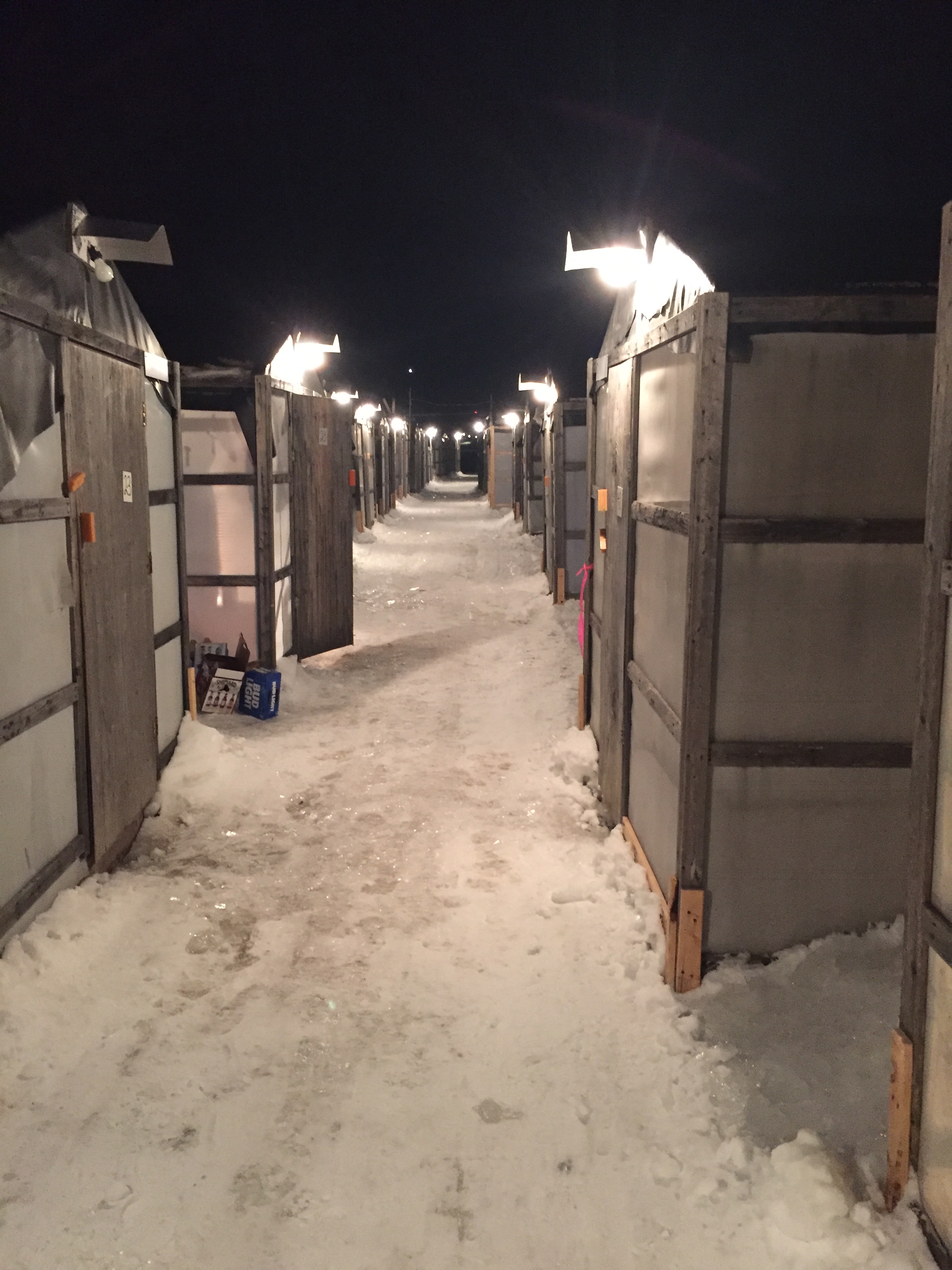
Humans are likely the most voracious predator of rainbow smelt. Smelt fishing has been a popular winter activity since before colonial times but, because of climate change and warming winters, the Kennebec River is the furthest south where consistent river ice forms to support a fishery from year to year. The commercial smelt fishery of the 1800s and 1900s caught smelt in winter and shipped them to Boston and New York. Maine’s commercial smelt fishery is now severely reduced in size such that most of the smelt in Maine grocery stores are from Canada.
DID YOU KNOW
In locations where they are invasive, mostly in midwestern lakes where smelt complete their entire life cycle in freshwater, smelt disrupt ecosystems by causing “size-structured interactions”, when adult smelt eat the juveniles of their predators like walleye.