Alosa aestivalis
Biology
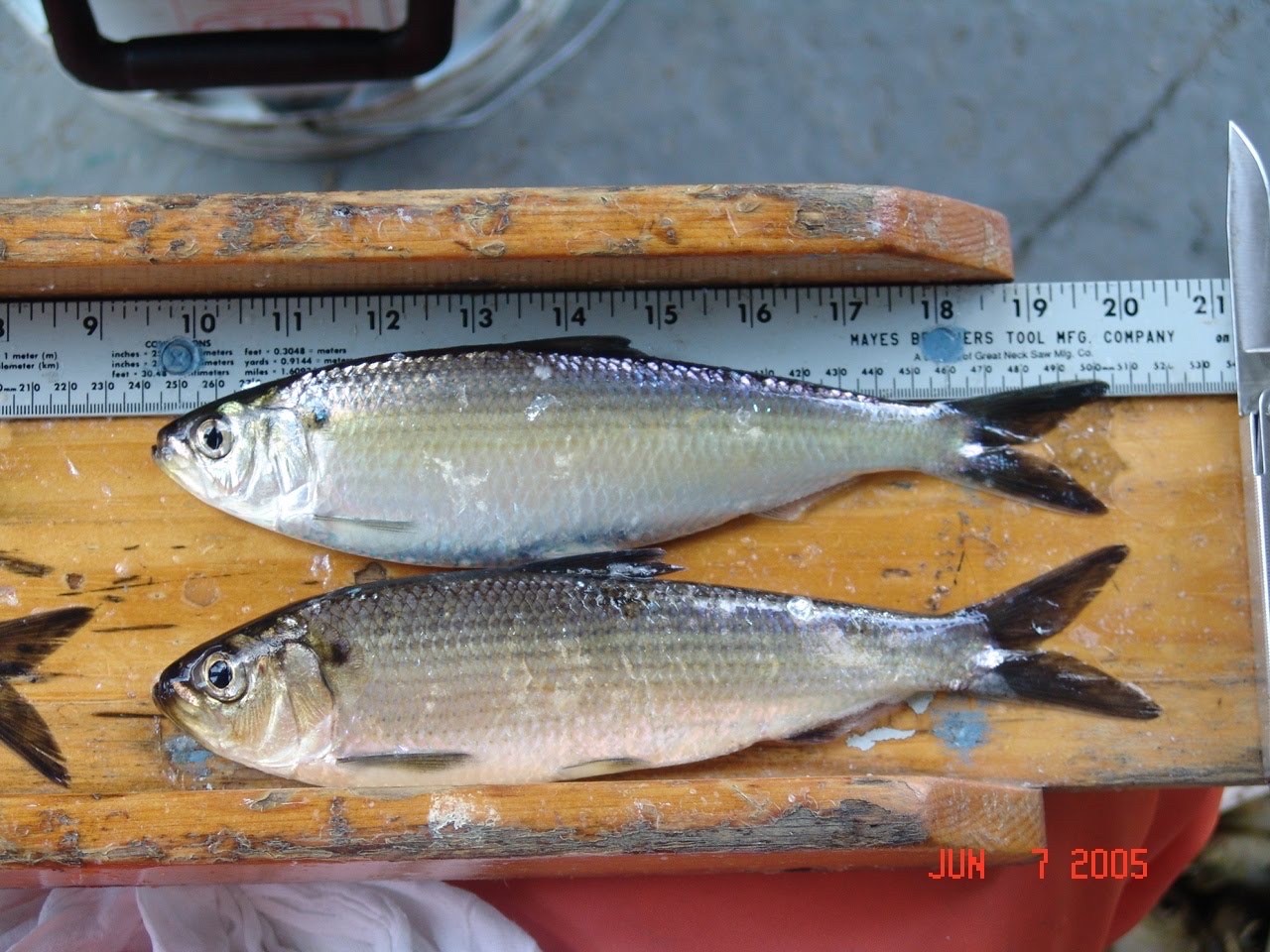
Blueback Herring are one of two Alosa sp. commonly referred to as “river herring”. Alewife (Alosa pseudoharengus) and blueback herring (Alosa aestivalis) are anadromous (sea-run or migratory) fish that are born (spawned) in freshwater lakes and rivers but spend most of their life at sea. Both species are native to Maine waters and for thousands of years have co-evolved and co-existed with other native fish and wildlife in Maine’s streams, rivers, ponds and lakes.
Blueback Herring are the less common river herring species in Maine. Blueback Herring have a shallower body, are more angular at the mouth, and are smaller than Alewife by age four. Blueback Herring are river spawners, preferring fast moving water including the main stem sections of rivers and tributaries. They do not spawn in ponds or lakes. Mill and hydro-electric dams block their migration, similar to Alewife. Restoration activity since 1990 has been reversing this trend and returning Blueback Herring to more of their native range.
Blueback Herring are found from Nova Scotia to northern Florida but are most numerous in warmer waters from Chesapeake Bay north. Blueback herring spawn from late May through mid-June in Maine, arriving towards the tail end of the alewife run. Females usually reach 100% maturity by age 5 and produce 60,000-103,000 eggs, whereas males generally mature at an earlier age (ages 3-4) and smaller size than females (US Fish and Wildlife Service, 2002).
Status and Management
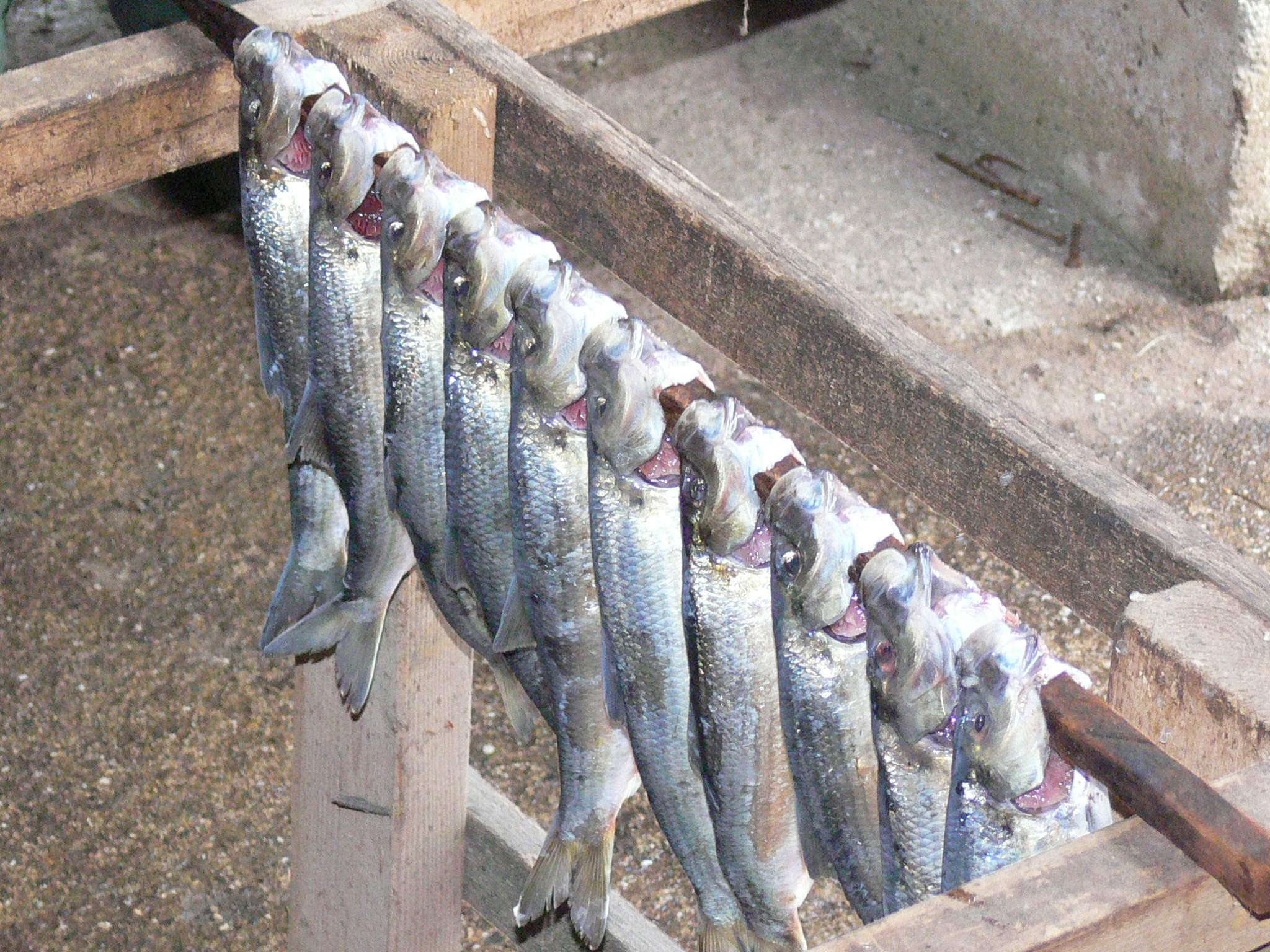
The alewife and blueback herring are two of the five species commercially harvested in Maine's river fisheries and are the most widespread of the anadromous fish species in the state (Atkins 1887). Commercially, blueback herring and alewife are referred to as “river herring” because there is little difference between the two species as bait or food and they are harvested and marketed together. The early fisheries for river herring used a wide range of gear, including weirs, dip nets, seines, drift nets, and set nets. Today, only weirs are used at licensed locations agreed upon between DMR and the municipality. In the 1800s most of the catch was for human consumption, because river herring kept well once salted or smoked. The demand for alewives for human consumption declined with the widespread use of refrigeration in the 20th century that made many other more palatable (better tasting) fish species available to the market. Refrigeration also permitted the export of lobsters in bulk, and in doing so increased the demand for river herring as lobster bait. Lobster bait is the primary use of blueback herring caught in the fishery today.
DID YOU KNOW
A significant portion of the catch was exported to plantations in the Caribbean as cheap protein for enslaved and indentured people.
Almost every Maine town with a river herring fishery has a law on the books that allows widows to collect up to a bushel a day for personal use.