Alosa sapidissima
Biology
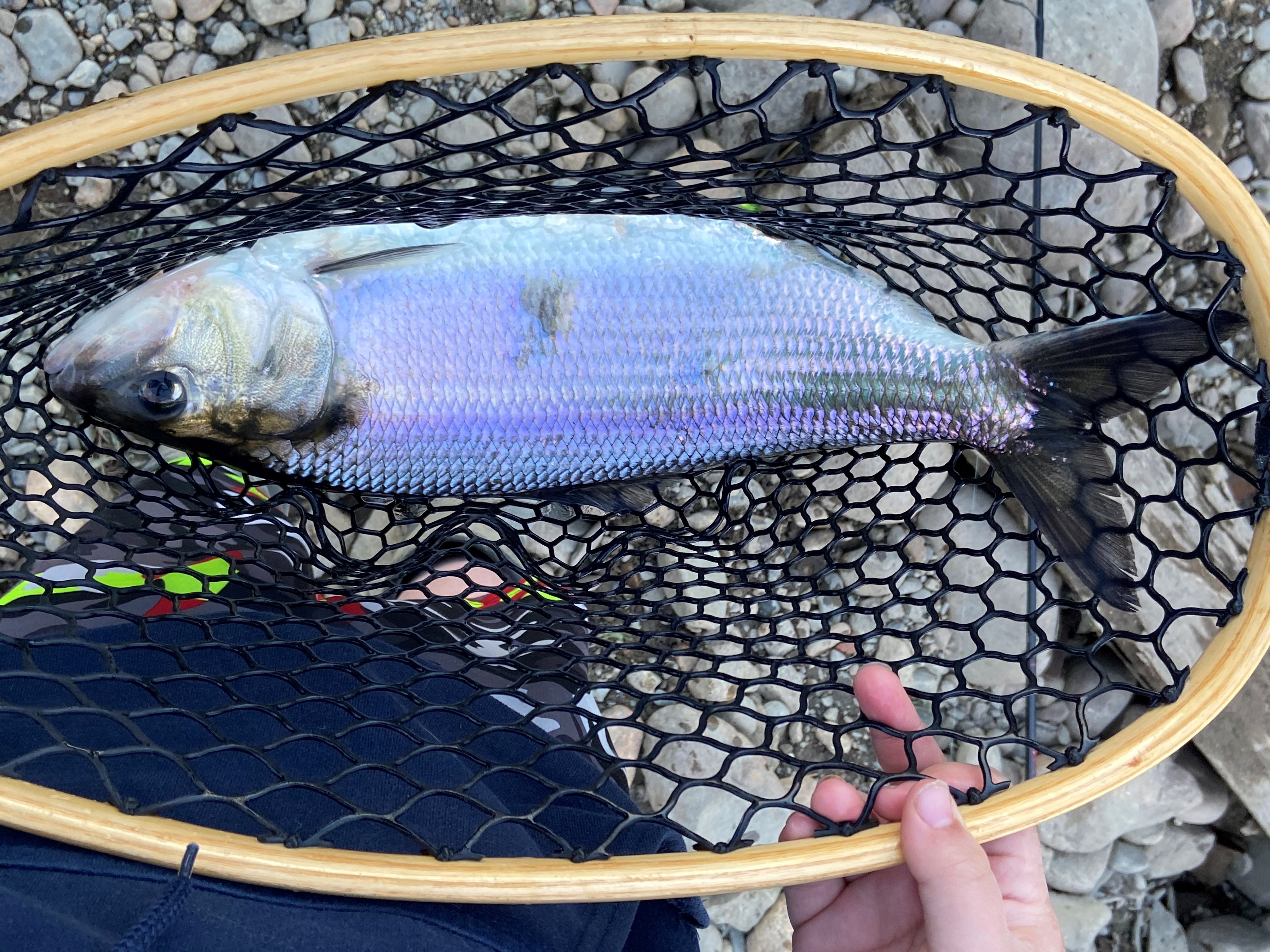
Shad are distant cousins to blueback herring and alewife. The three species look very similar, especially in their first year but size becomes an obvious difference. American shad can be over 2 feet in length and weigh up to 9 pounds compared to about 1 pound and 1 foot in length for blueback herring and alewife.
Like river herring, shad are anadromous, migrating from the ocean to freshwater to lay eggs, but shad only home to mainstem rivers to spawn. They are most easily found spawning in Maine’s largest rivers, including the Saco, Kennebec, Androscoggin and Penobscot, right below the lowest dam.
The size of American shad, and their taste, makes them a popular food fish for humans and other marine and freshwater predators. Shad evolved a complex underwater hearing system to detect the echolocation sounds of whales and the approach of seals and sharks. The same super underwater hearing that protects shad from predators is a problem in the tight confines of fish ladders and fish lifts. Shad are powerful swimmers but have trouble with tight corners where they may get crosswise to the current. Shadows and turbulence spook shad and keep them from progressing through rough bubble filled water easily.
Those shad that do reach their spawning grounds in May and June spawn over clean, sandy or pebbly bottom where eggs sink to the bottom. The eggs roll back and forth with the current until they hatch. A single female can lay 200,000- 600,000 eggs per season and may return multiple years to spawn (iteroparous). Shad eggs develop in 1 – 2 weeks between 55F and 65F. Larval shad stick to eddies and slow flowing shorelines until they are large enough to make way to estuaries in August. They mix with alewife and blueback herring on their way to the ocean.
Status and Management
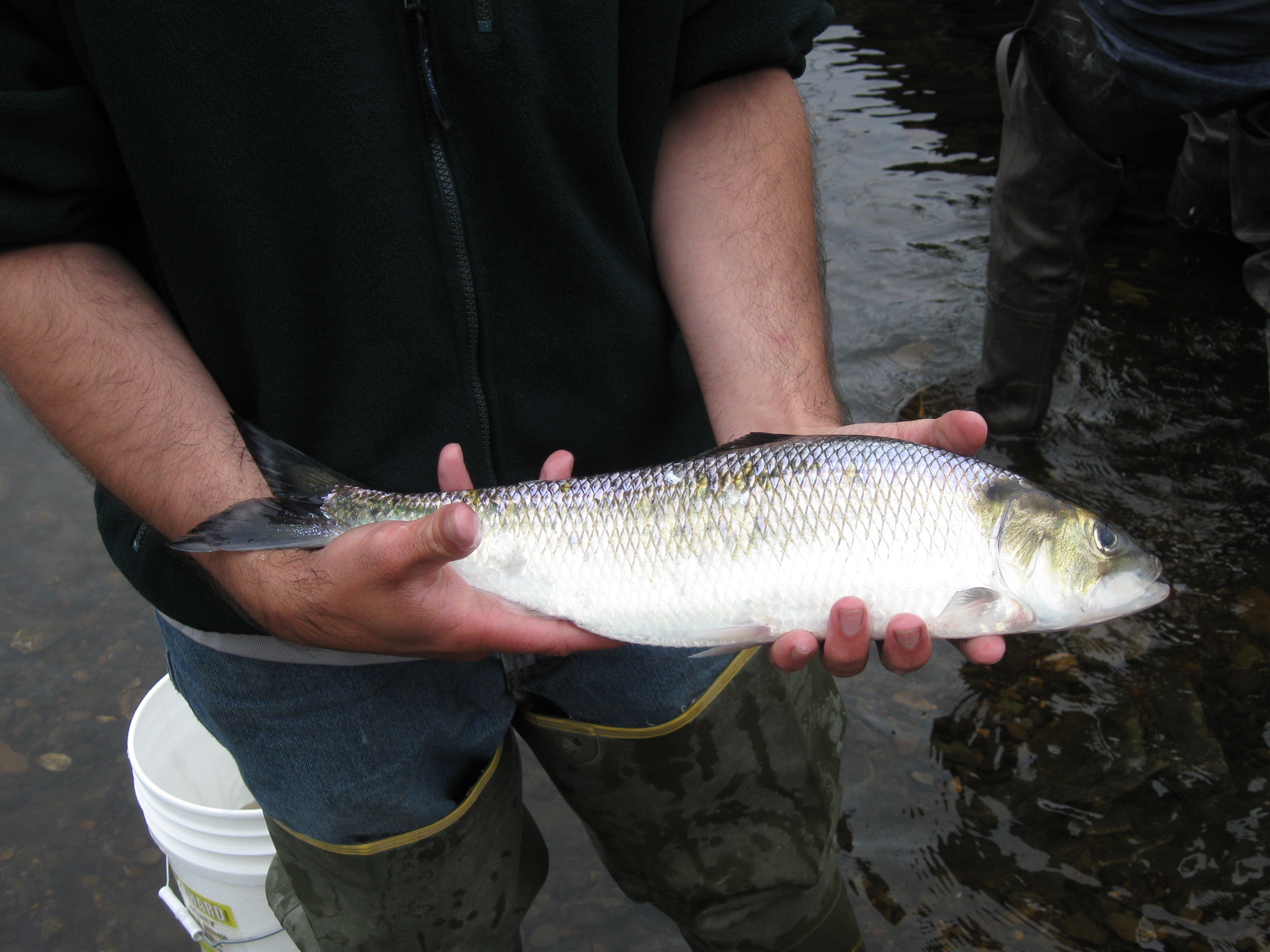
American shad were historically abundant in Maine’s large coastal rivers and supported important subsistence and commercial fisheries for both Indigenous communities and European settlers. Today, 23 Maine rivers could support American shad. Of more than 2,545 river kilometers of potential habitat, approximately 1,611 river kilometers are currently accessible while more than 810 river kilometers remain blocked by dams.
By the late 1800s and early 1900s, commercial fisheries for American shad were concentrated in the Kennebec and Androscoggin Rivers. Harvest was regulated through gear restrictions like mesh size limits and seasonal closures designed to allow uninterrupted spawning. Despite these measures, the combined impacts of dam construction, pollution, and overfishing led to severe stock declines. By the 1940s, most directed commercial shad fisheries had collapsed.
Active restoration of American shad began in the 1980s as water quality improved in main stem rivers improved. DMR was involved in:
-
Trap-and-transfer stocking of prespawn shad adults,
-
Sponsored hatcheries to grow fry for stocking,
-
Partnered on dam removals,
-
Oversaw installation of upstream and downstream fish passage.
These efforts have contributed to increasing adult returns in several large river systems, but current abundance remains well below historic levels.
In 1998, the Maine Department of Marine Resources closed all state waters to commercial fishing for American shad and instituted a two-fish-per-day recreational bag limit. The bag limit is still in place and recreational anglers are limited to single hook-and-line gear. These conservation measures, improved fish passage and habitat restoration are rebuilding American shad populations in Maine. American Shad are managed through interstate efforts under the Atlantic States Marine Fisheries Commission.
Check out VIMS and USFWS for more information on American Shad.
DID YOU KNOW
Shad were introduced to the Sacramento River in California in the 1800s and now have a large population, with spawning adults found from Baha, Mexico to Cooks Inlet, AK.