Anguilla rostrata
Biology
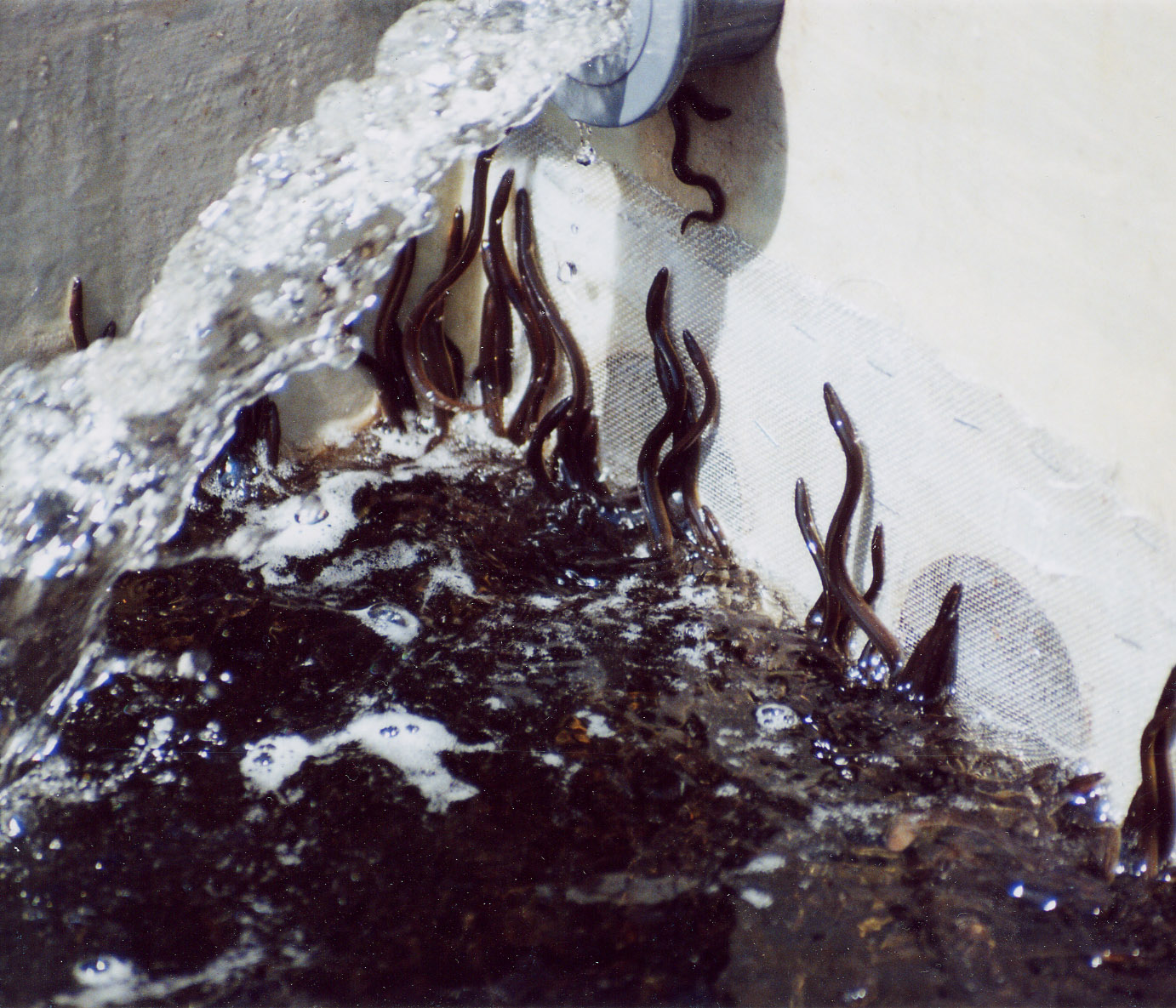
American eel are North America’s only catadromous fish. Catadromous fish spawn in the ocean and migrate to freshwater ecosystems to grow and mature. Eels can be found as far South as northern Brazil, throughout the Caribbean Islands and as far north as Newfoundland and Labrador, Canada and the southern tip of Greenland.
After hatching, larval eels are known as leptocephali. They are small and ribbon shaped, drifting on ocean currents for 1 – 2 years. Eventually they are carried towards their new homes. Larval eels transform into glass eels as they approach the continental shelf.
Glass Eel & Elvers
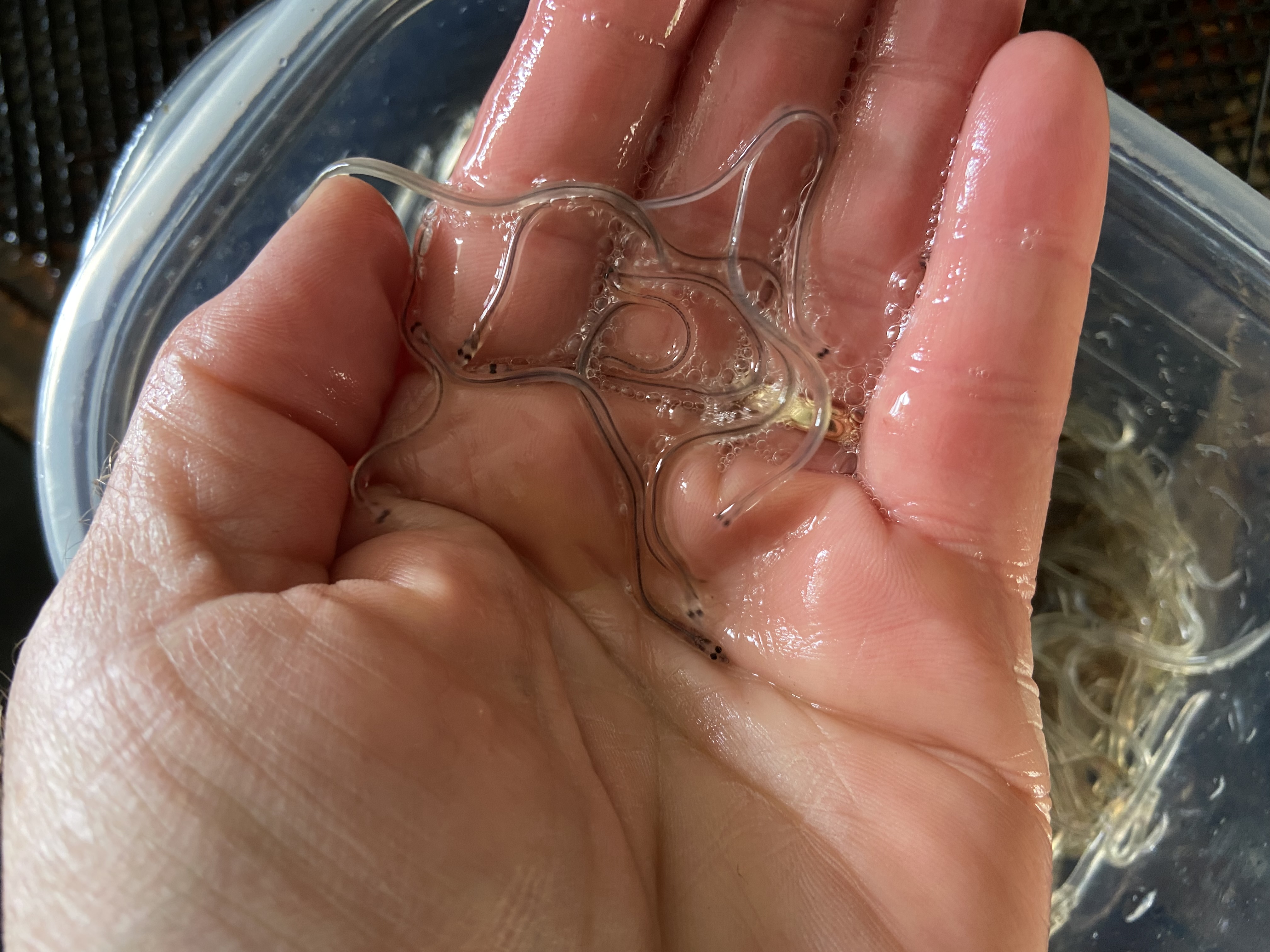
Glass eels and elvers are life stages that occur in estuaries during the first year that eels are moving into freshwater. Glass eels tend to be fully transparent and are more likely to be found in estuaries, whereas elvers have started to pick up some smoke color and are generally found closer to head of tide. Eels at this life stage are 2 - 3 inches in length (50- 90 mm) and weigh only 1/5th to 1/10th of a gram.
Yellow eels
As elvers move upstream from the estuary they start to “color”, assuming the dusky gray-green color on top and yellow bellies of freshwater eels. Yellow eels are widespread and inhabit nearly every drainage in Maine from the Piscataqua (Kittery) to the St. Croix River (Calais). Yellow eels can climb vertical objects to several feet and can go around obstructions to fish passage in wet grass. Eels have been found in lakes above hydro dams hundreds of miles inland in Maine. Yellow eels will also stay in lower watersheds, inhabiting brackish marshes and river mouths.
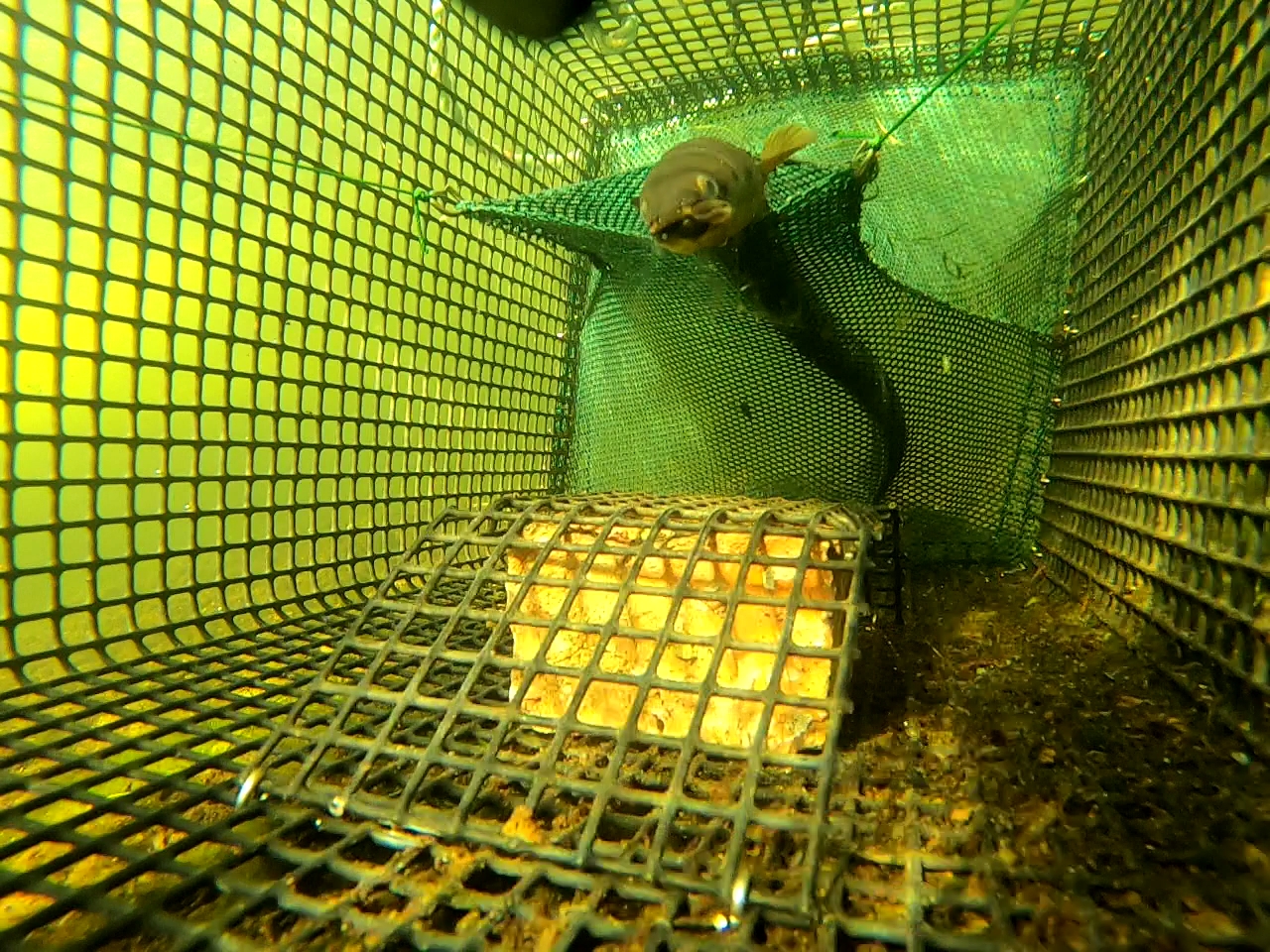
Mostly active at night, yellow eels have a diet consisting of aquatic insect larvae, worms, fish, crayfish, crabs and smaller eels. Yellow eels can be found following and feeding on schools of juvenile river herring in the fall. Yellow eels are in turn eaten by striped bass, smallmouth and largemouth bass, eagles, osprey and other fish-eating birds. Racoons, mink and otter will make a meal of eel if they can catch one. If they survive, yellow eels may live in freshwater for 8 - 25 years before migrating to sea to spawn.
Silver eels
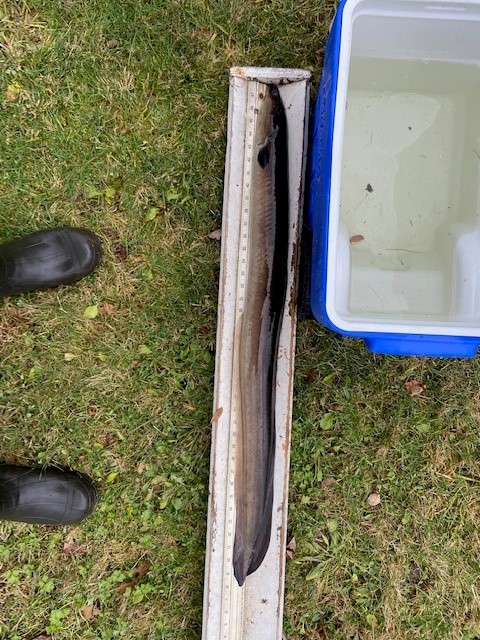
Silver eels are sexually mature and ready to start their spawning migration. This last metamorphosis (significant body change) involves:
-
Changing color, growing darker on top and lighter(silver) on their bellies as a form of camouflage that makes them harder to see during their long ocean migration.
-
Their eyes get bigger and change in sensitivity so they can see in the dimmer ocean depths.
-
Their snout shrinking and their digestive system withering as fall gets closer and they prepare for their last, one-way migration.
Rainy, moonless, autumn nights are the silver eel’s favorite conditions for starting their spawning migration. They ride the rising water out of the lakes and down streams to estuaries where they begin the swim to the Sargasso Sea. Millions of eels converge in the western North Atlantic Ocean, east of the Bahamas and south of Bermuda. On the way they are eaten by striped bass, salmon, seals, porpoise, sharks, bottom ambush predators like monkfish, and others. After they spawn in the Sargasso Sea the silver eels die.
Management and Status
Maine Elver Fishery
Maine’s lucrative elver fishery occurs mostly at night near head-of-tide and catches eels before the yellow eel stage. Fishermen are licensed for a dip net or fyke net (a funnel shaped net with long wings and throats to keep fish in). Dip netters cannot step in the water and fyke netters cannot cover more than 1/3rd of the stream width with their fyke net wings.
The season starts on March 22 and lasts until June 7. The state works closely with the Atlantic States Marine Fisheries Commission to set the Total Allowable Catch (TAC) for Maine, which was 9,688 lbs in 2024-2025. It is a limited entry fishery with only 425 licenses issued by the state, each license having a share of 7566 lbs. The remainder is allocated to and split amongst the four Federally recognized Wabanaki Tribes of Maine.
The Maine elver fishery is the most lucrative state fishery, with elvers demanding $1500 to $2500 per pound. Between 2020 and 2024 Maine elver fishermen caught an annual average of 9,554 pounds of elvers worth $14.7 million per year.
Follow this link to learn more about the elver fishery.
Threats to American Eel
Loss of habitat is the primary threat to American eels. Although some eels can climb dams, most eels are significantly limited in their ability to move upstream because of dams. Yellow eels live and eat from the sediment so if there are contaminants that settle to the bottom of lakes, rivers and streams, eels are likely to be affected.
Dams cause turbine mortality for silver eels when the eels try to pass downstream by swimming through the electricity generating turbines, usually the only free flowing water around a dam. Eels up to 4 ft long are caught in the turbine blades spinning at thousands of revolutions per second.
Another source of loss is from a parasite, Anguillicoloides crassus, an invasive nematode worm that infects the swim bladder of eels. Nematodes growing in the swim bladder interfere with an eel’s ability to control its depth, making it more difficult to swim and more likely to be eaten by a predator.
Climate change is a third stressor for eels, creating hazardous conditions in reservoirs that heat up beyond an eel’s tolerances in summer, and changing ocean current migration patterns for larval eels. Passage around dams usually requires rising near the surface to take advantage of downstream fish passage but warm water contains less oxygen and can cause eels to suffocate.
DID YOU KNOW
Almost all the elvers harvested are live packed and shipped out of state to Boston, MA where they are flown to grow-out farms in Asia.
A pound contains approximately 3,000 elvers.
The Maine elver fishery skyrocketed in value in 2011 when 1) the Fukushima nuclear disaster (caused by a tidal wave striking the Fukushima- Daiichi nuclear plant in western Japan) closed the Japanese eel fishery and 2) the EU closed the export of glass eels caught in Europe.
Glass eels instead of yellow eels are used for aquaculture because yellow eels will not eat commercial fish food used on fish farms.