Alosa pseudoharengus
Biology
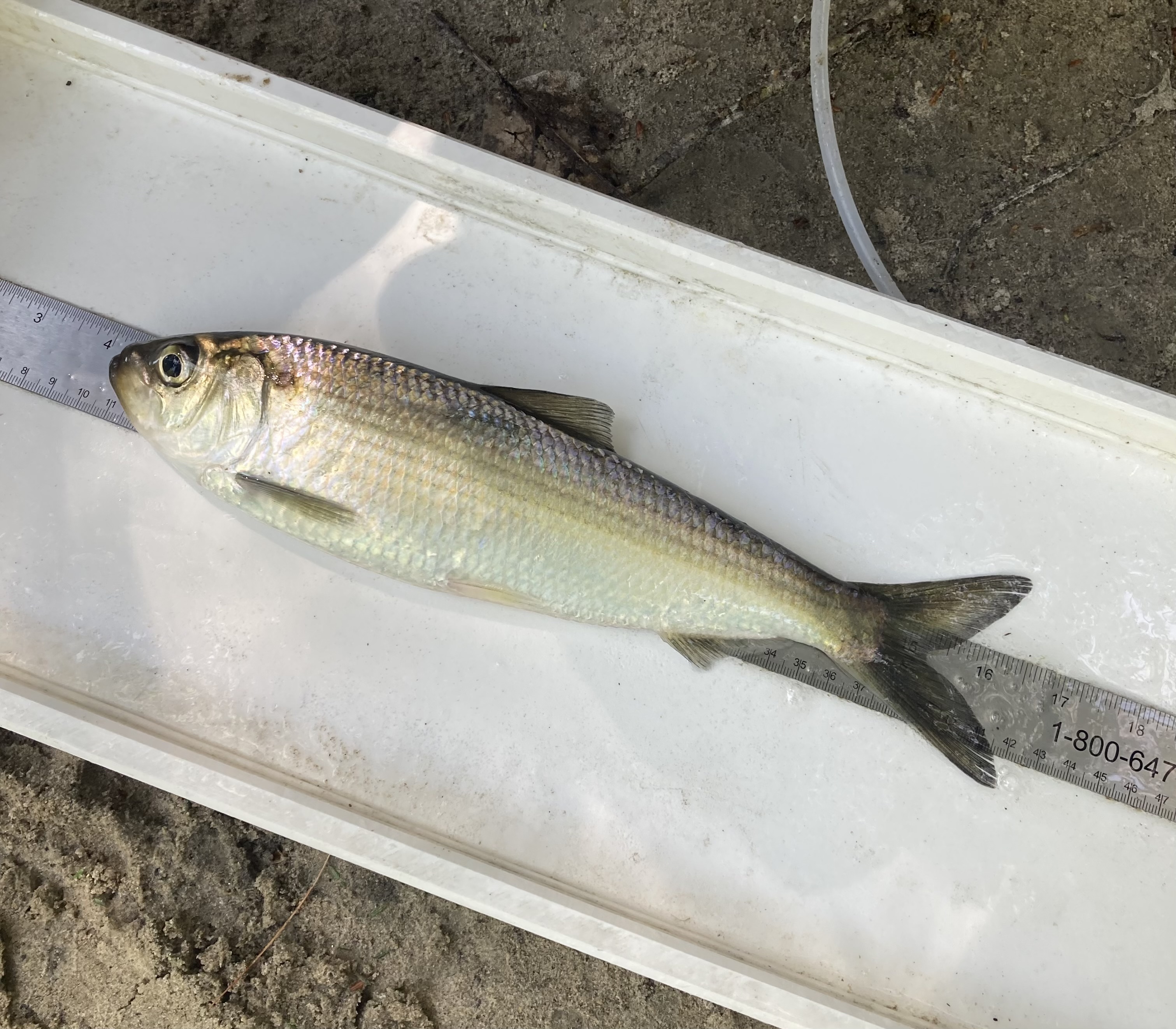
Alewife are one of two native Alosa sp. commonly referred to as “river herring.” Alewife (Alosa pseudoharengus) and blueback herring (Alosa aestivalis) are anadromous (sea-run) fish that are born (spawned) in freshwater lakes and rivers but spend most of their life at sea. Alewife are the more common river herring species in Maine. They have a deeper body, are more rounded at the mouth, and are larger than blueback herring by age four. Alewife spawn in lakes and have co-evolved and co-existed with other native fish and wildlife in Maine’s streams, rivers, ponds and lakes for thousands of years.
Spawning runs (populations) consist of 3 yr to 5 yr old fish returning for the first time, plus iteroparous spawners (fish that have survived since their first spawning run). Three, four and older alewife start making their way upstream as early as April but spawning activity, laying and fertilizing eggs, does not commence until water temperatures reach about 13C (55F) and end around 20C (68F). High flows, cold weather fronts and drought can make it hard for alewife to spawn successfully.
Alewife eggs sink to the bottom of a lake in 2 ft to 10 ft of water. Once they hatch in 3-6 days larval alewife look like mosquito larvae at 3 – 4 mm long. At two weeks old they are about 10 mm long and look like skinny spaghetti. By three weeks larval alewife begin to look like fish and are actively feeding on rotifers and small zooplankton. After three months the largest juvenile alewife from that year begin to move from the middle of the lake to the shallows to find more food.
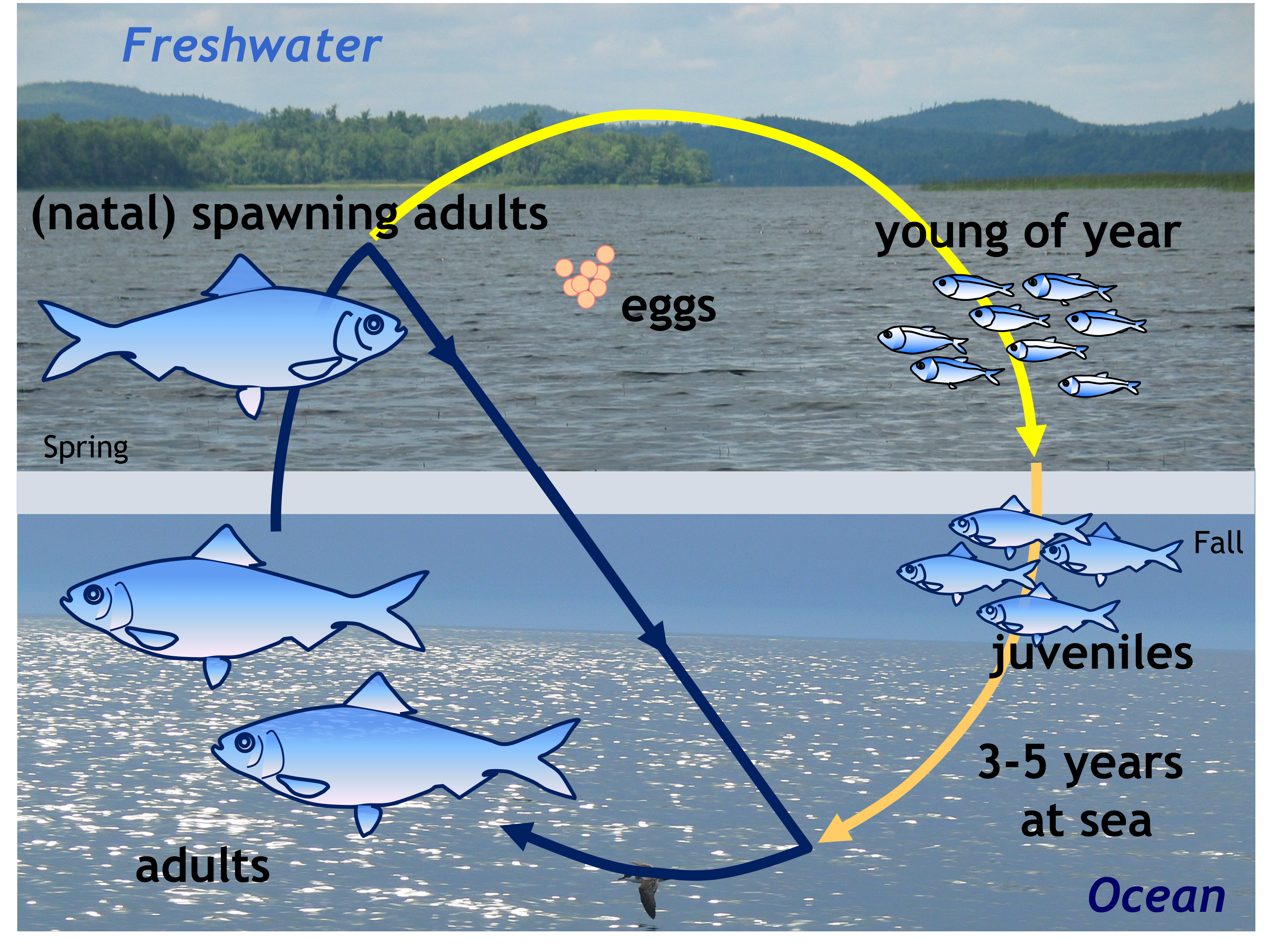
Some alewife leave early, as small as 25mm (1 in). Competition for food with other juvenile alewife may drive them to leave lakes early but the majority start leaving in late August and September. Usually, fall rain storms trigger pulses of juvenile alewife leaving Maine lakes for the state’s estuaries and bays.
Alewife are “the fish that feeds all”, according to a translation of the Wabanaki word for alewife, “siqonomeq”. Fewer than 5% of the juveniles will survive to 3 years of age. Juvenile alewife feed native and naturalized sportfish alike, including brook trout, lake trout, landlocked salmon, perch, pickerel and bass. Adult alewife feed and help grow trophy sized bass and pike. American eel gorge on juvenile alewife leaving lakes in the fall. Herons, mink, otters, racoons and eagles hunt adult alewife in the spring and juvenile alewife in the fall. In Maine’s estuaries seals, terns, cormorants, gulls, mackerel and striped bass form a gauntlet that alewives must run on the way to and from the sea. And in the ocean tuna, whales, guillemot, cod, haddock, etc. feed on alewife.
Status and Management
Alewife have a historical distribution from South Carolina to Newfoundland, Canada. Alewife in Maine used to reach Forest City, Millinocket, Guilford, Dexter, Harland, Madison, Farmington, Livermore, Norway, Windham, Steep Falls, Waterborough, Acton and South Berwick. The current range of alewife is much more limited, trimmed in many river systems by mill and hydro-electric dams that block their migration. In much of southern Maine dams have blocked alewife migrations since the 1700s, however, restoration activity since 1990 is reversing this trend and returning alewife to more of their native range.
Adult alewives are a critical bait species for the Maine lobster fishery. The State of Maine, through DMR, grants towns the right to set up river herring fisheries. Each town submits a harvesting plan and 100 scale samples for age analysis to ensure there are enough older fish returning to spawn. The harvest plans specify what days the fishery will be catching river herring. Almost every fishery must be closed for 72 hrs per week to allow river herring open passage to their spawning grounds.
There are currently 39 municipally controlled fisheries. Many of the remaining fisheries are in conservation closure as they collect 10 yrs of age analysis data and populations grow to at least 235 fish/acre, the minimum for establishing a fishery.
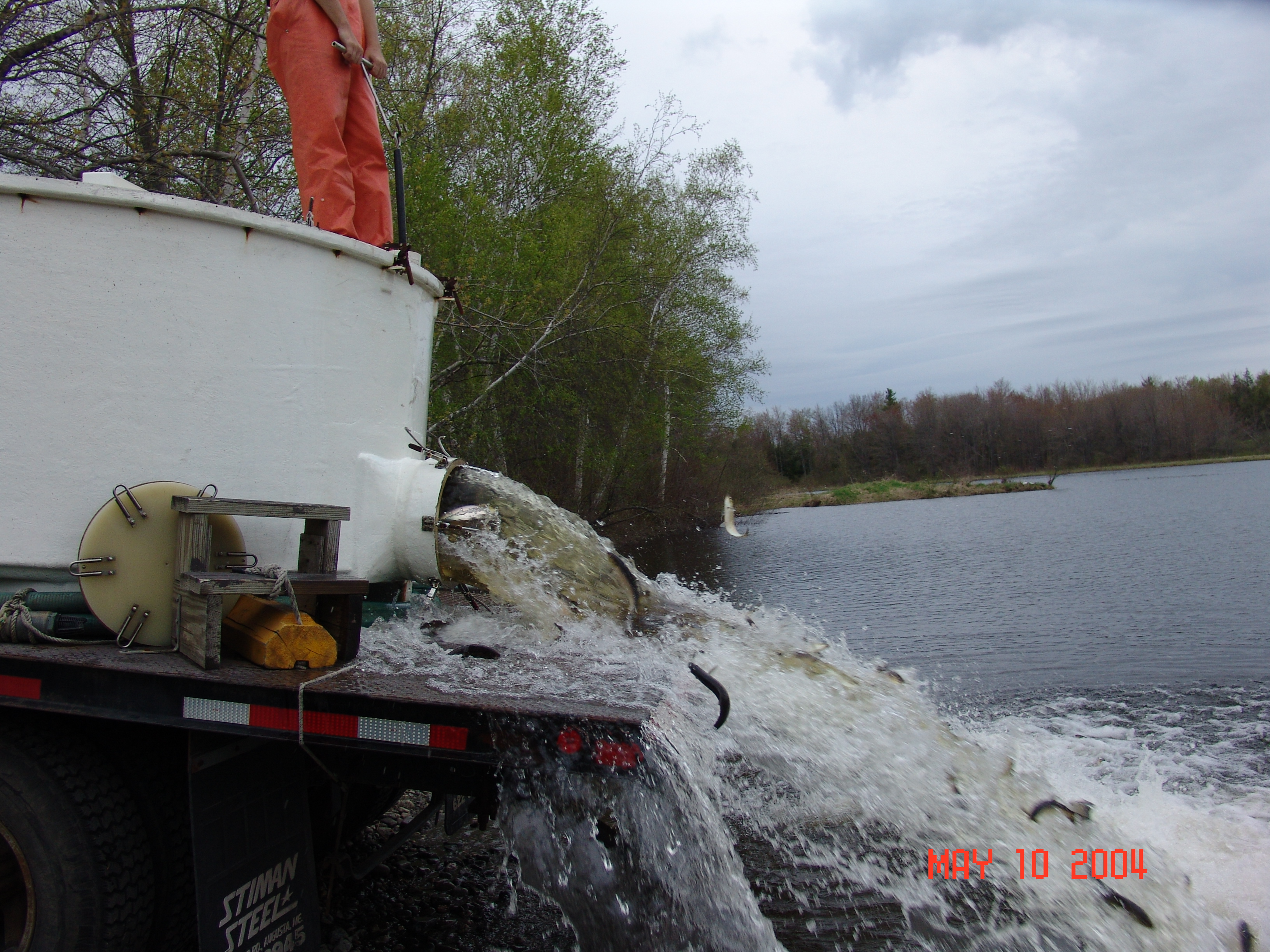
The management approach for alewives has focused on rebuilding populations through a combination of supplementation (stocking) and restoring access to historic habitat. Since 1969 DMR has worked with partners to install 13 fishways from Cumberland County to Washington County. DMR has an extensive restoration stocking program (“trap and truck”) to supplement or restart alewife populations across the state.
DID YOU KNOW
Because alewife and blueback herring migrate together in the spring they are caught together and are interchangeable for catching lobster, so, the fishery is for “river herring” instead of either specific species.
DMR personnel age 4000- 5000 fish per year to ensure that each harvested run has a healthy, distributed age class with a few 3 yr olds, the most 4 yr olds, some 5 yr olds and a few 6 and 7 year old and older fish. This distribution ensures that adults are returning to spawn multiple times (iteroparous repeat spawners).
In 2025 over 9.1 million river herring returned to the Kennebec River, according to the BSRFH trap count statistics.
There are more bald eagles sighted in a single day in the Sebasticook River, between Benton Falls and Waterville, than anywhere else in New England. Eagles start appearing in large numbers at the peak of the alewife run.