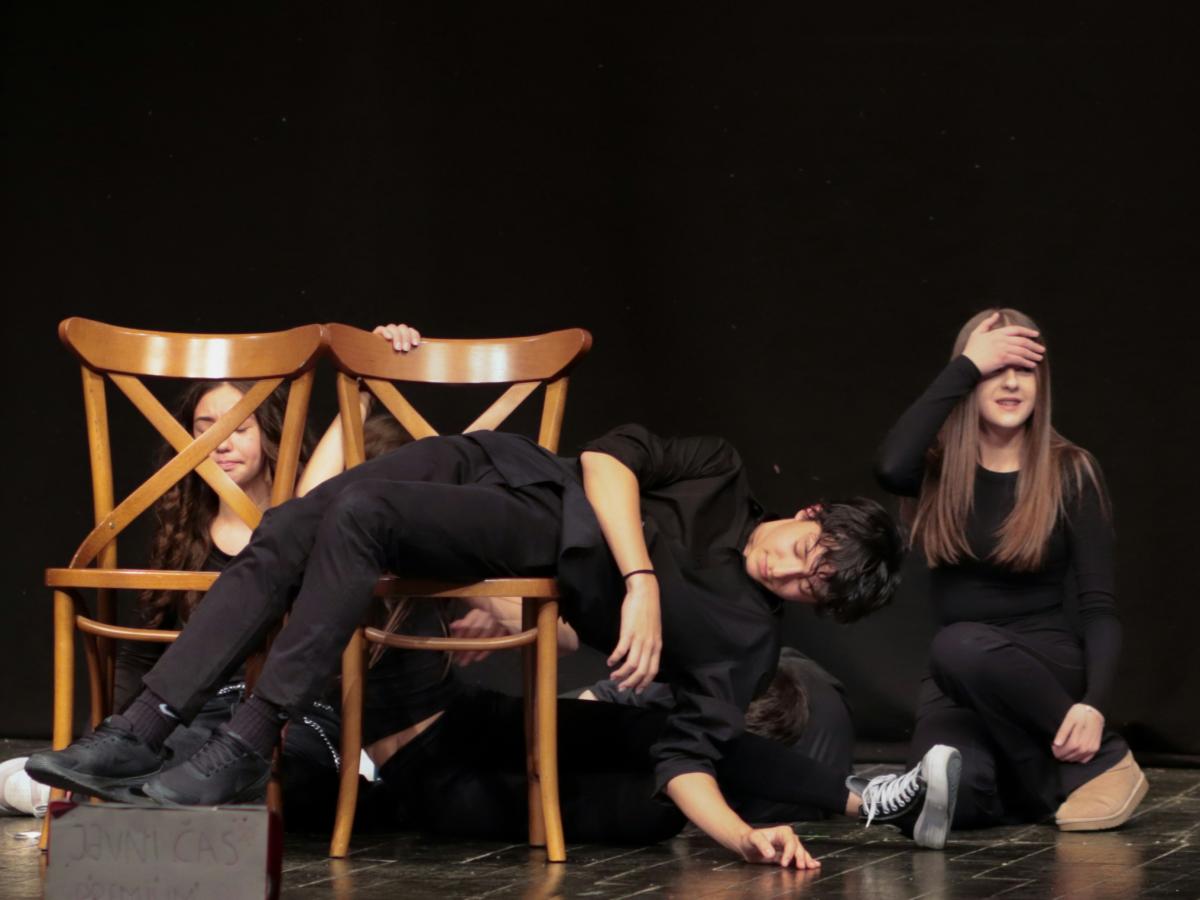
Every second week of September, educators across the country mark National Arts in Education Week. This year it runs September 13–19. National Arts in Education Week has been on the calendar since 2010, when Congress passed H.Con.Res. 275, a bipartisan resolution designating the second week of September as a national observance dedicated to arts education. The resolution was a recognition that the arts needed a dedicated moment of visibility, and that the case for arts learning was worth making at the federal level. Americans for the Arts has been the primary national driver of the week since its beginning, bringing together educators, advocates, and arts organizations to make the case publicly. 2026 marks 16 years of that effort.
The Value of Arts Education
The evidence base for arts education is substantial and growing. Here's a cross-section worth keeping at hand.
Houston Arts Access Initiative
Bowen & Kisida, Brookings Institution, 2019
A randomized controlled trial tracked more than 10,000 students in grades 3–8 across 42 Houston schools. Students who received enriched arts education showed a 3.6 percentage point reduction in disciplinary infractions, writing scores that improved by 13% of a standard deviation, and an 8% of a standard deviation increase in compassion for others. Elementary students also reported higher college aspirations and greater school engagement. These gains showed up alongside regular academic outcomes, not instead of them.
The Arts and Achievement in At-Risk Youth
Catterall et al., 2012, National Endowment for the Arts
Drawing from four longitudinal studies, this NEA-commissioned research examined what happens when low-income students have sustained access to the arts. The findings are hard to ignore: low-SES students with high arts involvement were three times more likely to earn a bachelor's degree than low-SES peers without that access. They volunteered at nearly twice the rate (47% vs. 26%), voted at higher rates (45% vs. 31%), and read news more regularly (73% vs. 44%). Arts access didn't just improve school outcomes, it shaped how young people showed up as citizens.
Arts Integration and 21st Century Skills
Corbisiero-Drakos et al., 2021, International Journal of Education & the Arts
A cluster randomized controlled trial in economically disadvantaged school districts found that comprehensive arts integration, when paired with genuine teacher-teaching artist collaboration, was associated with meaningful gains in creativity, critical thinking, collaboration, and communication.
Youth Arts as Civic Infrastructure
This white paper makes the structural argument that too often gets lost in outcome data: arts access for young people shouldn't depend on luck, zip code, or an extraordinary parent. The paper argues for treating youth arts as infrastructure, the same way we treat roads or broadband, because fragmented, optional access produces fragmented, unequal outcomes. The capacities it documents (attention, emotional regulation, belonging, public voice, creative judgment) are not supplemental, they are foundational.
Arts Across the Curriculum
Arts integration, the intentional weaving of arts practices and skills into other content areas, exists on a continuum from simple routines all the way to deep interdisciplinary learning. Integration means the art form is a legitimate vehicle for learning the content, and it can happen in any classroom. The arts don't just make other subjects more engaging. They make them more learnable.
The arts and literacy
Music instruction and literacy share more than we often acknowledge. Research by Anvari et al. (2002) found that musical skills predicted reading ability in preschool children, even after accounting for other cognitive factors. Music is doing something for reading that phonics instruction alone isn't. The Dana Arts and Cognition Consortium found links between music and reading fluency, and between visual arts and phonological awareness, with brain imaging showing that strong readers show greater neural development in the areas arts activities specifically activate: those that connect vision, hearing, and language. Drama and theater have a well-documented relationship with reading comprehension, vocabulary development, and fluency. The National Council of Teachers of English has a formal position statement on drama-based literacies. And for multilingual learners especially, arts integration opens pathways to meaning-making that language alone doesn't always provide.
The arts and numeracy
The connections run deep here too. A study of fifth-grade students found statistically significant gains in mathematics when instruction integrated fine art compared to students in traditional instruction. Visual arts integration has been linked to stronger geometric reasoning and increased use of precise mathematical vocabulary as students learn to perceive and describe spatial relationships through the lens of art-making. Pattern recognition, proportion, scale, sequence, and symmetry are all mathematical ideas that live inside music, dance, and visual design, often in ways that make them more tangible than a worksheet ever will.
The through-line across all of this is that the arts train students to do what every content area asks of them: look closely, think in multiple modes, tolerate uncertainty, revise, and communicate meaning. A student who has learned to analyze a painting, stage a scene, or listen analytically to a piece of music is practicing the same habits of mind we want them to bring to a primary source, a word problem, or a scientific claim. These aren't parallel skills. They're the same skills.
Sources for this section
Maine's Arts Educators Do This Work Every Day
None of this happens without the professionals in our schools who have devoted their practice to the arts and to arts learning. Our statewide organizations that support content teachers in the visual and performing arts fields consistently offer high-quality professional learning, networking, celebration, and advocacy.
Statewide Arts Education Organizations
- Maine Music Educators Association (MMEA)Supporting K–12 music educators across the state.
- Maine Art Education Association (MAEA)The statewide professional community for visual art educators.
- Maine Thespians, Educational Theatre AssociationSupporting student and educator theater programs statewide.
- Maine Association for Health, Physical Education, Recreation, & Dance (MAHPERD)Supporting dance educators across Maine.
3 Ways to Bring the Arts Alive This Week
You don't need a new curriculum unit or a budget line to do something meaningful this week. Here are four places to start. ** COUNT: heading says 3, this line says four, and there are three items below. Pick one number. **
1. Try a thinking routine from Harvard Project Zero
Project Zero's Thinking Routines library includes routines designed to develop close observation, interpretation, and questioning through direct engagement with art. "See, Think, Wonder" takes ten minutes and works in any classroom with any content. The full library is free and searchable. These aren't arts-only tools; they're inquiry tools that happen to use art as the entry point.
2. Find a teaching artist or local arts organization through the Maine Arts Commission
The Maine Arts Commission Artist & Organization Directory is a free, searchable database of Maine artists, teaching artists, and arts organizations, filterable by county, discipline, and entity type. If you've been thinking about bringing someone into your classroom this is where to start. The Commission also maintains a dedicated Teaching Artist Resource page with additional guidance on making those partnerships work.
3. Explore the Kennedy Center's Digital Resources Library
The Kennedy Center's free classroom resource library offers hundreds of standards-aligned lesson plans, learning guides, and how-to articles organized by both arts discipline (dance, music, theater, visual arts) and content area (math, science, history, literature). If you teach performing arts or want to bring performing arts into your classroom, this is one of the most robust free libraries available.