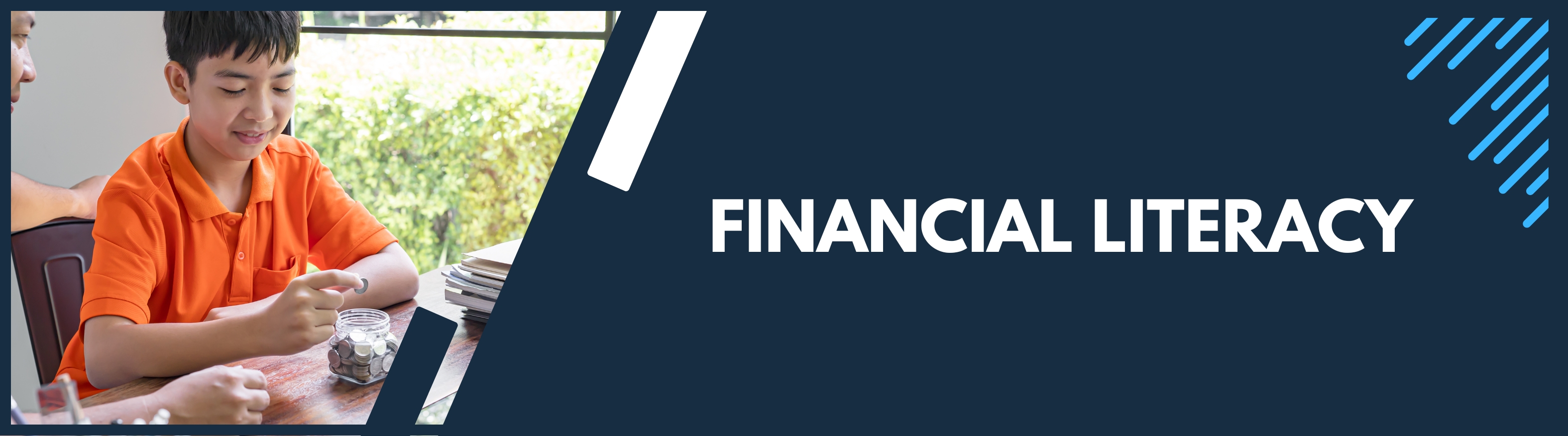
Financial Literacy and Personal Finance education are core components of education in Maine. These concepts are embedded in the Maine Learning Results and are included in the requirements for graduation from Maine high schools. A study from the Journal of Family and Economic Issues found that increasing individuals' "perceived financial knowledge" is positively associated with "positive financial behaviors." This means that financial confidence itself may be a significant driver of financial well-being, as well as being integral to education across our state.

Use the resources provided below to help build your knowledge and skills in Financial Literacy and Personal Finance.
- Financial Literacy Resources from the Finance Authority of Maine (FAME).
- The Federal Reserve offers professional development and educator resources online and in-person, as well as classroom connections.
- National Center for Economic Education (NCEE) Professional Development offers workshops on economics, personal finance, teaching strategies, and classroom implementation. Many are free and offer PD credit.
- MyMoney.gov for Teachers is the federal repository of educator guides, background information, webinars, and financial capability resources that help teachers build content knowledge.

Use these resources to find curricula, units, and lessons for Financial Literacy and Personal Finance for all grade levels and learners.
- Intuit for Education — free resources for teaching financial literacy.
- EconED — free resources for teaching personal finance and economics.
- Next Gen Personal Finance — student-ready curriculum and materials to teach everything related to personal finance.
- FDIC — free resources for teaching about banking and finance based on the Money Smart curriculum.
- JA Financial Literacy - JA Financial Literacy® is a one-semester, teacher-led course that equips high school students with foundational personal finance skills. Volunteers engage with students through a variety of activities that may include subject-matter guest speaking, coaching, or advising for case study and project coursework.
- The Maryland Department of Education curates an extensive list of free programs, interactive games and simulations, and other teaching tools on financial literacy.
- The Massachusetts Department of Education has developed a crosswalk of financial literacy programs by grade level.
Governing Process
The statutory requirement for Financial Literacy education and related Maine Learning Results standards.
- Maine Learning Results Social Studies Standards, including Personal Finance and Economics
- S.P. 454 — L.D. 1069, Resolve, Directing the Department of Education to Review Personal Finance Course Offerings in Maine Schools and Convene a Working Group of Relevant Interested Parties
Members and meeting summaries of the Financial Literacy Working Group.
Financial Literacy Working Group Members
Meeting Summaries
- Meeting 5 — August 11, 2026
— Slide Deck - Meeting 4 — July 28, 2026
— Slide Deck - Meeting 3 — July 14, 2026
— Slide Deck - Meeting 2 — June 30, 2026
— Slide Deck - Meeting 1 — June 16, 2026
— Slide Deck
S.P. 454 — L.D. 1069 states, "the Department of Education shall administer a survey to all school administrative units in the State to collect data and information on the status of personal finance education in schools."
Contact
Geoffrey Wingard
Phone: 207-458-1998
Email: Geoffrey.Wingard@maine.gov