December 12, 2025 at 2:24 pm
With a robust statewide population, Maine is a stronghold for common loons. Striking icons of our lakes and ponds, their haunting calls are synonymous with the glassy waters of serene summer evenings and foggy fall mornings. But as winter creeps onto the landscape and ice closes in from the shore, the life of Maine loons takes on an air of mystery.
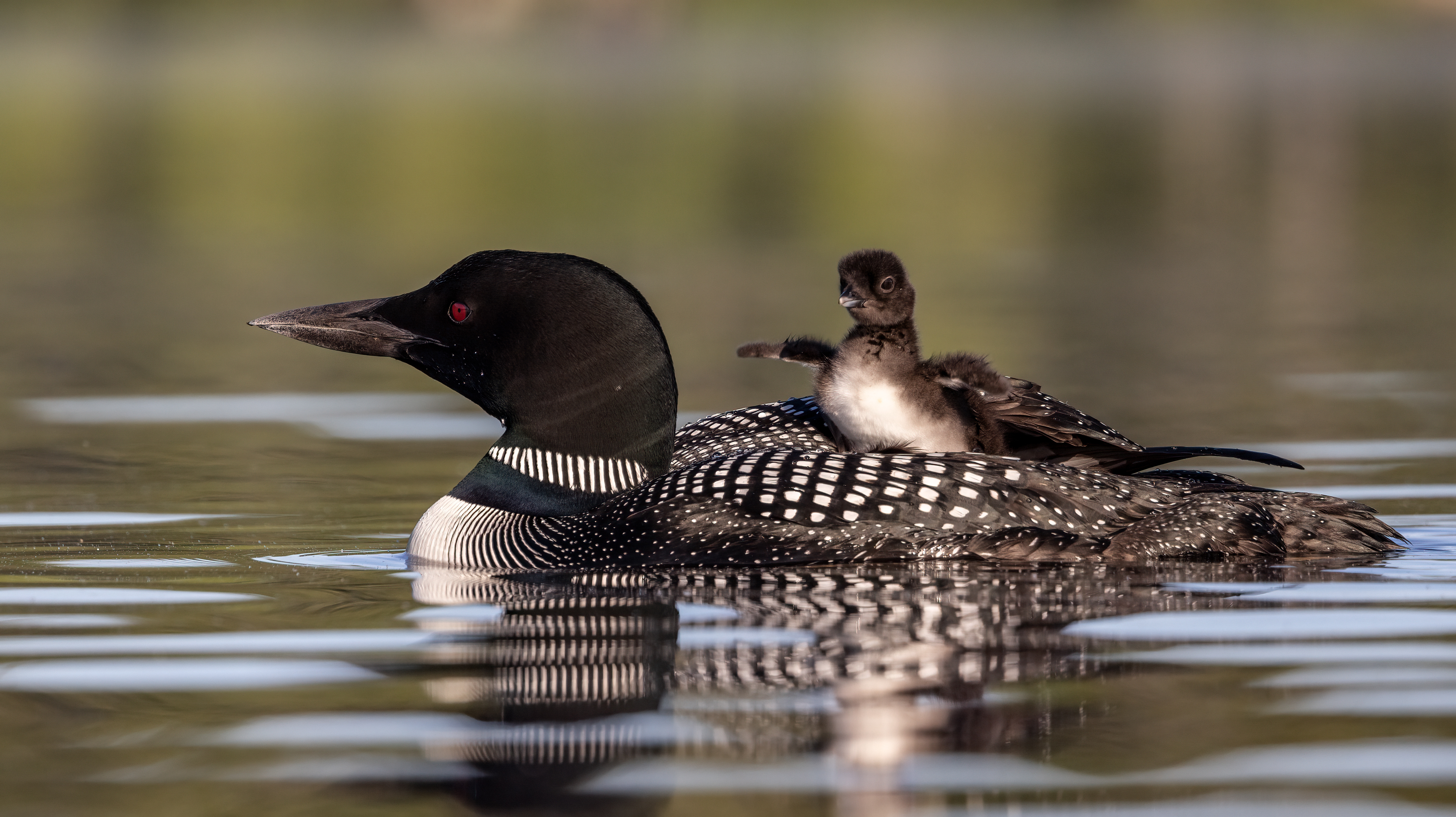
Just as paddlers stow their oars, and anglers swap their rods for tip ups, loons quietly adjust to the changing seasons. With the breeding season behind them, loons undergo a partial molt in late September or early October. Keeping only their flight feathers, they trade the rest of their recognizable black and white breeding plumage for humble gray attire. Fading, feather by feather, into the muted winter landscape is the loon’s first step out of Maine’s summer birdwatching spotlight, and into winter mode.
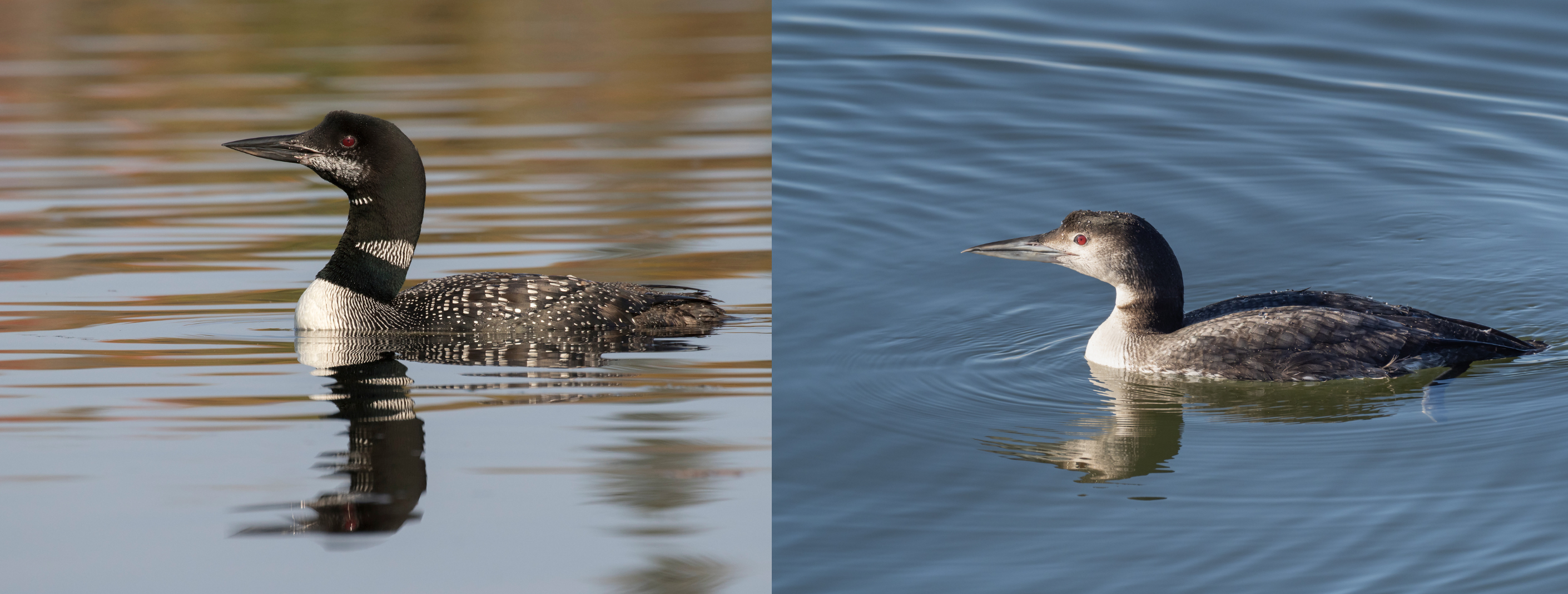
The molting of flight feathers occurs later in the season after loons complete their second step toward winter mode- moving from inland waters to the sea. Perhaps triggered by dropping temperatures and shorter days of late November, or motivated by the opportunity for quality winter territory, adults disappear from inland waters first. Independent by about 12 weeks old, chicks stay back a bit longer to practice survival skills, build energy reserves, and ensure their fledgling feathers are migration ready before daring to leave their natal home.

Maine loons rarely travel further than the Gulf of Maine and seldom venture more than a few miles offshore. While not a long journey by comparison to the epic migrations of warblers, thrushes, and swallows, their seasonal adaptation to a saltwater environment is equally impressive. Common loons are equipped with specialized glands above their eyes that filter excess salt from their blood after ingesting marine fish, crabs, shrimp, snails, and other ocean delicacies. Their power and prowess as deep divers and their efficiency as underwater predators of inland waters translate seamlessly into ocean life.
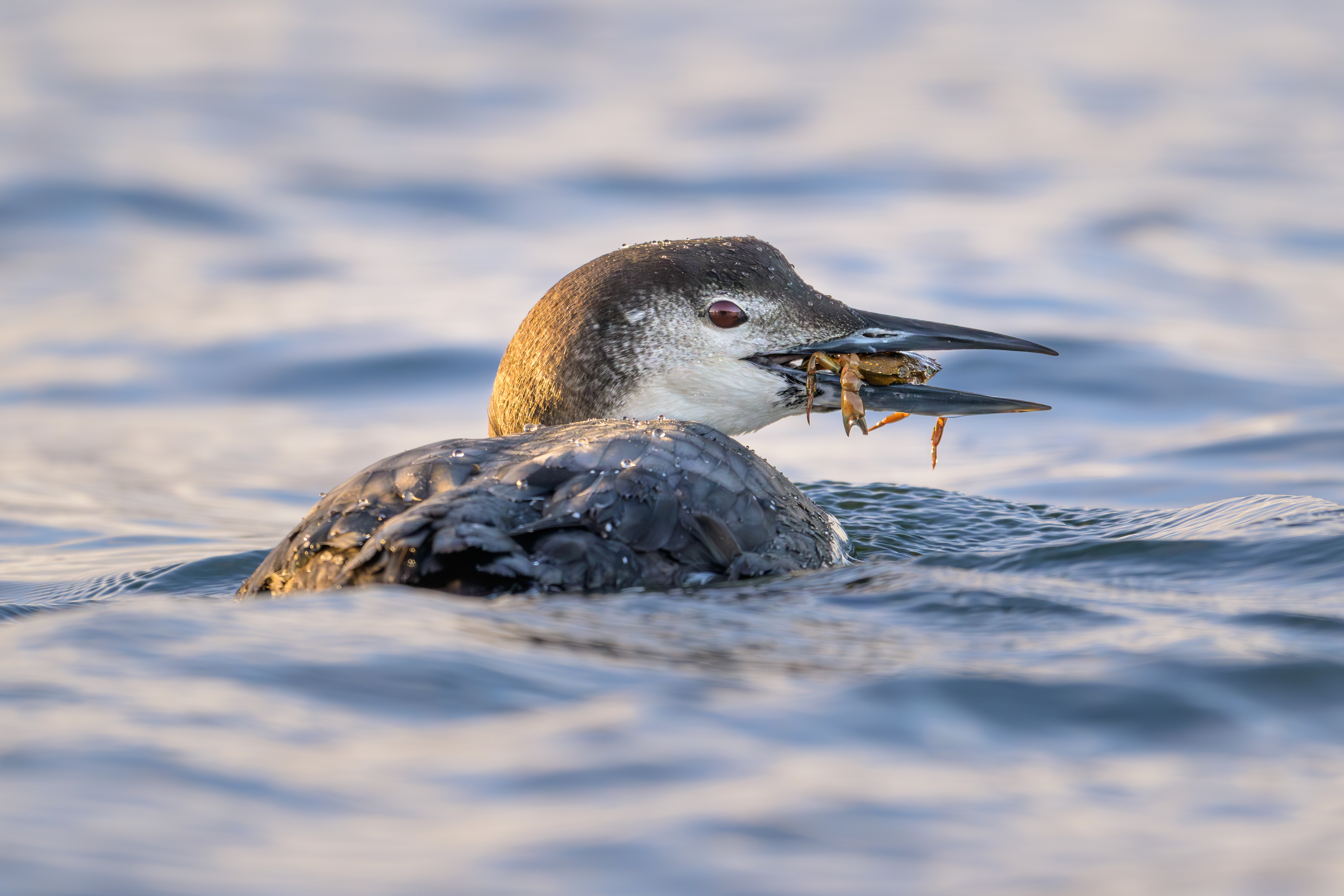
Avid birders extend loon watching season by bundling up to explore Maine’s rocky coastline in winter. But for most, loons are out of sight, out of mind until spring, that is, unless winter comes early or loons leave late. The timing is tight, and every year loons are put to the test, tempting mother nature with each day they wait to migrate. Not all make it out before the ice closes in, leaving Mainers to witness the vulnerability of a treasured species and the unforgiving reality of nature.
Compared to dabbling ducks and other late migrants who can take off nearly vertically, loons have large bodies, dense bones, and short wings. They are adapted perfectly to aquatic life but need a runway the length of one to three football fields to take off, putting them at risk of sudden hardwater imprisonment. Like a skipping stone, they tap dance across the water’s surface as they slowly gain speed and lift with every furious flap of their wings.

When winter seeps into the landscape gradually, the progression of ice formation motivates loons to pack their bags. But an early season deep freeze can take loons by surprise, rapidly shutting down their runways for migration, and generating reports of iced-in loons. If a cold snap retreats quickly, milder temperatures may allow a brief window for escape, but in years when an early freeze only deepens, an iced-in loon may not get a second chance. In these circumstances, both adults and juveniles, whether in good health or not, can become captives of frozen water.
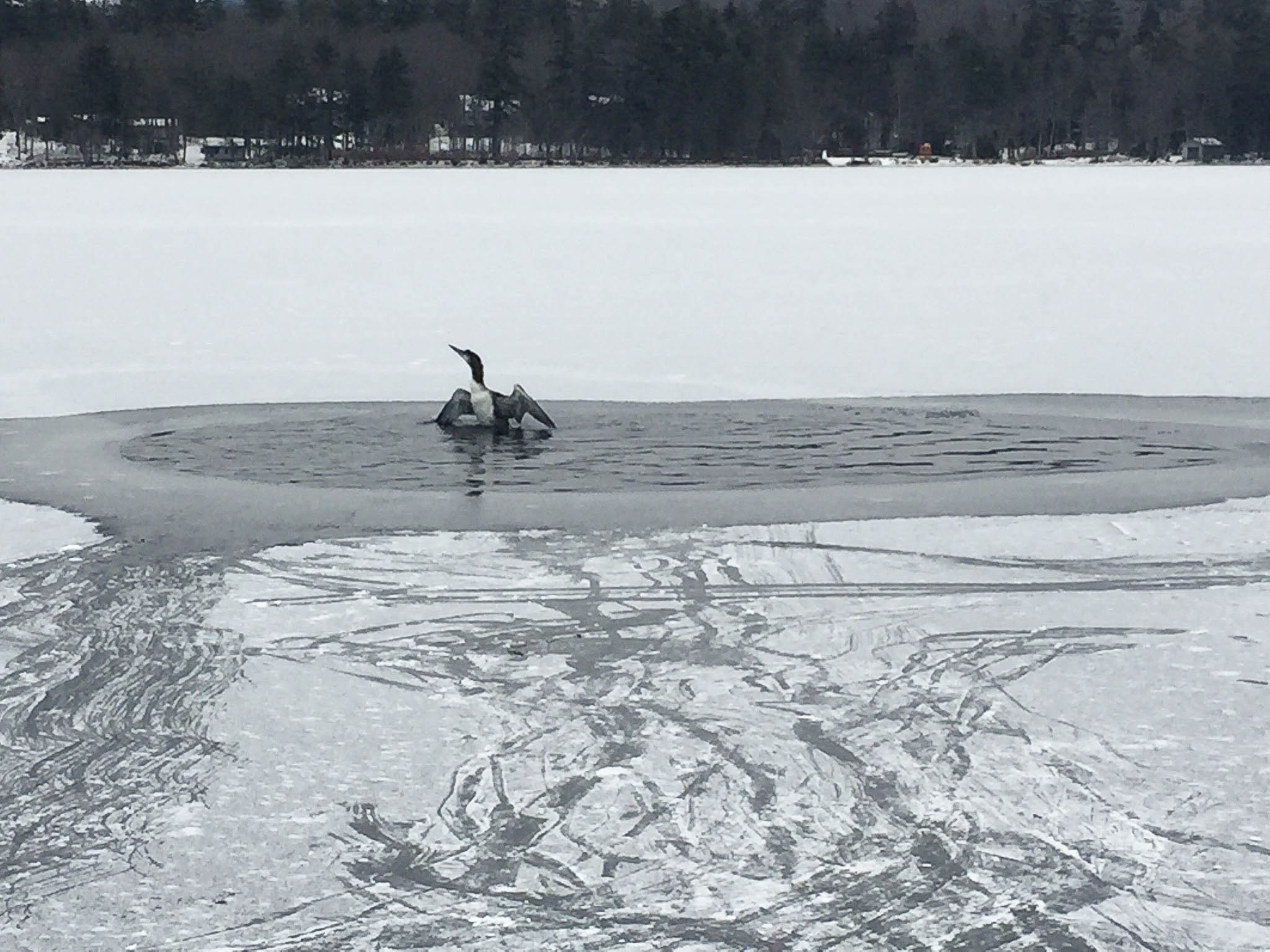
Even when winter unfolds slowly, there are still occurrences of iced-in loons that overstay winter’s welcome. Environmental cues detected during a warm fall season could result in delayed loon migration and increased risk of becoming unexpectedly iced in. Young birds that hatched late in the season may not be fully fledged in time for the journey. Birds of any age, compromised by injury, malnutrition, lead poisoning, or other health concerns may also delay or become incapable of migration. If their trip is postponed long enough, they’ll enter their complete molt cycle rendering them flightless for a month whether they have wide open water or not.

A variety of factors contribute to when and how many loons are affected, but there will inevitably be some every year. The good news is that despite this, Maine’s loons are resilient and thriving at the population level. So much so that our state is in the unique position to support loon conservation efforts in surrounding states where loons are listed as Endangered or Threatened. In fact, Maine’s clean waters are home to the largest population in the Northeast and numbers have been gradually increasing since the 1980s to more than 4,000. At these numbers, winter mortality is a natural occurrence with no measurable population impact.

Just as iced-in events do not negatively impact Maine’s loon population as a whole, rescue of iced-in loons does not positively impact the population in a meaningful way. This is an important point to remember when weighing the high risk of rescue against the conservation benefit. Rescues of iced-in loons have numerous logistical considerations and are decidedly dangerous, even for trained responders.
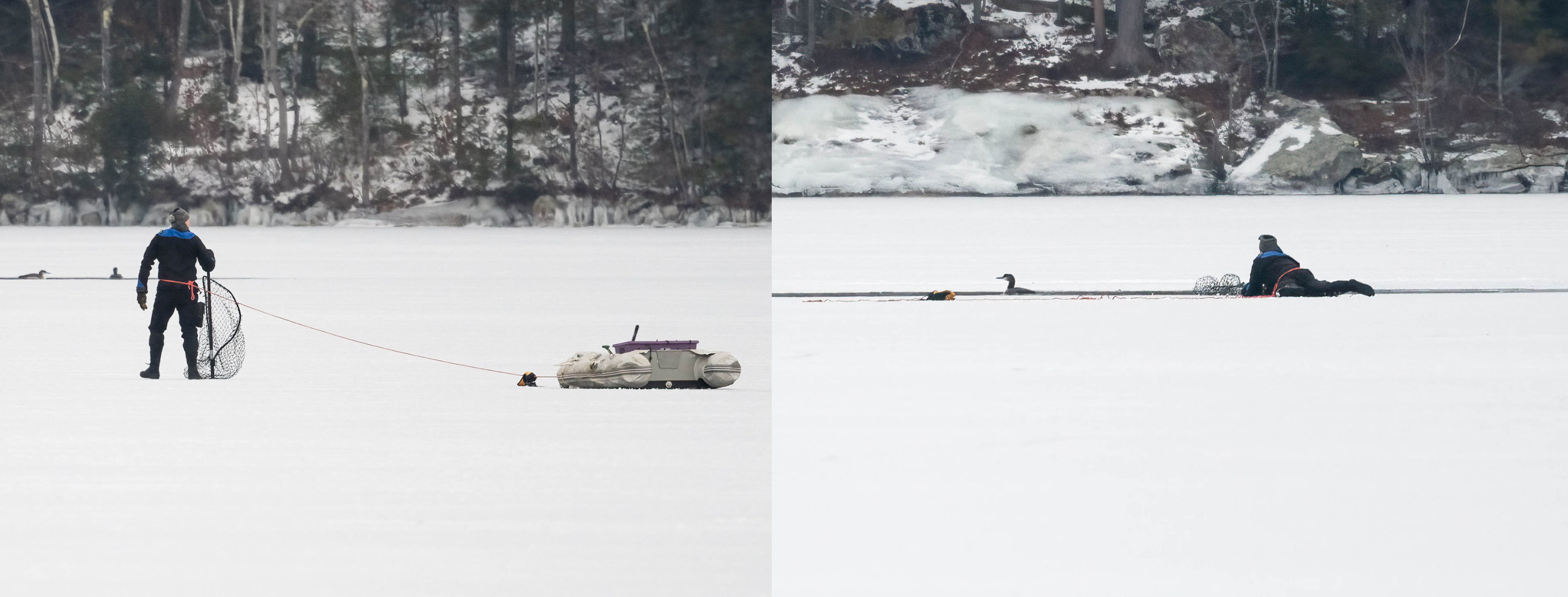
Conditions must be just right if rescue is to be considered, with safety as the number one priority. Parameters evaluated include shoreline access, distance from shore, thickness and condition of the ice, size of the ice opening, number of neighboring openings in the vicinity, wellness of the loon, weather, and availability of resources. All of these contributing factors affect the probability of capture which may or may not lead to successful rehabilitation and release.
For example, an opening more than 20 feet across allows too much space for loons to escape the reach of nets. Multiple openings allow loons to dive and evade would-be rescuers. Healthier loons are more mobile and difficult to catch than loons who are already struggling and less likely to survive the ordeal. To put it simply, ideal conditions for safe and successful rescues are exceedingly rare. But when the stars align, it’s in everyone’s best interest for rescue to be attempted only by trained teams with specialized safety equipment. Never attempt to rescue an iced-in loon yourself.
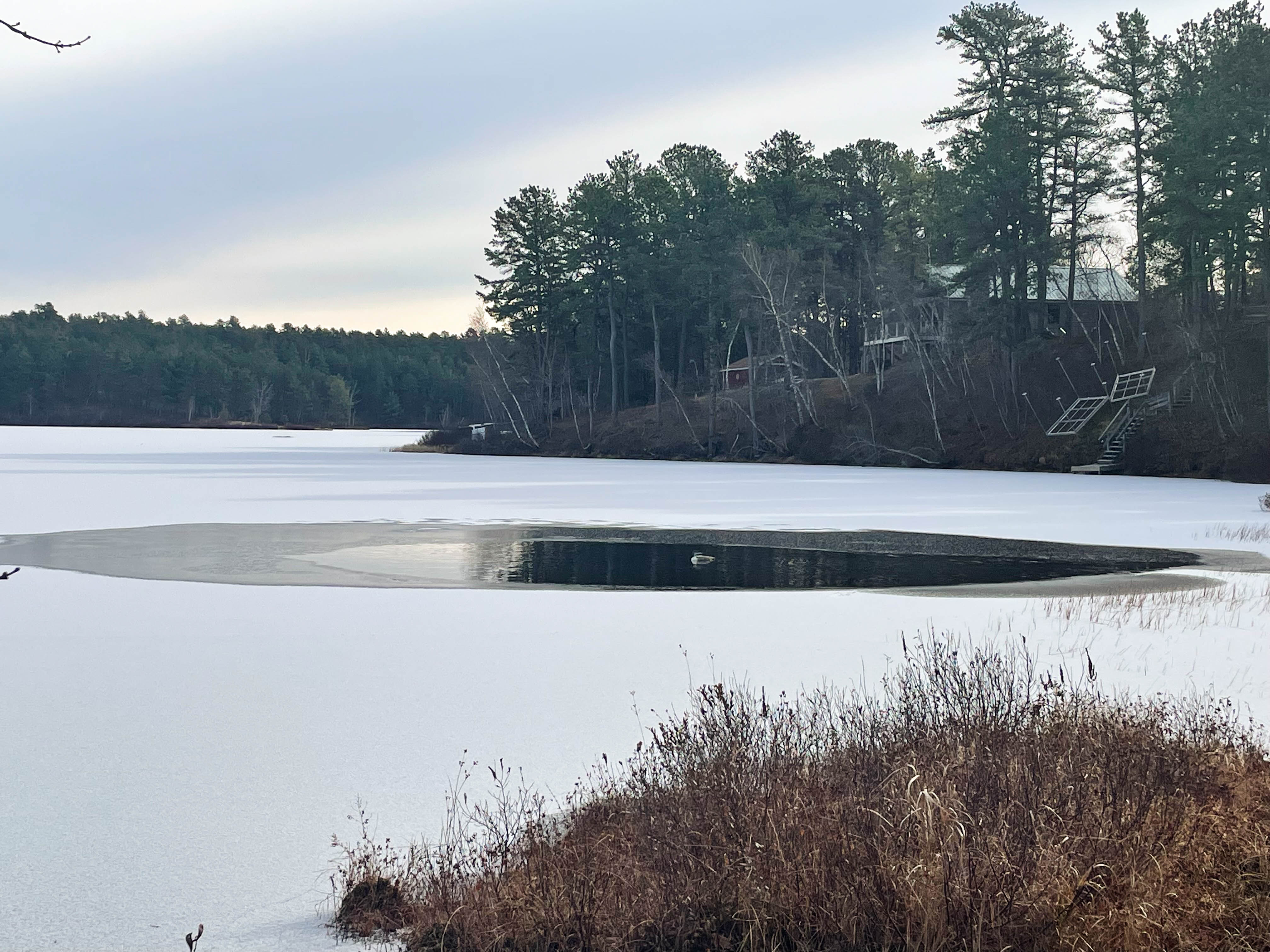
For decades, MDIFW and organizations like Biodiversity Research Institute, Maine Audubon, and licensed wildlife rehabilitators have been monitoring Maine’s loon population, informing caring communities about the challenges loons face in winter, and allocating limited resources to big picture conservation efforts. While a handful of rescues have been coordinated over the years, there is no professional organization in Maine dedicated to the rescue of iced-in loons. There are however, a number of avenues through which anyone can support loon conservation on a larger scale and make a difference for Maine’s avian icon:
- Help fund conservation monitoring and research
- Protect nesting habitat by obeying Maine’s headway speed law
- Clean, Drain, Dry to keep Maine’s waters clean and prevent aquatic invasive species
- Participate in community science
- Fish lead-free
- Give loons space