Home → Fishing & Boating → Fishing → Use of Lead Fishing Tackle on Inland Waters
Use of Lead Fishing Tackle on Inland Waters
On this page:
- Fish Lead-Free to Protect Maine's Loons and Other Wildlife
- Understanding the Law
- Lead-Free Options
- Other Ways to Help Maine's Loons
Fish Lead-Free to Protect Maine's Loons and Other Wildlife
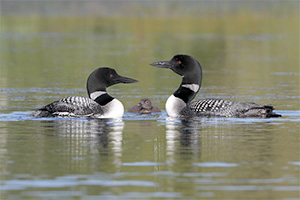
Fishing lead-free is better for our wildlife and the health of our lakes. Ingested lead fishing tackle is the third leading cause of death for adult common loons of which there are over 4,000 adults across the state, the largest population in the Northeast. Keeping lead sinkers and jigs out of Maine waters will increase the survival of these birds and will allow for continued population growth of this species across the northeast.
MDIFW is proudly partnered with Maine Audubon to help anglers switch to lead-free tackle.
Understanding the Law Regarding the Sale and Use of Lead Sinkers and Lead Jigs
It is unlawful to use, sell, or offer for sale lead sinkers and unpainted lead jigs measuring 2.5 inches or less in length or weighing one ounce or less.
It is unlawful to sell or offer for sale painted lead jigs measuring 2.5 inches or less in length or weighing 1 ounce or less. Effective September 1, 2026, the use of painted lead jigs measuring 2.5 inches or less in length or weighing 1 ounce or less will be prohibited (Title 12, §12663-B & Title 12, §12664).
Sale restrictions are statewide; use restrictions only apply in inland waters.
View Lead Jig and Sinker Law Diagram (PDF)
A "lead sinker" means a device that contains lead that is designed to be attached to a fishing line and intended to sink the line and does not include artificial lures, ice fishing sounders, weighted line, weighted flies or jig heads (Title 12, §12663-B & Title 12, §12664).
A "lead jig" means a hook with a lead weight molded to it, regardless of whether it is painted, coated or covered by some other substance or by attached skirts. "Lead jig" does not include a fishing-related lead item, including, but not limited to, a lead core line, spinnerbaits, buzzbaits, spoons, poppers, plugs or flies (Title 12, §12663-B & Title 12, §12664).
The measurement of the lead sinker or lead jig shall include all components that are permanently manufactured to the lead itself. This does not include any additional items that have been added to the original manufactured device.
Lead-Free Options
Non-toxic tackle comes in many metal choices, and modern metal alloys offer several advantages:
- They are environmentally safe.
- They have more sound-producing qualities to call in those fish and up your catch.
- Tungsten is a popular alterative since it is denser and harder than lead. This alternative allows anglers to effectively target greater depths while still using a more environmentally friendly tackle alternative.
- Tackle made from tin, bismuth, and steel alloys are lighter than lead, and many anglers have reported success using lighter baits and lures because they have a more natural appearance and presentation.
- Any fishing tackle containing zinc is not recommended because it is also toxic to wildlife.
Learn where to buy lead-free tackle in Maine.
Other Ways to Help Maine's Loons
- Protect nesting habitat by obeying the no-wake law within 200 feet of shore.
- When participating in wakesurfing activity, you must be in at least 15 feet of water and must be more than 300 feet off the shoreline.
- Dispose of fishing line so it does not get tangled up on a loon's feet or bill.
- Watch loons from a distance. If a loon is showing stress behaviors, leave the area. Learn about loon stress behaviors.
- If you see a loon on a nest, keep your distance and watch with binoculars.
- Help fund conservation monitoring and research
- Participate in community science
For more information, please visit fishleadfree.org