Reducing emissions through investing in public, active, and shared transportation
Electrifying vehicles is the most effective way to reduce greenhouse gas emissions within the transportation sector, however, improving public and active transportation is an important step in reducing emissions in Maine. Although MaineDOT can't ask drivers to use their vehicles less, the Department can provide drivers with the choice of alternative modes of transportation. There are a number of projects underway that have goals of increasing active and shared transportation within the State.
Family of Plans
MaineDOT's Family of Plans is a set of multimodal and modal transportation planning documents that lay out the Department's vision for Maine's transportation system. The Family of Plans is centered around MaineDOT's Long-Range Transportation Plan, with one of the five overarching goals being an “Environmentally Sustainable Transportation System,” that will be achieved by investing in practical transportation solutions that mitigate impacts on the natural world and prepare for the realities of climate change. Other plans under the Family of Plans, such as the Maine State Active Transportation Plan, the Maine State Rail Plan, and the Maine State Transit Plan, provide recommendations for how MaineDOT can improve our multimodal transportation system and increase the use of the public and active transportation.
Carbon Reduction Strategy
MaineDOT’s Carbon Reduction Strategy (CRS) built on MaineDOT's larger Climate Initiatives by providing guidance for the investment of the Carbon Reduction Program (CRP) funds made available to MaineDOT under the 2021 Infrastructure Investment and Jobs Act (IIJA). In accordance with the CRS, MaineDOT has invested CRP funds in important active transportation and transit projects across Maine.
Complete Streets
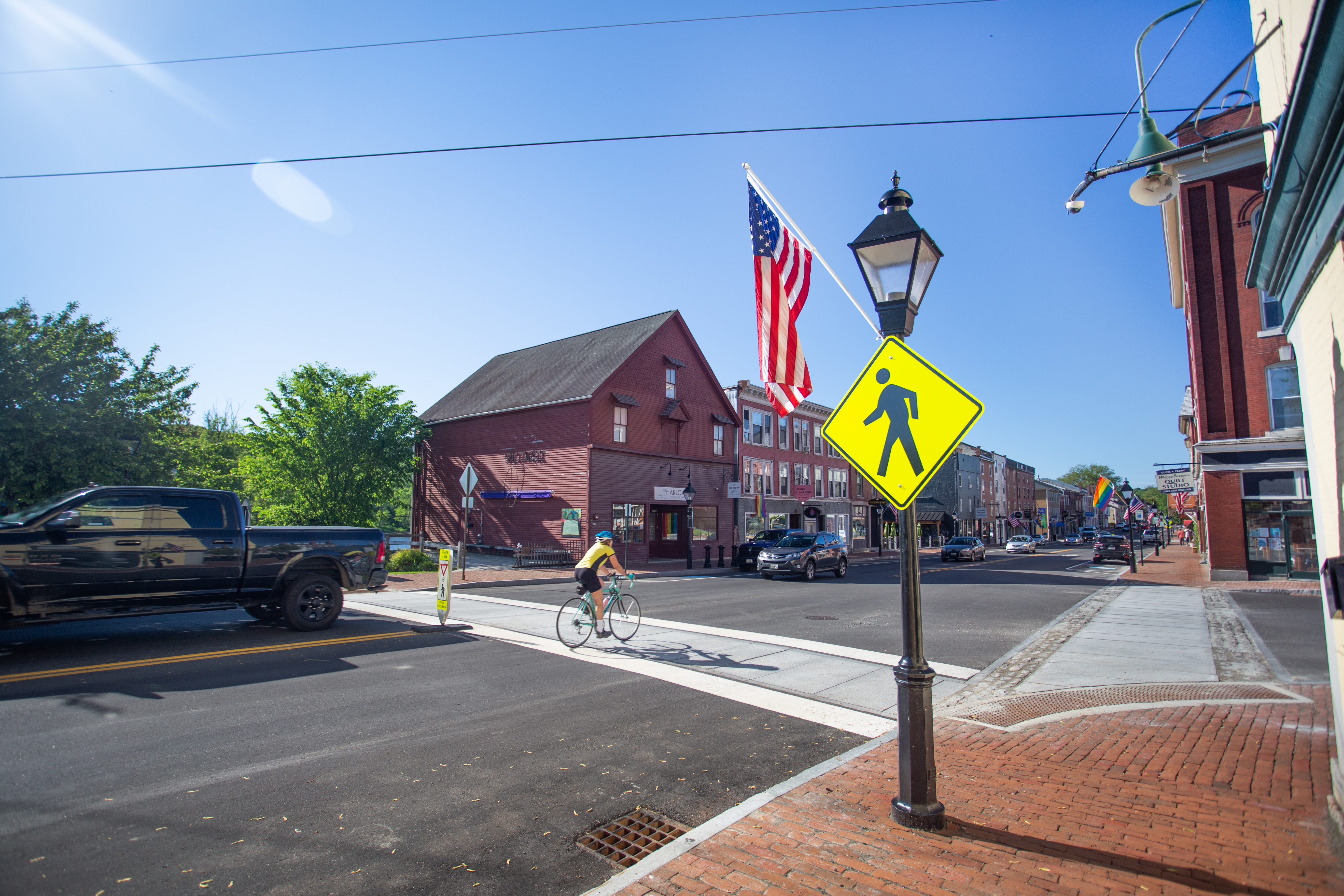
MaineDOT's first Complete Streets Policy was adopted in 2014, with an updated version released in 2024. Complete Streets project elements provide demonstrated safety and mobility benefits for all roadway users and are an important part of Maine's transportation projects. The 2024 updated policy now utilizes the MaineDOT Roadway Context Classification in providing contextually appropriate guidance for incorporating Complete Streets elements into transportation projects across Maine.
Roadway Context Classification
In 2024, MaineDOT established a Roadway Context Classification System that identifies the current context of a roadway based on many factors, including the density and nature of the built environment around the road. The Roadway Context Classification System identifies five unique contexts that are typically found in Maine: rural, village, rural town, suburban, and urban. Context classifications have been mapped across the road network in Maine. This map will serve as a guidance tool to assist in the implementation of MaineDOT's speed limit setting process, the updated Complete Streets Policy, and increased utilization of speed management strategies.
Community-Based Initiatives
MaineDOT has multiple Community-Based Initiatives, such as the Active Transportation Partnership Initiative, the Village Partnership Initiative, and the Urban Partnership Initiative, which support enhanced safety and active transportation infrastructure. Community-Based Initiatives can increase economic opportunity and quality of life in local communities through effective design for all users, updated lighting, parking, safer pedestrian walkways, and more.
GO MAINE
GO MAINE is Maine's statewide travel resource program. GO MAINE was relaunched in 2022 and is administered by consultant AECOM on behalf of MaineDOT and the Maine Turnpike Authority. GO MAINE connects members with travel options for all destinations in the state, including public transit, carpooling, vanpooling, volunteer driver networks, and biking and walking. GO MAINE focuses on engaging employers, institutions, and other organizations that generate a significant number of trips, as well as community partners and stakeholders. GO MAINE serves the entire state of Maine, and services are free.
Workforce Transportation Pilot
The Workforce Transportation Pilot program was an initiative of the Maine Jobs and Recovery Plan to pursue and develop transportation solutions to connect workers and potential workers with employers across Maine. This $5 million program provided competitive grants of up to $750,000 to local and regional partnerships to pilot innovative ways to connect workers and employers through ridesharing, vanpools, and other transportation options. Awards supported twelve innovative projects across industries and employers of all sizes through the state.
The LAP (Lewiston-Auburn-Portland)
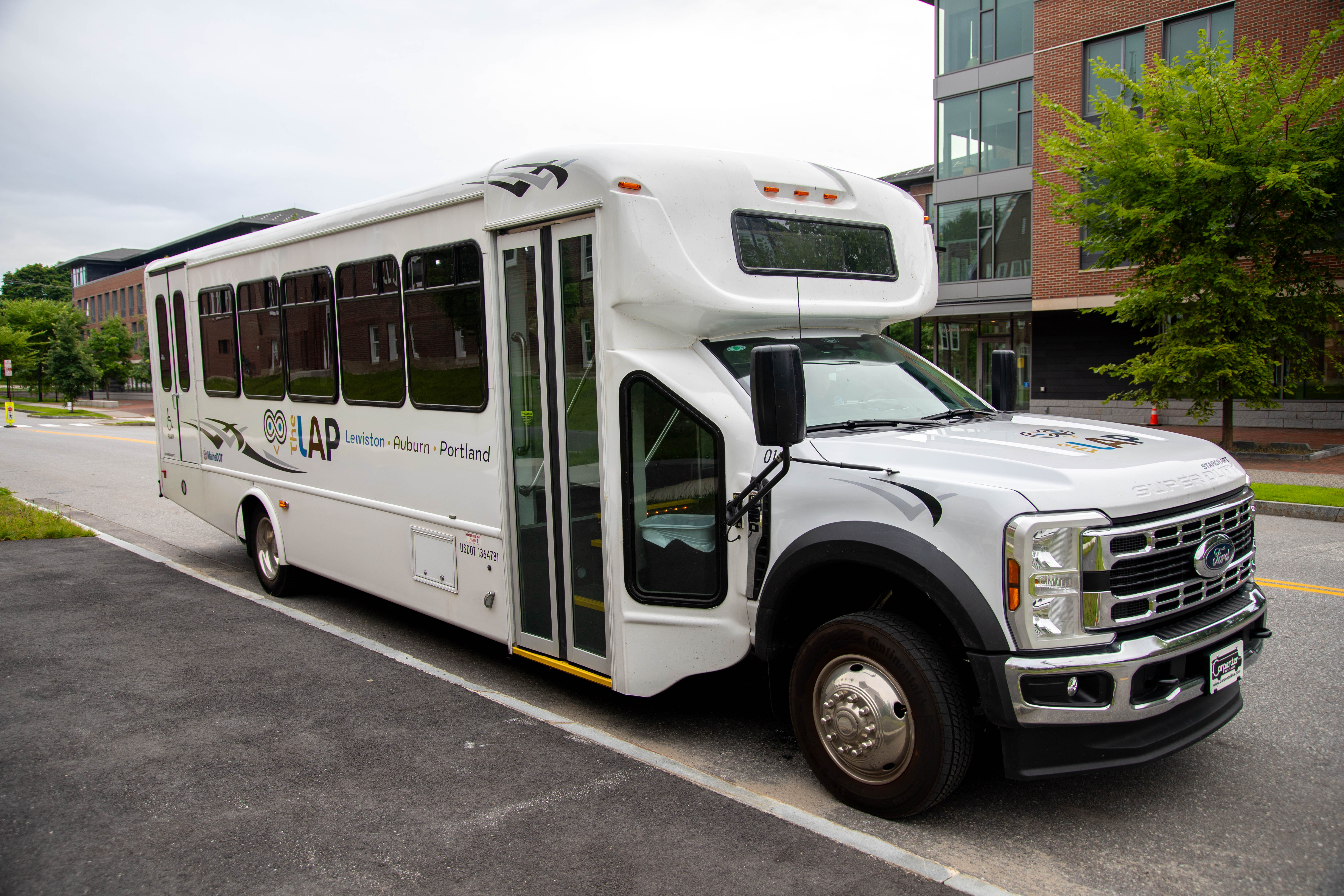
The LAP is MaineDOT's commuter bus service between Lewiston/Auburn and Portland. The LAP is a two-year pilot program that launched in July 2024 and operates with six stops and extended service hours. In addition to providing a valuable connection between two of Maine's largest urban areas, The LAP acts as an indicator of the demand and potential market for enhanced public transportation between the Portland and Lewiston/Auburn metropolitan regions.
Temporary Demonstration Projects
MaineDOT has partnered with municipalities to implement temporary demonstration projects across the state. These temporary demonstration projects allow municipalities to test potential solutions toward safety improvement and collect data. Check out this video, featuring four Municipalities in Maine discussing the temporary demonstration projects within their communities.