The Maine Department of Energy Resources (DOER) tracks and shares energy information and trends relevant to the State of Maine. This webpage provides a clear, data-driven look at how Maine produces and uses energy, including the mix of resources used to generate Maine’s electricity as well as the amount and types of energy consumed in Maine.
This page was last updated in January 2026 and will be updated again when new information becomes available. All data are sourced from the U.S. Energy Information Administration (EIA), the U.S. Census Bureau American Community Survey, and the Maine Department of Energy Resources. For a more in-depth look at Maine’s energy landscape, please refer to the Maine Energy Plan. For information on the latest Maine energy prices and price trends, visit the DOER heating fuel prices page or the electricity prices page.
Energy Generation in Maine
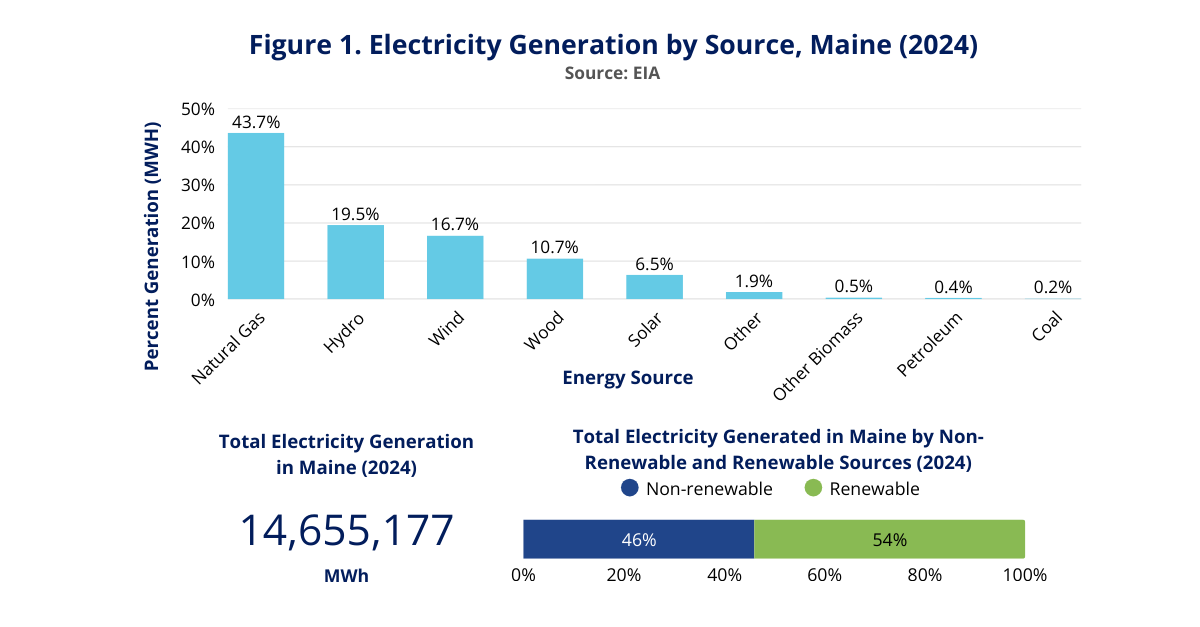
In 2024, nearly 15 million megawatt hours (MWh) of electricity were generated within the state of Maine. Of that total, approximately 54 percent was derived from renewable sources while approximately 46 percent was derived from non-renewable sources. Natural gas was the largest source of electricity generated in Maine, representing approximately 44 percent of total electricity generation (Figure 1). This is followed by hydropower, wind, wood and wood-derived fuels, solar, and other sources.
Note: EIA data does not include any behind-the-meter generation, nor does it include front-of-the-meter generation less than 1 MW. For information about behind-the-meter solar in Maine, visit the Maine Solar Dashboard.
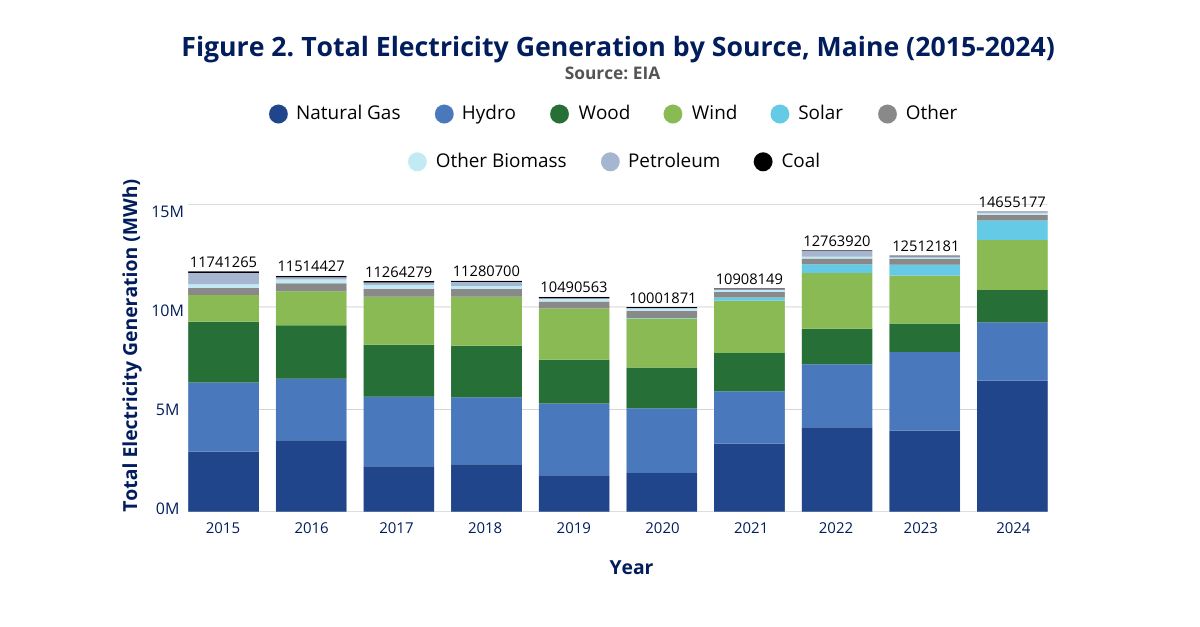
Maine’s total in-state electricity generation has increased from approximately 12 million MWh in 2015 to nearly 15 million MWh in 2024, as shown in Figure 2. The use of natural gas to produce electricity in Maine more than doubled from roughly 3 million MWh in 2015 to over 6 million MWh in 2024.
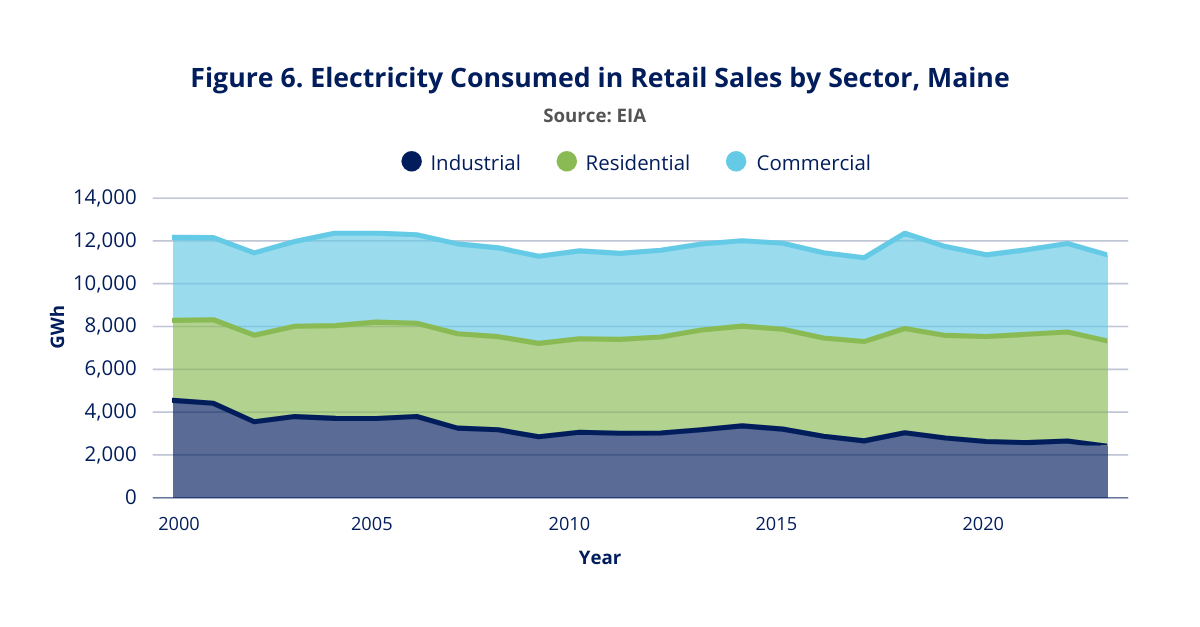
Note: Not all of the energy produced in Maine is consumed in Maine. Maine is part of the regional electric grid, managed by ISO New England (ISO-NE), as well as another grid managed by the Northern Maine Independent System Administrator that is connected to New Brunswick, Canada. The electricity generated in Maine flows into the regional grids and contributes to supplies consumed across New England and exchanged with adjacent regions. Figure 6. shows the annual amount of electricity consumed in Maine broken down by sector.
Maine is required by law to increase the portion of electricity consumed in the state that comes from renewable and clean sources, which may be produced in Maine as well as nearby jurisdictions. For more information about Maine’s renewable and clean energy standards, visit this page.
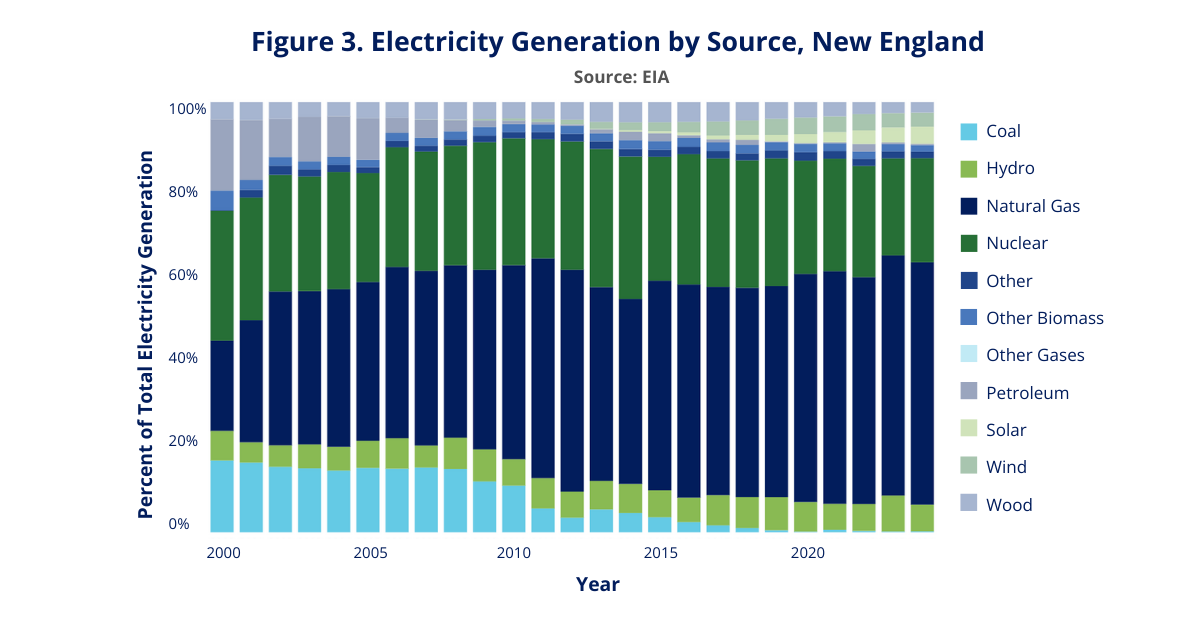
Over the last two decades, the New England region has seen a decline in electricity produced by oil and coal coupled with a substantial increase in natural gas-powered generation as depicted in Figure 3. More than half of the electricity generated in New England is now derived from natural gas.
Energy Consumption in Maine
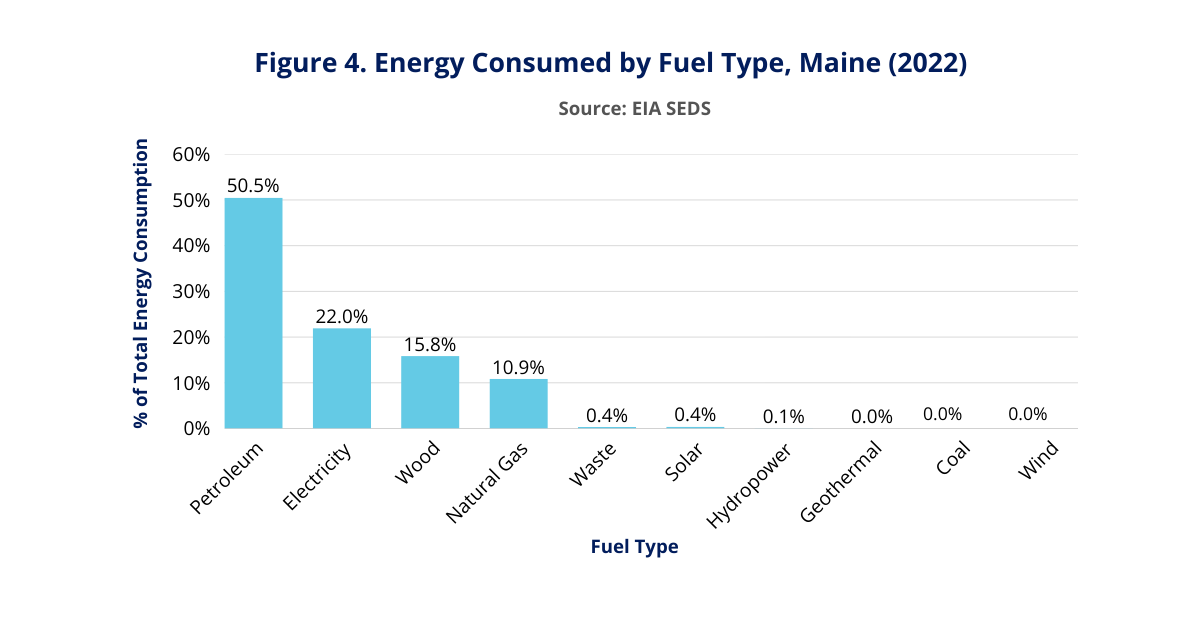
Maine’s total direct fuel consumption is primarily made up of petroleum, wood, and natural gas, according to the latest data from 2022 (Figure 4). Maine also consumes a significant amount of electricity to power the state’s commercial, industrial, and residential sectors.
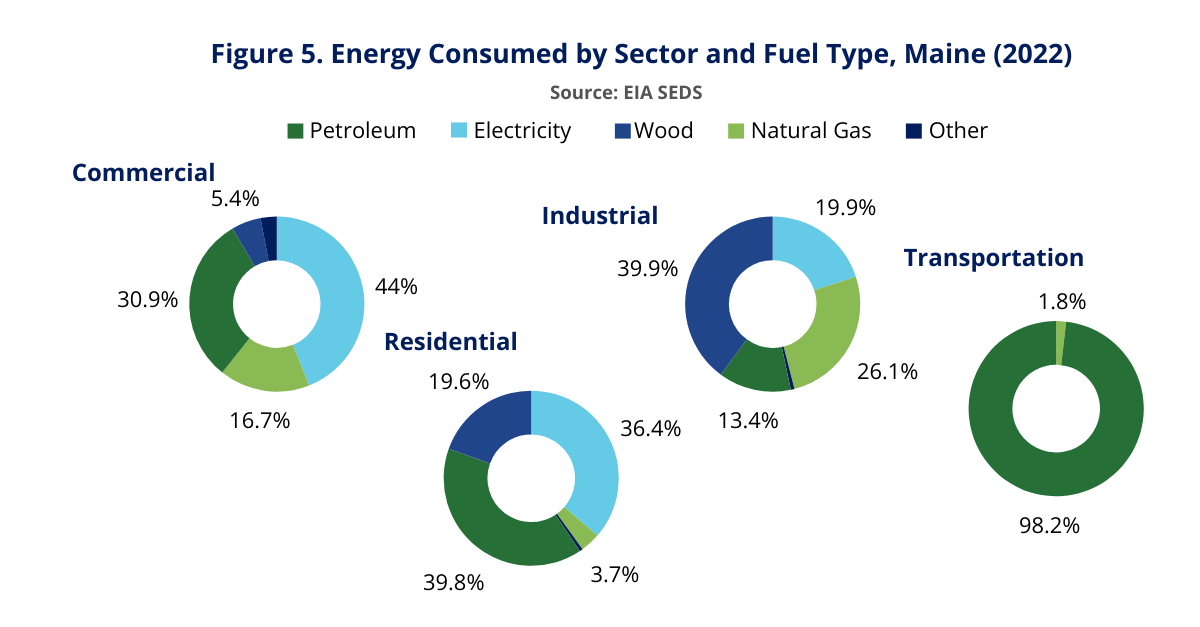
Most of the petroleum consumed in Maine is used for transportation and residential heating (Figure 5). The primary petroleum products consumed in Maine are gasoline, diesel, and heating oil. Maine residents rely on personal vehicles as a primary mode of transportation, and gasoline-powered vehicles are the most common vehicles on Maine roads.
In 2023, Maine consumed 11,336 gigawatt hours (GWh) of electricity based on retail sales (Figure 6), which represents roughly 10 percent of New England’s total electricity consumption (114,490 GWh). Maine’s residential sector consumed the most electricity overall, followed by the commercial and industrial sectors, respectively.
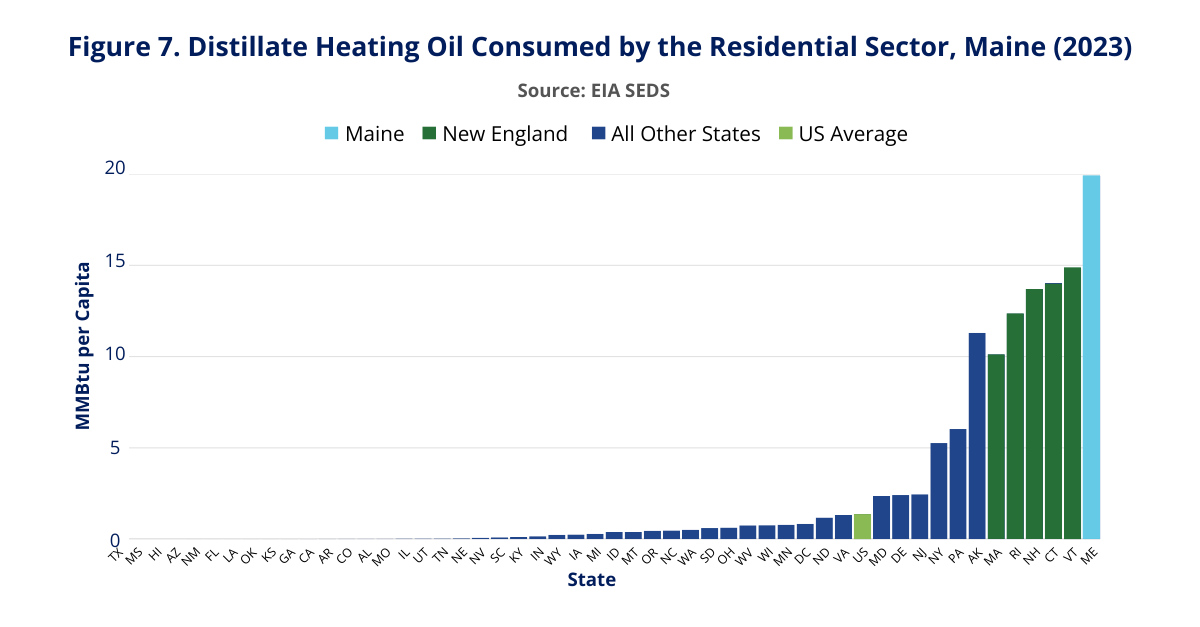
Maine consumes more residential heating oil per capita than any other U.S. state and consumes significantly more per capita than other New England states, as shown in Figure 7.
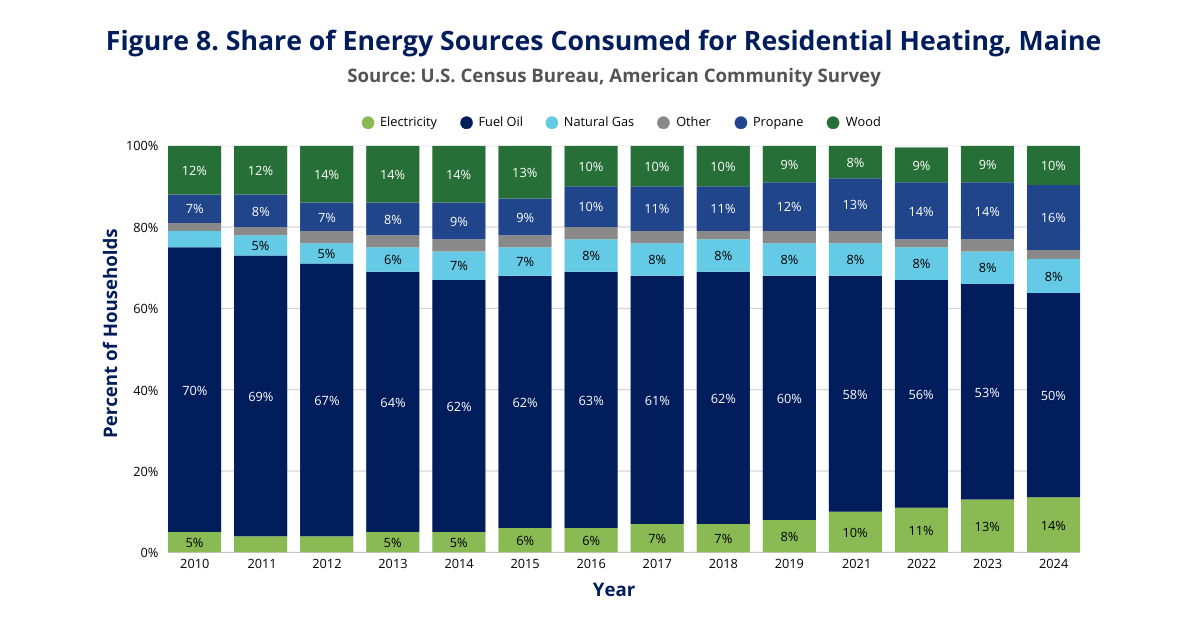
Approximately 50 percent of all Maine households rely on fuel oil as their primary heat source, although that figure has declined steadily from 70 percent in 2010 (Figure 8). Electricity use for home heating has increased significantly with heat pump adoption. Growth in propane use for home heating has also contributed to Maine’s decline in oil reliance. The use of other sources for home heating including wood and natural gas have remained relatively flat during this period. More information about residential heating trends in Maine is available here.
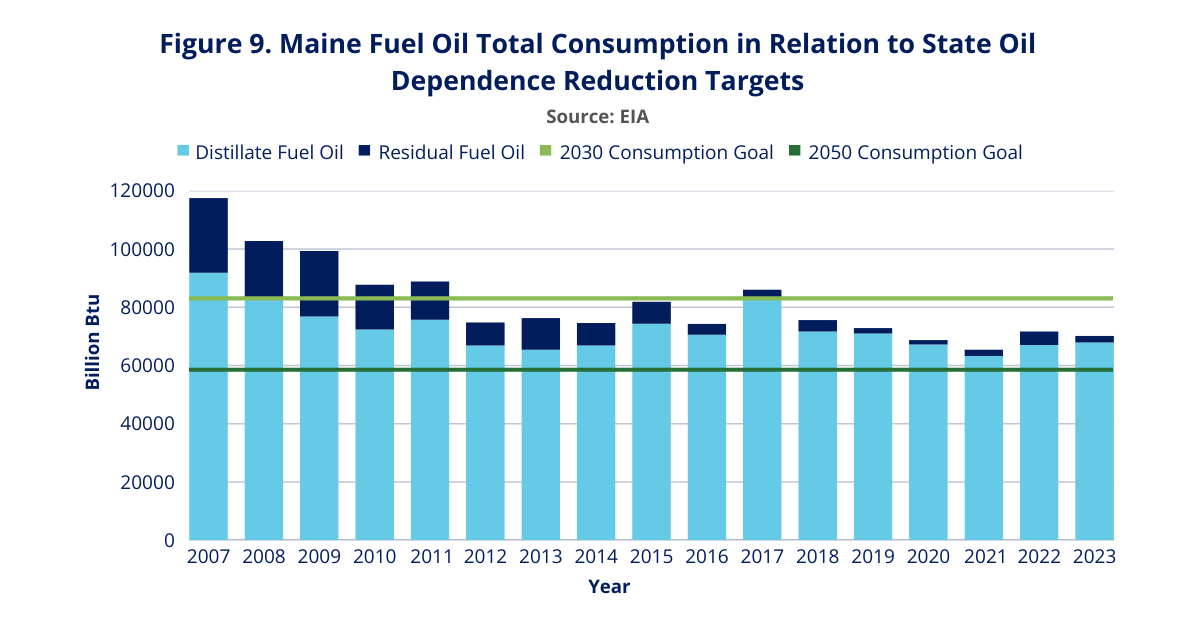
Since at least the 1970s, Maine policymakers have recognized the need to reduce the state’s reliance on oil to shield Maine from global market supply and price volatility. Since 2011, Maine has had a statutory goal in place to reduce oil consumption from 2007 levels by at least 30 percent by 2030, and at least 50 percent by 2050. As shown in Figure 9, Maine has already surpassed its 2030 target and is on track to achieve the 2050 target.