Home → Labor Laws →Energy Generation Facility Labor Standards Fact Sheet and Technical Resource Guide
Energy Generation Facility Labor Standards Fact Sheet and Technical Resource Guide
Overview
The construction of certain energy generating facilities – such as solar, hydropower, and wind – in Maine is subject to intersecting federal and state labor standards. These standards apply whether a new facility is being built or an existing facility is being modified. This resource guide outlines these labor standards so that construction companies and their agents understand and adhere to them.
Note that this resource guide is intended as general information only and does not carry the force of legal opinion. The Maine Department of Labor (MDOL) is providing this information as a public service. MDOL strives to keep this information updated and accurate but makes no express or implied guarantees about this resource guide’s information. There will often be a delay between changes in statute or rulemaking and the modification of this resource guide, but MDOL will make every effort to keep this information current and to correct errors brought to our attention.
Maine State Labor Standards
Maine law establishes three sets of labor standards that apply to certain clean energy generation projects:
- Apprenticeship in Energy Facility Construction (26 MRS Section 3502)
- An Act Concerning Equity in Renewable Energy Projects and Workforce Development (26 MRS Chapter 15)
- An Act Regarding the Procurement of Offshore Wind Energy Resources (35-A MRS Section 3408)
Federal Labor Standards
The Bipartisan Infrastructure Law (BIL) and Inflation Reduction Act (IRA) include labor standards applicable to some energy projects funded by the BIL or those seeking enhanced tax incentives under the IRA. Compliance with labor standards established through state law is required and must be met independently of satisfying the labor standards required of those pursuing enhanced tax incentives available under the IRA. Note: some credits and deductions were altered, eliminated, or are subject to accelerated phase-out through the passage of H.R. 1 in the 119th Congress.
If you have questions about state labor standards, contact the Bureau of Labor Standards for more information.
Maine State Labor Standards
Apprenticeship in Energy Facility Construction (26 MRS Section 3502)
Applicable Projects
Maine’s Apprenticeship in Energy Facility Construction law went into effect in January 2021. It applies to renewable energy generation systems that both:
- Have an installed nameplate capacity of 2 megawatts or more; and
- Are not on the customer side of an electric meter.
This law applies to projects even if they do not receive state funding or other state assistance.
Labor Standards
This law sets a standard for the number of apprentices, as a percentage of the total number of construction workers, that must be hired to work on a covered project. To the extent that qualified apprentices are available, the number of apprentices employed on a project must be at least:
- 10% of all people employed on the project, if construction began on or after January 1, 2021, and before January 1, 2025;
- 17.5% of all people employed on the project, if construction of the generation facility began on or after January 1, 2025, and before January 1, 2027; and
- 25% of all people employed on the project, if construction of the generation facility begins on or after January 1, 2027.
Rulemaking
The Rules Governing Apprenticeship in Construction of Energy Generation facilities are in Chapter 19 of the Code of Maine Rules. The Department of Labor Bureau of Labor Standards is responsible for adopting and enforcing these rules.
Compliance
Section IV the Chapter 19 Rules require construction employers to self-monitor and report compliance:
- A construction employer must submit a plan for finding and hiring a sufficient number of qualified apprentices to the Bureau of Labor Standards before starting each phase of the construction project. Employers may rely on the phase structure identified in their project’s scope of work or the structure outlined in the reporting template below.
- When each phase of the construction project is completed, the employer must submit an interim report to BLS of the results of its efforts to employ qualified apprentices. If the employer did not employ any or enough apprentices, they must give a clear explanation of why they didn’t.
- When the entire construction project is completed, the employer must submit a final report also including a clear explanation if they failed to hire a sufficient number of qualified apprentices during the entire project.

How do I submit my plan for finding and hiring qualified apprentices, and my reports, to BLS?
All plans and reports must be submitted to the Bureau of Labor Standards at EnergyLaborStandards.BLS@maine.gov. Employers may use this template for this purpose.
Penalties
There are financial civil penalties if construction employers are out of compliance with the Apprenticeship in Energy Facility Construction law and Chapter 19 rules:
- A construction employer who violates the Apprenticeship in Energy Facility Construction law commits a civil violation subject to a fine of at least $50 but not more than $200. Each calendar day a construction employer does not employ a sufficient number of apprentices required by the law/rules is a separate violation.
- A construction employer who discharges or discriminates against an employee because the employee makes a complaint about a violation of the law commits a civil violation subject to a fine of at least $50 but not more than $200.
- If a construction employer is found to have violated the Apprenticeship in Energy Facility Construction law statute, the Attorney General can request an injunction in Superior Court to prevent any further violations.
Hiring apprentices for your project to satisfy federal or state requirements? This fact sheet can help.
An Act Concerning Equity in Renewable Energy Projects and Workforce Development (26 MRS Chapter 15)
Applicable Projects
Maine’s Act Concerning Equity in Renewable Energy Projects and Workforce Development went into effect in August 2022. It makes clear that certain energy facility projects are subject to Maine’s existing prevailing wage law (26 MRS Chapter 15). Assisted projects started on or after January 1, 2023, including all phases of site preparation, construction, retrofitting, and demolition work, must pay prevailing wage.
Assisted projects are defined as any energy generation project with a nameplate capacity of 2 megawatts or more where the State or an agency of the State:
- provides certifications that entitle the generator to renewable energy credits; or
- provides other economic assistance, including, but not limited to, payments pursuant to power purchase agreements, rebates, grants, loans, commitments of funds, or other financial assistance.
Labor Standards
This law requires that a contractor or subcontractor working on an assisted project must pay all construction workers working on the assisted project prevailing wage, unless the project is built in whole or in part using federal funds and subject to federal prevailing wage. Employers may pay the established apprentice rate to apprentices on the project if they are in a registered apprenticeship program.
Prevailing wage rates are set by the Bureau of Labor Standards. Rates are set by project category, trade, and locality.
Rulemaking
The Rules related to establishing the prevailing wage for public construction projects, including assisted projects, are in Chapter 13 of the Code of Maine Rules. The Department of Labor Bureau of Labor Standards is responsible for adopting and enforcing these rules.
Compliance
Maine’s Act Concerning Equity in Renewable Energy Projects and Workforce Development requires all contractors and subcontractors to keep detailed payroll records on the job site. These records must include the names, occupations, and job titles of all people working on the project; hours worked; and hourly pay rate or other compensation paid to each individual worker.
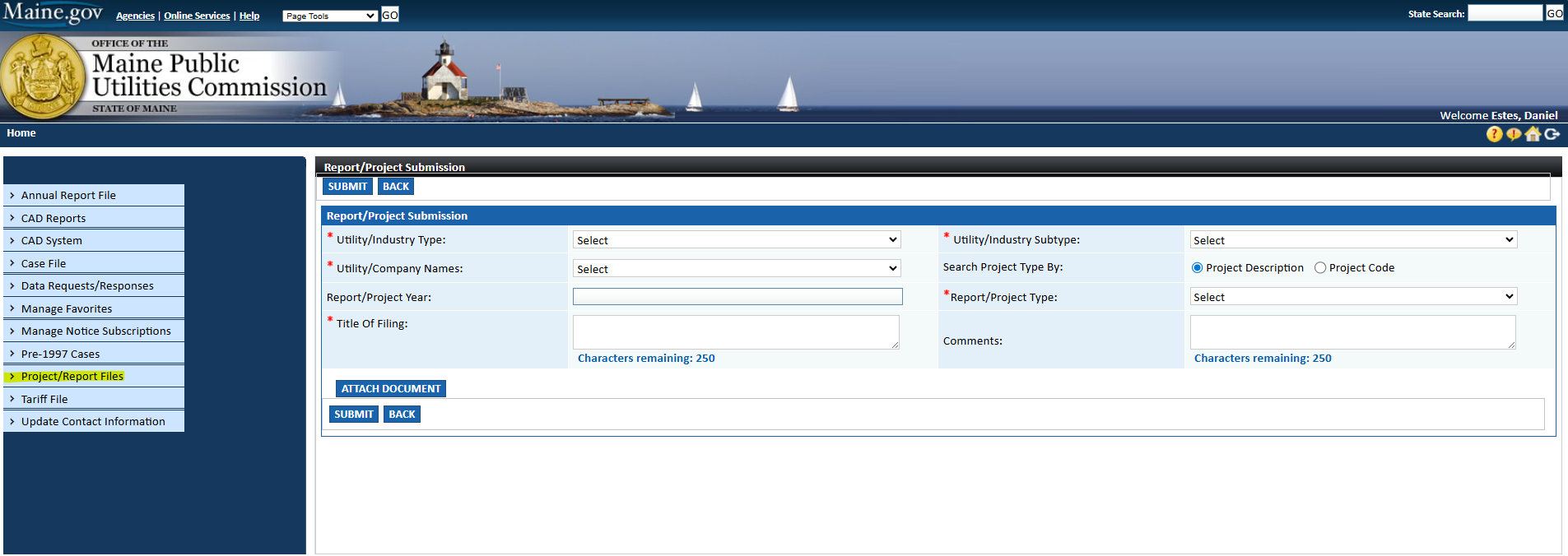
A copy of each such record must also be filed monthly with the public authority letting the contract or State agency providing economic assistance. Filed payroll records for assisted projects will appear under the Public Utilities Commission’s case management system. Using the “Other Searches” and “View Project/Reports” options, records will appear under the Report/Project Type: “Wage Records of Contractors Pursuant to 26 MRS Section 1311.”
How do I submit Assisted Projects payroll records to PUC?
See detailed guidance in the Instructions for Submitting Assisted Project Payroll Records section below.
Penalties
Any contractor or subcontractor who willfully and knowingly violates Maine’s Act Concerning Equity in Renewable Energy Projects and Workforce Development is subject to a fine of at least $250. Each day a worker is not paid prevailing wage is a separate violation.
Per 26 MRS Chapter 51, entities responsible for the development of an assisted project with a nameplate capacity of one megawatt or more and the entity's chosen prime contracting entity must attest on a yearly basis that they have reviewed and understand these labor standards before work may begin on any phase of site preparation, construction, retrofitting, or demolition work.
An Act Regarding the Procurement of Offshore Wind Energy Resources (35-A MRS Section 3408)
Applicable Projects
The construction of offshore wind power projects procured by the Department of Energy Resources are subject to the labor standards codified in 35-A MRS Section 3408.
Labor Standards
The Act Regarding the Procurement of Offshore Wind Energy Resources requires offshore wind construction projects procured to:
- Pay all construction workers on the project compensation at or above the Maine Emerging Industry Compensation Threshold (MEICT). The MEICT is the value of a trade’s total compensation package (including wages, benefits, etc.) as defined by the local collective bargaining agreement rate for that trade in the project’s county.
- Prioritize hiring additional workers through local hires and the use of a hiring hall.
- Require all construction workers on the project to complete an OSHA-10 construction safety training program.
- Adhere to requirements around reducing the project's workforce if needed, workers' compensation coverage, the use of staffing agencies and independent contractors, recordkeeping, the posting of rates for each applicable occupation, guaranteeing against labor disruptions, and inclusive bidding standards.
If an agreement between an employer and labor organization is in place, such as a project labor agreement, that meets the requirements of 29 United States Code, Section 158(f) for the covered work, that satisfies these requirements.

Did you know that MDOL’s SafetyWorks! offers OSHA-10 classes?
Find and register for a class at SafetyWorks.
Rulemaking
The Department of Labor is responsible for adopting and enforcing rules related to these labor standards. That rulemaking is in process.
Penalties
The Act Regarding the Procurement of Offshore Wind Energy Resources gives workers the right to sue for wages and penalties if they are paid less than the MEICT. The employer can be required to pay a penalty equal to the difference between the actual wage and benefits paid and the MEICT plus reasonable attorney's fees.
Federal Labor Standards
Inflation Reduction Act
Applicable Projects
The Inflation Reduction Act’s (IRA) labor standards apply to the construction, alteration, or repair of clean energy projects where the energy project developer (taxpayer) is claiming an enhanced benefit for specific tax credits or deductions. Note: some credits and deductions were altered, eliminated, or are subject to accelerated phase-out through the passage of H.R. 1 in the 119th Congress.
Labor Standards
- To qualify for increased clean energy tax incentives under the IRA, energy project developers (taxpayers) generally need to:
- Pay laborers and mechanics employed in construction, alteration, or repair no less than applicable prevailing wage rates;
- Employ one or more qualified apprentices, if the project employs four or more people to perform that type of construction work;
- Meet ratios of apprentices to journeyworkers established by the apprenticeship sponsor and Maine Apprenticeship Program or U.S. Department of Labor;
- Ensure that qualified apprentices from registered apprenticeship programs perform a minimum percentage of the total labor hours of the construction, alteration, or repair work on the project;
- 10% for construction started before 2023;
- 12.5% for construction started in 2023; and
- 15% for construction started in 2024 or after.
Compliance
Note: the Internal Revenue Service and U.S. Department of Labor enforce compliance with the IRA’s labor standards. To learn more about compliance with the IRA’s labor standards, refer to the following guidance from the U.S. Department of Labor.
Interaction of IRA and Maine State Labor Standards
Compliance with labor standards established through state law is required and must be met independently of satisfying the labor standards required of those pursuing enhanced tax incentives under the IRA. When there are multiple labor standards identified for wage rates or apprenticeship utilization, energy project developers must meet all of them unless otherwise noted.
This tool can help you identify applicable standards under state and federal law:
Frequently Asked Questions
An Act Concerning Equity in Renewable Energy Projects and Workforce Development (26 MRS Chapter 15)
|
If the facility meets the definition of an assisted project under § 1304 (1-A) and the repairs or retrofitting are necessary to the continued generation, storage, or transmission of energy, that work will be subject to Maine’s prevailing wage. Satisfying the IRA’s apprenticeship ratios allows energy project developers to qualify for the full value of specific federal tax credits/deductions allowable under the law. A lower benefit amount is available to developers that don’t satisfy those requirements. Whether a project is subject to Davis-Bacon is a completely separate question from whether it must meet the IRA’s thresholds. Employers must pay Davis-Bacon rates to qualify for the full value of IRA credits or deductions, but employers wouldn’t be obligated to comply with Davis-Bacon as a whole unless the project is otherwise subject to it. Employers seeking tax credits or deductions under the IRA must also comply with Maine’s laws on:
§ 1306 provides that the prevailing wage rates in effect at the time the contract was signed will apply for the life of the contract. MDOL does not permit energy generating facility projects. MDOL partners with permitting agencies to monitor and enforce compliance.
|
Apprenticeship in Energy Facility Construction (26 MRS Section 3502)
|
Before starting the construction project and before starting each phase of the construction project, a construction employer must submit a written plan to BLS for locating and employing enough qualified apprentices. Construction employers must be continuously looking for and hiring qualified apprentices until they meet the necessary threshold. When each phase of the construction project is completed, the employer must submit to BLS an interim report about the results of its efforts to employ qualified apprentices. If the employer didn’t hire any or enough qualified apprentices, they must include a clear explanation why. When the entire project is complete, the employer must submit a final report to BLS. That report must also include a clear explanation if they failed to hire enough qualified apprentices during the entire project. There is no specific form that construction employers are required to use, though MDOL provides the following template that is available for use: Download the Template (Word) A construction employer can meet the requirements of this law by:
See the 1-pager here for more information: Registered apprenticeship 1-pager “Reasonable efforts” means trying to meet the requirement until uncertainty about success makes it commercially unreasonable to proceed. “Reasonable efforts” also means not taking steps to deliberately avoid meeting the requirement. “Reasonable efforts” to find and hire qualified apprentices includes, but is not limited to, contacting the Maine Apprenticeship Program (MAP) and sponsors of apprenticeship training programs such as labor organizations and employers with a presence in Maine. Under the law, these efforts must be ongoing. This means a single call or email to an apprenticeship program will not be enough. Employers must document, in writing, their plan and efforts to find and hire qualified apprentices and send it to BLS according to the schedule described above. Yes. Apprentices working on a job site in Maine can reside in other states and still be counted toward the required percent of employees. No. The apprenticeship program does not need to be approved in Maine. It is acceptable for the apprentices to log additional hours outside of the state of Maine. No. Certified pre-apprenticeship does not satisfy the apprenticeship requirement. Yes. For instance, if 100 people were employed on a construction project begun before 2025, 10 apprentice electricians, or 5 apprentice laborers and 5 apprentice electricians, or any other combination of 10 qualified apprentices, meets the 10% requirement. All apprentice-able occupations must be included in determining the number of people employed in the construction. As explained in 26 MRS 3201(2), an apprentice-able occupation is a skilled occupation that:
Construction is considered to begin with the very earliest phase of an operation to physically construct a facility. This includes preparation of the site, putting up fencing and other protective structures to secure the site, transport of materials to the site, and maintenance of the site. It depends. Youth under the age of 18 are prohibited from some hazardous occupations, as outlined in the Employers Guide to Youth Employment. Registered apprentices age 16-17 may, under certain circumstances, work in a limited way in hazardous occupations. § 3213 requires that certified pre-apprenticeships: A. Meet the requirements of § 3213 and any rules adopted by MDOL; B. Have a documented outreach plan to increase registered apprenticeship opportunities for underrepresented, disadvantaged, or low-skilled individuals and members of historically marginalized communities; C. Conform to standards identified by the United States Department of Labor for a quality framework for pre-apprenticeship; D. Comply with state and federal law regarding equal employment opportunity in apprenticeship and training; E. Have a training program and curriculum based on industry standards and approved by the Maine Apprenticeship Program, upon recommendation by the Maine Apprenticeship Council, that will prepare individuals with the skills and competencies needed to enter a registered apprenticeship program; F. Have supervised hands-on training and workplace safety training; and G. Have a formalized agreement with a registered apprenticeship sponsor that enables pre-apprenticeship graduates to enter directly into a registered apprenticeship program and includes articulation agreements for earning credit for skills and competencies already acquired. |
Instructions for Submitting Assisted Project Payroll Records
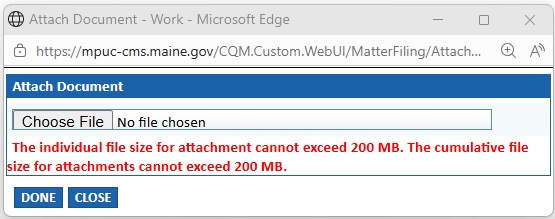
Wage Records of Contractors Pursuant to 26 M.R.S. Section 1311 must be filed using the Commission’s Case Management System (CMS). The following instructions direct you to (1) Register as a User in the CMS, and (2) file your record in the designated CMS project file.
|
If you are already a registered user in CMS, go to step 2.
View a larger version of this graphic
|