DACF Home → Bureaus & Programs → Bureau of Agriculture → Agricultural Resource Development Division → Maine Healthy Soils Program
Maine Healthy Soils Program
 Promoting Healthy Soils - The Maine Healthy Soils Program offers technical and financial assistance to Maine farmers to improve on-farm soil health and the health of our agricultural economy and environment.
Maine Healthy Soils Program was created to provide farmers with resources to adapt their farms to a changing climate. Healthy soils are, literally, the foundation of a resilient agricultural system, and the Maine Department of Agriculiture, Conservation and Forestry is proud to offer new resources to help Maine's farmers achieve their soil health goals. Our services range from one-on-one soil health coaching to administration of grant and incentive opportunities. Our approach to developing soil health management systems is holistic, accounting not only for the physical features of your farmland but also for the overall capacity of your farm operation. Building soil health into your business must work for you, the farmer, to be sustainable. That fact is a foundational pillar of our program's mission.
On this Page:
Funding and Grants
No-Cost Soil Health Testing
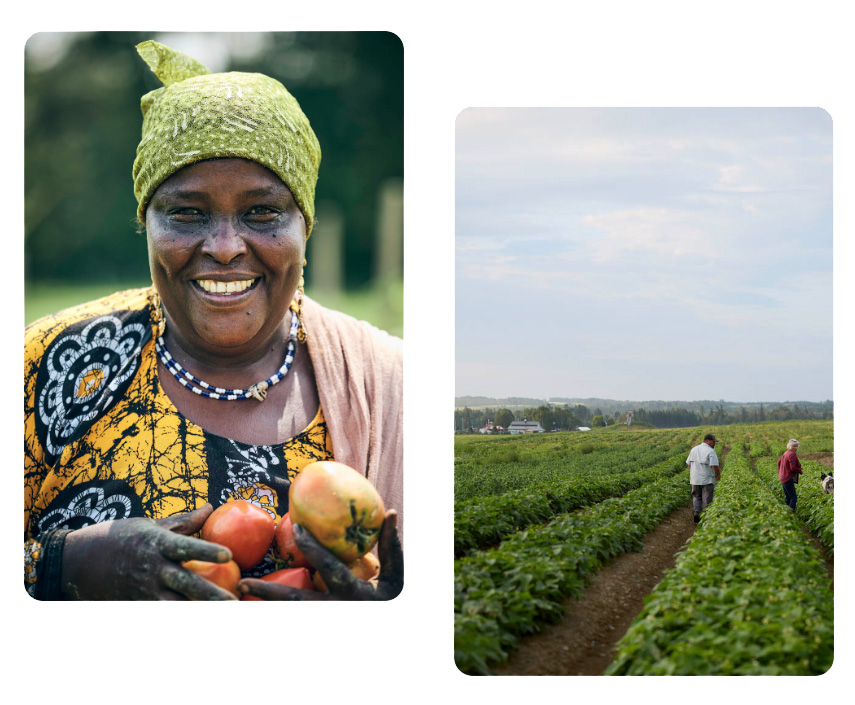
The Maine Healthy Soils Program is partnering with Augusta-based Woods End Laboratories to provide no-cost soil health testing. Soil health testing differs from traditional soil nutrient testing, as it also includes measurements of some physical and biological characteristics of your soil that impact the productivity of your soil. This testing establishes a soil health baseline that can help you make decisions about nutrient inputs, cover cropping, and field operations in the future.
Eligibility +
- Farms that produce $2,000 of agricultural products (vegetables, tree fruit, livestock, dairy, eggs, etc.) that are sold commercially or intended to be sold commercially.
- Farms operations that support community access to agricultural products.
- 501-C3 non-profit organizations that are farm operations that support community access to agricultural products.
- Farms are eligible to receive this testing once every three years. For example, if you receive this testing in field season 2025, you would not be able to enroll for another round of sampling until field season 2028.
Close -
NRCS EQIP Top-Off Incentive - Now Open!
The Maine Healthy Soils Program is making $500,000 available to promote participation in federal soil health conservation programs through the USDA-NRCS Environmental Quality Incentives Program (EQIP). Farmers with an eligible USDA-NRCS EQIP contract active between January 1, 2022 and June 30, 2031 may apply. All eligible applicants will receive payment through this program. Please download and review request for applications (RFA) to learn how to apply.
- Request for Applications (RFA) (PDF)
- Online Application
- ARDTIP27 Invoice Request Form (Excel)
- Tutorial: Creating a Google Sheet from a Microsoft Excel Template (PDF)
- Email the RFA Coordinator if you are struggling to convert the Excel template
Eligibility +
Farmers in Maine are eligible to apply, eligible applicants must:
- Own and/or operate a farm operation located in Maine.
- Have a USDA-NRCS EQIP contract with eligible practice codes as listed in Section 1E of this RFA.
- Have a USDA-NRCS EQIP contract with eligible practice codes as listed in Section 1E of this RFA.
- Produce agricultural products with a gross annual value of at least $2,000 that are intended to be sold commercially in one (1) of the last three (3) years. ALTERNATIVELY, applicants may be a farm operation that produces agricultural products with a gross annual value of at least $2,000 to support community access to agricultural products.
- Have access to at least one (1) acre of farmable land. This land does NOT need to be contiguous, and you do NOT need to have one full acre of production (the land may be rested, forest, generally out of production, etc.).
- Enroll in the Maine Healthy Soils Program by signing up for program email updates.
Close -
Key Dates +
- September 23, 2026 – Application opens
- September 30, 2026 – Information Session
- October 7, 2026 – Information Session
- October 15, 2026 – Information Session
- October 21, 2026 – Written Questions due by 12:00 p.m.
- November 6, 2026 – Application Submissions due by 12:00 p.m.
- January 2027 – Anticipated payment period
Close -
Soil Health Implementation Grant
The Maine Healthy Soils Program is making grants available to farmers to address on-farm barriers to improving or maintaining soil health. You may apply for up to $65,000 to improve your ability to trial, adopt, scale or maintain healthy soils best practices. Eligible expenses include, but are not limited to, equipment, labor, and materials. Please review the Request for Applications below for a full overview of the program.
- Request for Applications (PDF)
- Application Workbook (Word)
- Budget Template (Excel) - Updated March 2, 2026
- Convert Excel Spreadsheet to Google Sheet (PDF)
- Annotated Map Example (PDF)
- Question & Answer Summary - February 26, 2026 (PDF)
- Question & Answer Summary - March 4, 2026 (PDF)
Eligibility +
Farmers in Maine are eligible to apply, eligible applicants must:
- Own and/or operate a farm operation located in Maine.
- Produce agricultural products with a gross annual value of at least $2,000 that are intended to be sold commercially in one (1) of the last three (3) years. ALTERNATIVELY, applicants may be a farm operation that produces agricultural products with a gross annual value of at least $2,000 to support community access to agricultural products.
- Have access to at least one (1) acre of farmable land. This land does NOT need to be contiguous, and you do NOT need to have one full acre of production (the land may be rested, forest, generally out of production, etc.).
- Enroll in the Maine Healthy Soils Program by signing up for program email updates.
- Commit to working with MHSP staff to complete soil health testing and management planning IF you are awarded funds UNLESS you have a current soil health management plan that includes a soil health test three (3) or fewer years old.
- You have NOT received a Soil Health Implementation Grant in any of the last three (3) funding cycles.
If you have any additional questions about your eligibility, contact the RFA coordinator, Matt Boucher, at matthew.boucher@maine.gov.
Close -
Key Dates +
Applications Open: February 11, 2026
Live Q/A Session: February 18, 2026 Join on Microsoft Teams
Written Questions due: March 3, 2026
Applications due: March 17, 2026
Close -
FY2025 Awardees +
- Blenheim Park Maine (Bremen, ME)
- Blue-Zee Farm (Penobscot, ME)
- Hall Brook Farm (Thorndike, ME)
- Hart-to-Hart Farm (Albion, ME)
- Little Darling’s Farm (Unity, ME)
- The Milkhouse (Monmouth, ME)
- Misty Brook Farm (Albion, ME)
- Pemaquid Falls Farm (Pemaquid, ME)
- Second Frost Farm (Monroe, ME)
- The Buckle Farm (Unity, ME)
- Whatley Farm (Topsham, ME)
Close -
FY2026 Awardees +
| Awardee | Project Summary |
|---|---|
Sparkplug Farm |
Purchase of a power harrow and air seeder to develop a one-pass, vertical tillage system for planting annual cover crops in pasture. The project aims to improve soil structure and soil biological activity on a sandy soil interspersed with low-lying, denser, wet soils. |
AR Mace Inc |
Purchase of a specialized flail mower specific to wild blueberry production. The mower is designed to be more flexible given the terrain challenges associated with wild blueberries. The goal of this mower is to improve residue management, allowing for better soil coverage and nutrient management, reduced erosion, reduced fuel costs and more controlled traffic across the fields (reducing equipment-driven compaction and erosion risk). |
Smith & Meyer |
Purchase of a no-till drill, mulcher, soil conditioner, flail mower, and cover crops to develop a low-disturbance ground cover management system that integrates annual cover cropping and pruning debris mulch. The project aims to improve ground cover biodiversity and reduce compaction to improve overall orchard resiliency to drought and nutrient stress. |
Alewives Brook Farm |
Purchase of a chisel blow and field cultivator to replace conventional moldboard plow tillage and a flail mower to improve cover crop residue management. The project aims to reduce nutrient and water stress on a sandy soil, while reducing disturbance to soil structure. |
New Spoke Farm |
Purchase of a tractor-mounted seeder, roller, crimper, and flail mower to transition the farm from a traditional tillage operation to a low-till, permanent bed, high-residue cover crop system. The project aims to reduce compaction risk and improve nutrient retention/cycling, with the goal of reducing overall need for external inputs over time. |
Thomas Farms |
Purchase of a no-till drill and precision fertilizer pump to transition the farm from a three-pass tillage system to a no-till high residue planting system. The project aims to reduce compaction and erosion risk in highly disturbed soils by reducing overall equipment traffic, minimizing disturbance, and implementing a high-residue cover crop system. |
Chase Farm |
Installation of tile drainage on a portion of the farm to improve the existing crop rotation/cover cropping system. The soils in question remain wet late into the summer season, making them impossible to work in the spring. The project aims to improve these soil water dynamics to the farm can integrate more rest and crop diversity across the farm. |
Noyes Family Farm |
Purchase of a no-till corn planter to eliminate intensive tillage during corn rotations. This project aims to reduce erosion and compaction, while reducing soil surface exposure. The goal is to improve rotational flexibility to give corn ground longer rest periods to recover from the intensive cropping. |
Lazy Acres |
Redesign of existing irrigation system to reach new fields to improve crop rotation and field resting and purchase of a flail mower for cover crop management. The project aims to establish a system wherein 33% of the growing area is in a full-season cover crop every year. The project will introduce cover cropping on a farm that previously has not deployed this soil health tool, with residue management focused on mowing and tarping rather than tillage. The budget includes additional materials such as cover crop seed, silage tarps, and a cover crop seeder to implement the project. |
Hazelnut Hill |
Purchase of a walk-behind tractor and implements (incl. power harrow, flail mower, drop seeder, sickle bar mower, and roller crimper) to establish a cut-and-carry residue management system. This system will be used to improve green mulching of crop production areas, while prepping rested fields for production in future seasons. Includes purchase of cover crop seeds to trial which mixes work best for the cut-and-carry system |
Dandelion Spring |
Wages for an employee dedicated to transitioning 0.5 acres of production space to full no-till. Includes purchase of a rear-mounted compost spreader for no-till soil building and cover crop seeds to trial different cover cropping approaches. The project targets inefficiencies in the current operation that make no-till implementation difficult, with the long-term goal of improving soil surface coverage and balancing soil nutrients while minimizing external inputs. |
Chill Hill Flowers |
Purchase of a push-behind spreader and a flail mower to integrate cover cropping into the farming operation. Includes the purchase of lime, cover crop seeds, and a drip irrigation system to increase field resting and to reduce reliance on overhead irrigation, which negatively impacts soil surface aggregation. The project addresses key inefficiencies needed to ensure soil structure remains stable and to reduce nutrient imbalances. |
Steamboat Shire, LLC |
Purchase of a tractor, manure spreader, and aerator to manage existing compaction risk and establish new silvopasture. Includes a drag harrow, post hole digger, and woodland thinning equipment to establish new pastures. The project aims to increase existing pasture by at least 8 acres, all of which will be silvopasture, to improve rotational grazing and field resting. |
WillowsAwake LLC |
Purchase of specialized undervine mowing equipment, compost spreader, and no-till drill to improve ground cover management and overall nutrient management. The project aims to establish an annual cover cropping system with the goal of cycling nutrients by using cover crops with varying rooting depths and residue breakdown rates. Improved mowing equipment will increase turnover and nutrient return of existing groundcover. Includess purchase of cover crop seeds to experiment with best mixes for the farm's needs as well as tuition for compost school, so the operation can establish a composting plan to reduce long-term reliance on external inputs. |
Buggy Brook Farms |
Purchase of a no-till seeder to fully transition the operation from conventional tillage to no-till. The project aims to improve rotational grazing by increasing the number of paddocks in rotation through increased reseeding efficiency, thereby improving field resting and reducing compaction/erosion risk caused by conventional tillage and heavy animal traffic. |
Pine Root Farm |
Purchase of a manure spreader and retrofit of existing equipment to allow for fall cover crop planting during cultivation passes. The project focuses on the nutrient needs of this incredibly sandy soil by investing in soil-building equipment/amendments that will improve biological activity and organic matter. Includes purchase of equipment necessary to establish and manage living pathways between vegetable rows to further stabilize soil and cycle nutrients. |
Two Farmers Farm LLC |
Purchase of a chisel plow, subsoiler, and installation of drainage tile on 36% of the existing production space. The reduced tillage equipment will allow for long-term management of dense soils, while the drainage will help reduce compaction risk and allow for earlier cover crop planting. The project aims to improve water dynamics that negatively affect production, integrating more cover cropping that will help keep significant compaction risk at bay. |
Machias River Farms LLC |
Purchase of equipment and contracted services necessary to expand pasture acreage. Includes contracted service for stump removal/mulching of recently thinned forestland and purchase of a spreader for amendements. Additionally, includes cost of seeds needed to establish the new pasture. New pasture will increase rotational grazing rest periods to reduce overall compaction and erosion risk caused by intensive animal traffic in a minimal rotation. |
Calyx Farm |
Purchase of a drop spreader/seeder to improve planting inefficiences that reduce focus on soil health implementation. Includes purchase of cover crop seed, lime, and silage tarps to improve nutrient imbalances and reduce reliance on tillage for cover crop termination. The project aims to reduce labor times and increase cover cropping opportunities within the tight succession planting windows under which the farm operates in a sandy soil with low nutrient holding capacity. |
Close -
Technical Assistance Capacity Grant
The Maine Healthy Soils Program is making grants available to agricultural service providers to improve access to soil health technical assistance in Maine. Eligible organizations may apply for up to $185,000 for up to 3 years to undertake projects that address educational and knowledge expansion regarding soil health best practice implementation. Eligible expenses include, but are not limited to, salaries/wages, equipment, supplies, contractual services, travel, fringe, and indirect costs. Please review the Request for Applications below for a full overview of this grant initiative. Applications are due by 5:00 PM on May 16, 2025.
Request for Applications (PDF)
Eligibility +
Applicants are eligible to apply to the Technical Assistance Capacity Grant if they are an agricultural service provider, defined as:
- Organizations, including but not limited to colleges and universities, agricultural non-profit organizations, crop advisors, and soil and water conservation districts, that provide technical and/or financial assistance to farm operations to address barriers, constraints, and other such issues commonly faced.
For more detail, the eligibility guidelines can be found in the request for applications and the rules governing the Maine Healthy Soils Program. If you have any additional questions about your eligibility, contact matthew.boucher@maine.gov.
Close -
Key Dates +
- Applications Open: March 14, 2025
- Live Q/A Session: March 21, 2025
- Written Questions due: April 18, 2025
- Applications due: May 16, 2025
Close -
Soil Health Resource Hub
| Resource | Category | Resource Type | Description |
|---|---|---|---|
| Cover Crops | Factsheet | Developed by Penn State, this factsheet discusses how to optimize timing of hairy vetch and cereal rye cover crop termination using a roller-crimper. This factsheet provides:
|
|
| Video | This short video developed by the USDA – NRCS provides a brief introduction to soil compaction created by equipment traffic. The video discusses how to spot signs of compaction; how cover crops and subsoilers compare as compaction relievers; and how heavy tillage can increase your compaction risk. This is a great introduction if you are dealing with compaction on your farm! |
||
| Cover Crops | Video | This webinar, sponsored by NOFA-MASS, features a discussion of different springtime cover crop termination strategies, including winterkill, tillage, tarping, roller-crimping, and mowing. The webinar reviews how different cover crops respond to different termination options. This is a great webinar to treat like a podcast! Listen to it while you tend your fields. |
|
| Factsheet | Strip tillage is a method of reduced tillage that reduces soil disturbance, increases soil coverage, and maintains living roots in the soil. On top of protecting your soil, this practice can save on time, labor, and fuel costs. Learn more about strip tillage from Cornell University, including
Remember: When testing out a new method to improve your soil health, start on a small plot rather to make sure the practice works for you before scaling up practice usage. |
||
| Cover Crops, Crop Rotation | Guides | This guide provides a comprehensive overview of ecological weed management options for both organic and conventional producers. The focus of this guide is non-chemical means of weed control. Chapter 3 of this guide focuses on cultural practices that will help you integrate soil health principles into your weed management program. Some options reviewed in this chapter include: Mulching, Cover Crops, Crop Rotation, and Integrating Livestock Later chapters offer profiles on major agricultural weeds and options for mechanical weed management. This guide does not provide management strategies for pastures. This guide is a product of the Sustainable Agriculture Research and Education (SARE) Outreach Program. |
|
| Decision Support Tool | The Web Soil Survey is a tool maintained by the USDA-NRCS that allows you to view the soil series on your property. This tool also allows you to explore how your soils will fare under different uses. Understanding this information can help you:
|
||
| Cover Crops | Decision Support Tool | Use this Cover Crop Species Selector tool to browse cover crop options specific to your goals, location, and crop sequences. This tool provides an easy-to-read report on each cover crop that may work for your operation, complete with:
This tool was created by the Northeast Cover Crops Council using the latest, cutting-edge cover crop research. You can view additional tools hosted by the NECCC on their website. |
|
| Crop Rotation | Guide |
This planning manual provides a comprehensive overview of crop rotation planning. It focuses on how to plan your crop rotations to maximize soil health and sustainably manage pests. The support provided in this guide will also be useful for non-organic producers. This manual was created by the Natural Resource, Agriculture and Engineering Service with funding from the Sustainable Agriculture Research and Education (SARE) Program
|
|
| Cover Crops | Guide |
This guide offers a comprehensive overview of individual cover crops, their benefits, how to set cover cropping goals, and how to choose cover crops accordingly. This guide, created by the Sustainable Agriculture Research and Education (SARE) Program, will help you:
|
|
| Guide | The New England Vegetable Management Guide is an excellent source for vegetable crop management. The 'Cultural Practices' section provides information on soils and soil health management and the 'Crops' section provides soil fertility information for individual crops. This guide is updated every 2 years based on current research and is a collaborative effort between the University of Maine, the University of Massachusetts – Amherst, the University of Vermont, the University of New Hampshire, the University of Connecticut, and the University of Rhode Island. |
Program Staff

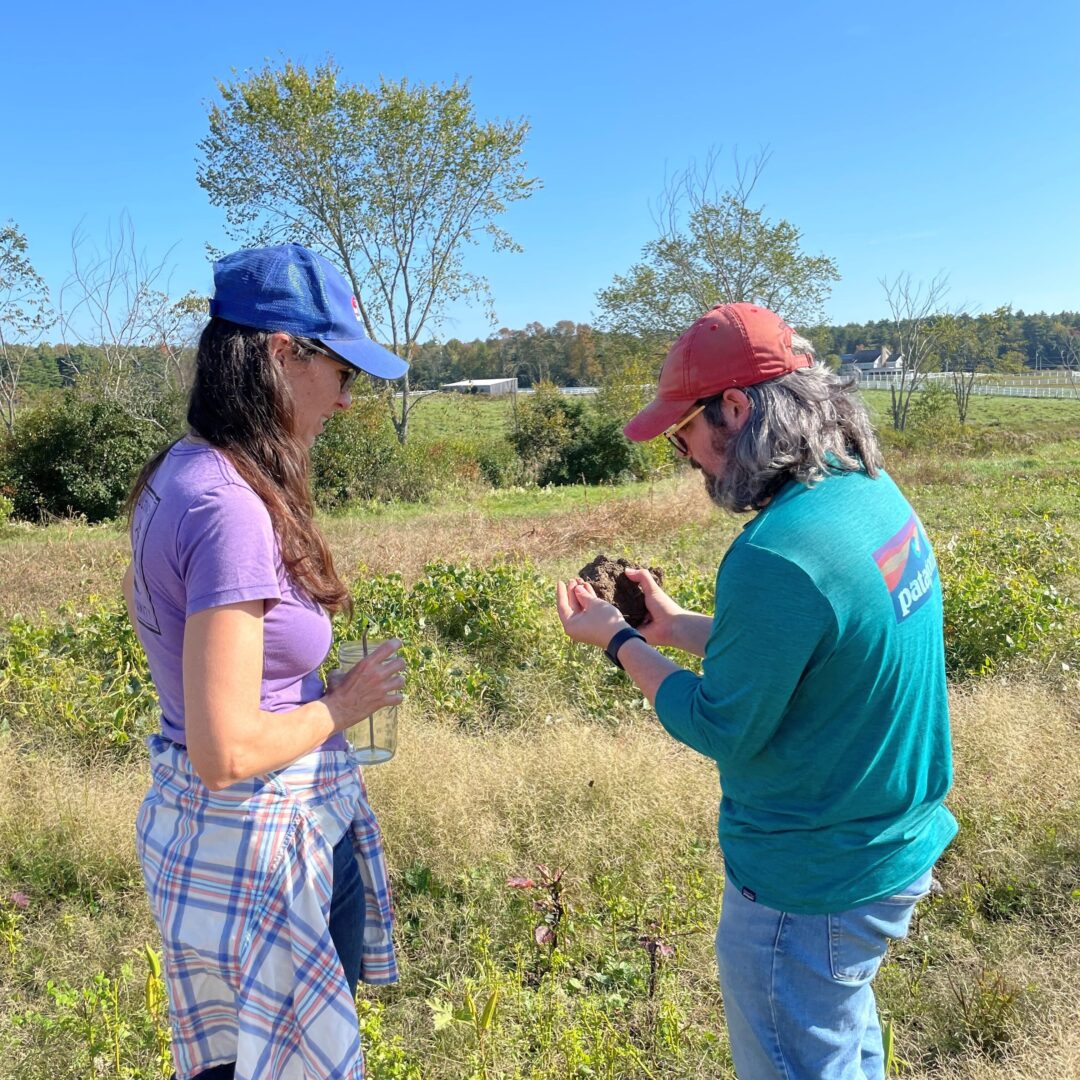
Matt Boucher, State Soil Scientist
Matt Boucher, Ph.D., is the State of Maine Soil Scientist and Director of the Maine Healthy Soils Program. He earned his bachelor's degree from the University of Massachusetts–Amherst and his Ph.D. from Cornell University. Dr. Boucher has spent over a decade providing technical assistance in sustainable agriculture to farmers across the Northeastern United States. As a research and extension professional, Dr. Boucher developed expertise in soil science, entomology, and plant pathology, focusing on integrated pest management and cover cropping. He has experience supporting various commodities from small fruit, tree fruit, and grapes to field crops and mixed vegetables. Dr. Boucher joined the Maine Department of Agriculture, Conservation, and Forestry in 2022 and is a licensed soil scientist.
Frequently Asked Questions
See below for answers to some frequently asked questions about program opportunities and logistics.
What services do you offer? +
Our services include no-cost soil health testing; virtual and on-farm consultations; soil health field days and trainings; grants and incentives for improving soil health on your farm; and general education and outreach. If there are additional services you are hopeful the program can offer, or if you have questions about our current offerings, please schedule an appointment!
Close -
Is there a waiting list for technical assistance services? +
Technical services, including no-cost soil health testing, field visits, and virtual consults, are available on a first-come-first-served basis. If availability for those services is filled, we will open a waitlist.
Close -
Is there a fee for any services offered by the Maine Healthy Soils Program? +
No.
Close -
Who am I meeting with when I schedule an appointment? +
Currently, all appointments are scheduled with Matt Boucher, the State Soil Scientist.
Close -