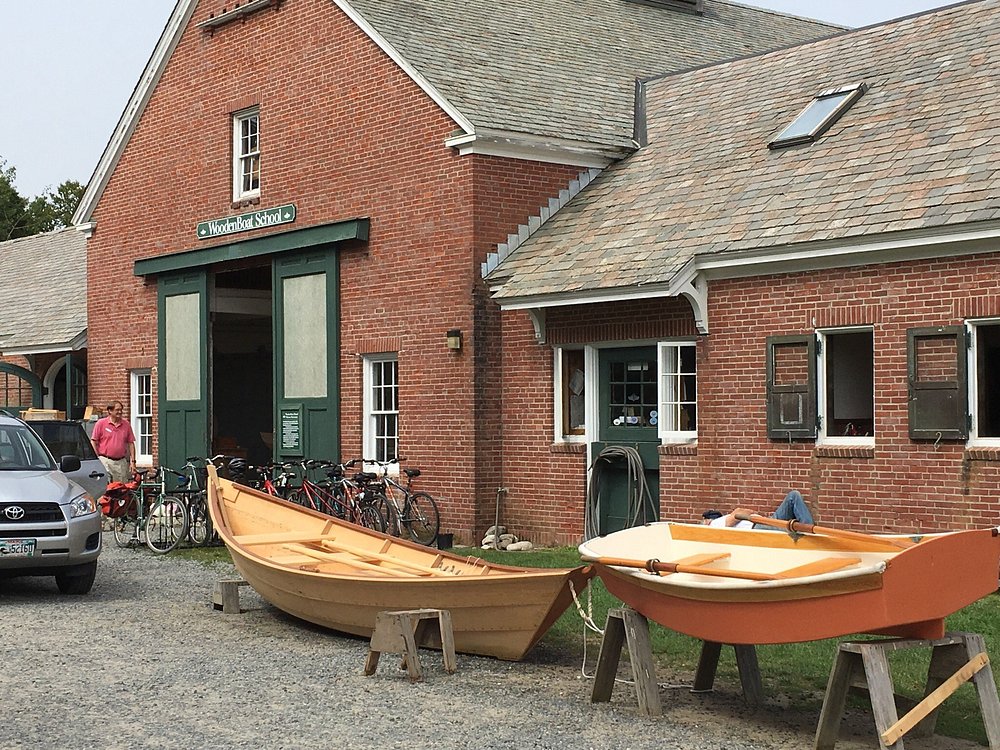
Wooden Boatbuilding
Photo: Main Street Maine
A handful of eighth graders cluster around a 12-foot flat-bottom skiff resting on two wood benches inside the boat shop of Bath’s Maine Maritime Museum. The wooden boat is the work of their hands. Over two semesters, they learned woodworking and traditional boatbuilding skills before building the skiff themselves. The museum’s Discovery Boatbuilding program is one of several across Maine helping pass wooden boatbuilding skills from one generation to the next, continuing a tradition that stretches back centuries from the birch bark canoes crafted by Wabanaki people to the super-fast clippers and enormous six-masted schooners of Maine’s shipbuilding heyday to today’s rowboats, racing sailboats, and custom yachts.
Before steel and fiberglass became standard boatbuilding materials, wood reigned. In a place like Maine with abundant timber, wooden boatbuilding thrived and for centuries was a dominant sector of the state’s economy. When the shipbuilding industry transitioned away from wood, the tradition of wooden boatbuilding remained in communities where there was always a need for a wooden boat, even if it was just a dory.
During the 1970s, wooden boatbuilding evolved from utilitarian purpose into celebrated traditional craft. Today, from Brooklin to Arundel, traditional wooden boatbuilding is taught through professional schools, apprenticeship programs, community workshops, school programs like Maine Maritime Museum’s, and even family boatbuilding vacations.
Author: Stephanie Bouchard