Winslow Homer Studio
Photo: Portland Museum of Art
An unassuming carriage house, moved 150 feet to perch alongside the jagged granite coast, is where Winslow Homer, one of the greatest American artists of the 19th century spent the last quarter of his life painting the sea in all its many moods.
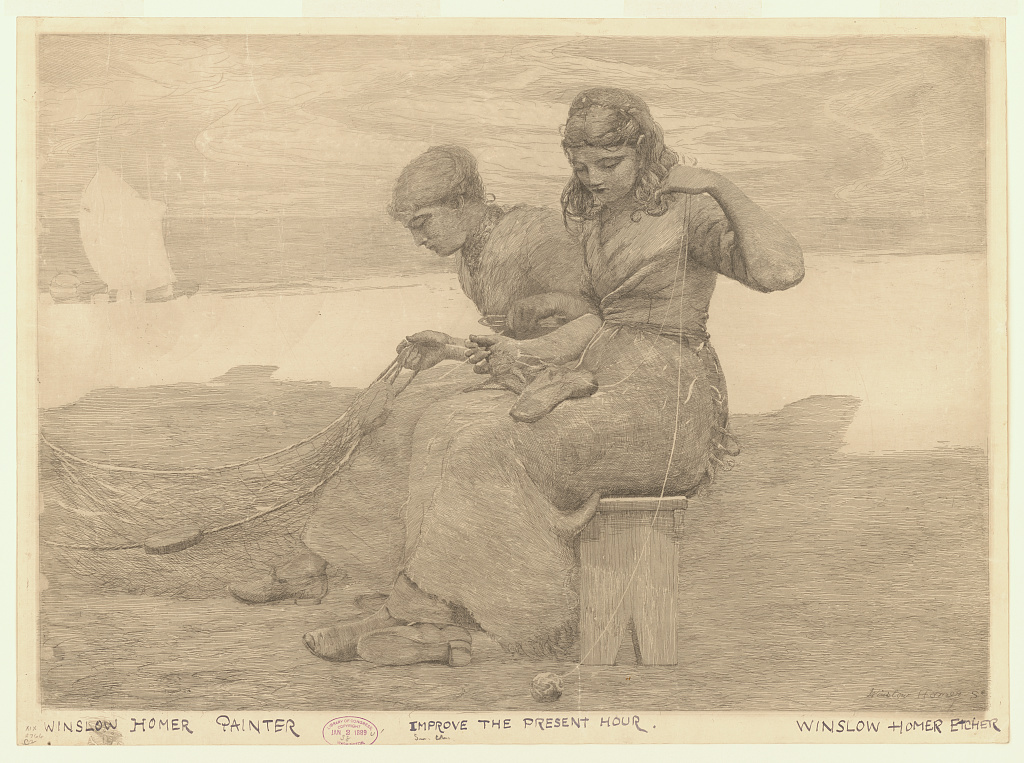
Born in Boston, Homer began his artist career in the late 1850s through an apprenticeship in a Boston lithography shop before transitioning to a freelance illustrator. Working in New York City for magazines, including the popular Harper’s Weekly, Homer attracted national attention for his ability to convey perceptive portraits of American life. During this period, he is especially known for his portrayal of Civil War soldiers in the Union army and the vast impact of the conflict on American life. While he continued to produce illustrations until 1875, Homer began to transition into oil painting and watercolors, his reputation growing as a progressive and original artist.
Prout’s Neck, just south of Portland, was where Homer’s family had summered since the 1870s. After an 18-month immersion in Cullercoats, an English fishing village, painting the harsh livelihoods of fishing families, Homer determined that Prout’s Neck would be his permanent home. This relocation in 1883 resulted in a dramatic shift in Homer’s work, and he began to delve deep into the vast power of the ocean and the dramatic, raw beauty of Maine’s coast.
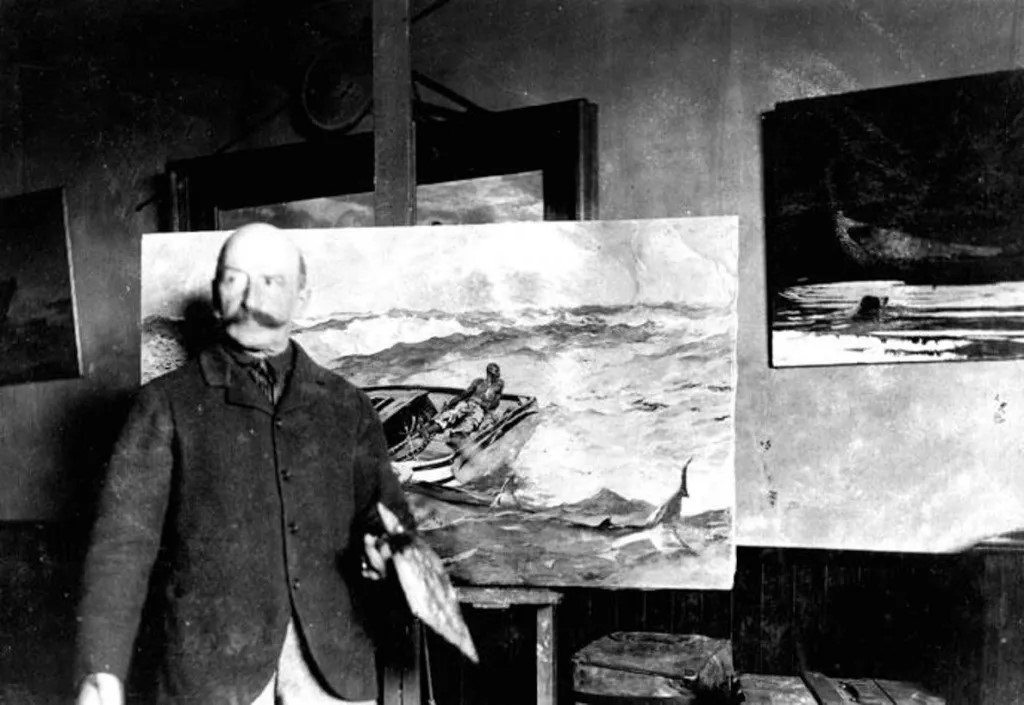
After moving the carriage house that had belonged to his father much closer to the pounding waves, Homer hired architect John Calvin Stevens to convert the structure into a comfortable studio and residence. It is here, in this quiet Shingle Style retreat, where Homer spent the rest of his life until his passing in 1910. It is here where magnificent canvases like Weatherbeaten, The Fog Warning, and The Gulf Stream, were inspired by the dramatic power of the surf literally at Homer’s doorstep. A famous photograph from around 1900 shows Homer standing in the studio beside his easel and The Gulf Stream, a testament to how directly the building itself factored into the work made there.
After Homer's death, the studio remained in his family's hands for nearly a century, passing down through descendants who maintained it but also made a number of alterations that obscured its original 1884 appearance. It was designated a National Historic Landmark in 1965, in recognition of its singular place in the history of American art.
In January 2006, the Portland Museum of Art purchased the studio and its grounds and, working with Mills Whitaker Architects, undertook a six-year restoration to strip away later modifications and return the building to its appearance during Homer's working years there. The studio reopened to the public in September 2012. Access to the studio is only available through guided tours with the Portland Museum of Art which are available seasonally from April to October – advance reservations are highly recommended.