South Solon Meeting House
Photo: Penobscot Marine Museum
At an unassuming rural crossroads 11 miles northwest of Skowhegan sits a white clapboarded building built in 1842. The South Solon Meeting House was a place for the community to gather for events, religious worship, and municipal meetings. By the 1940s, the Gothic Revival–style meetinghouse was rarely used and deteriorating. Then, in the 1950s, it experienced a revival of its own.
Arts benefactor Margaret Day Blake was attending the Skowhegan School of Painting and Sculpture (see Skowhegan School of Painting and Sculpture) when she visited the South Solon Meeting House and was moved to provide funds for restoration of the building and a transformative art project.
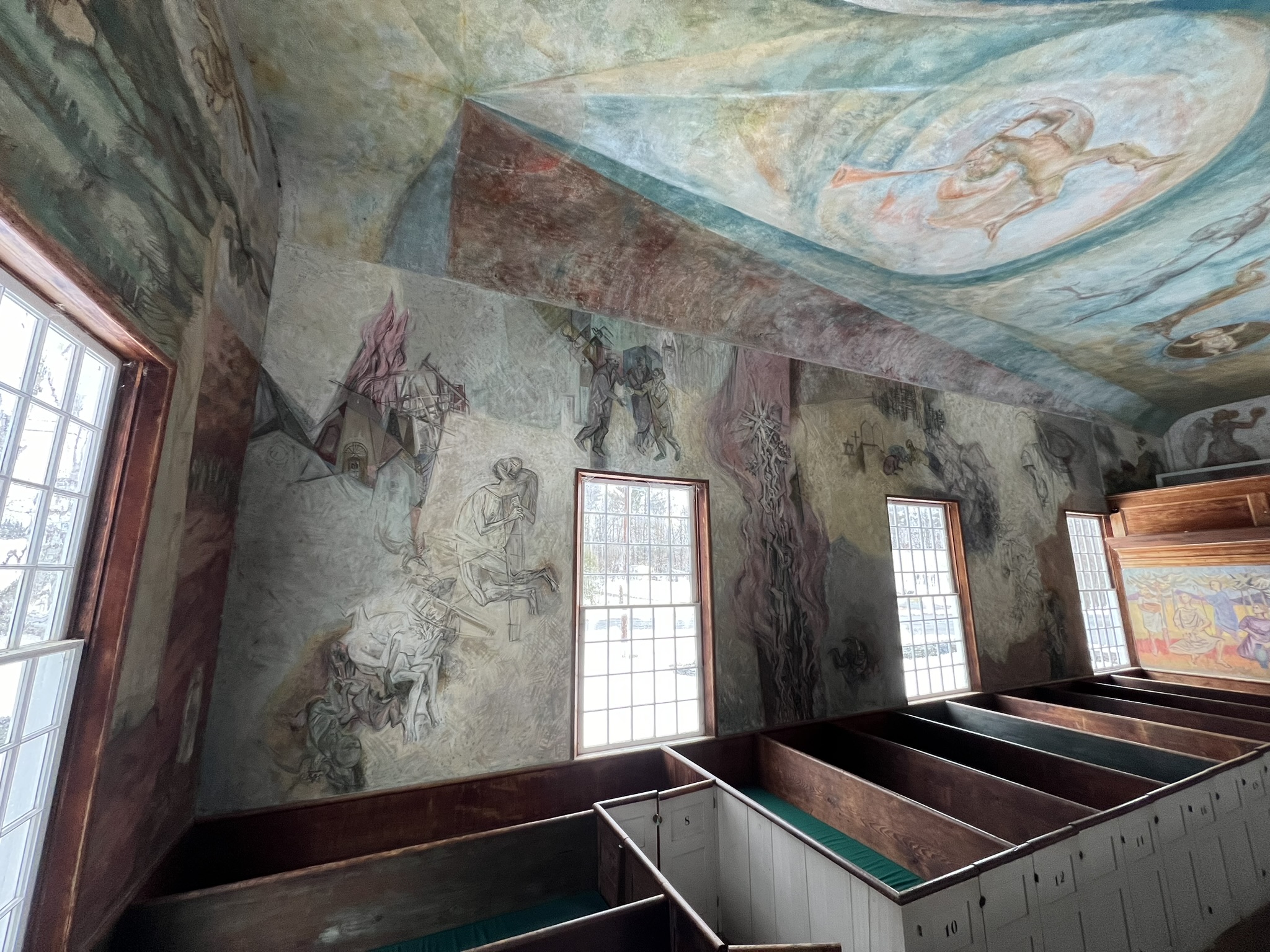
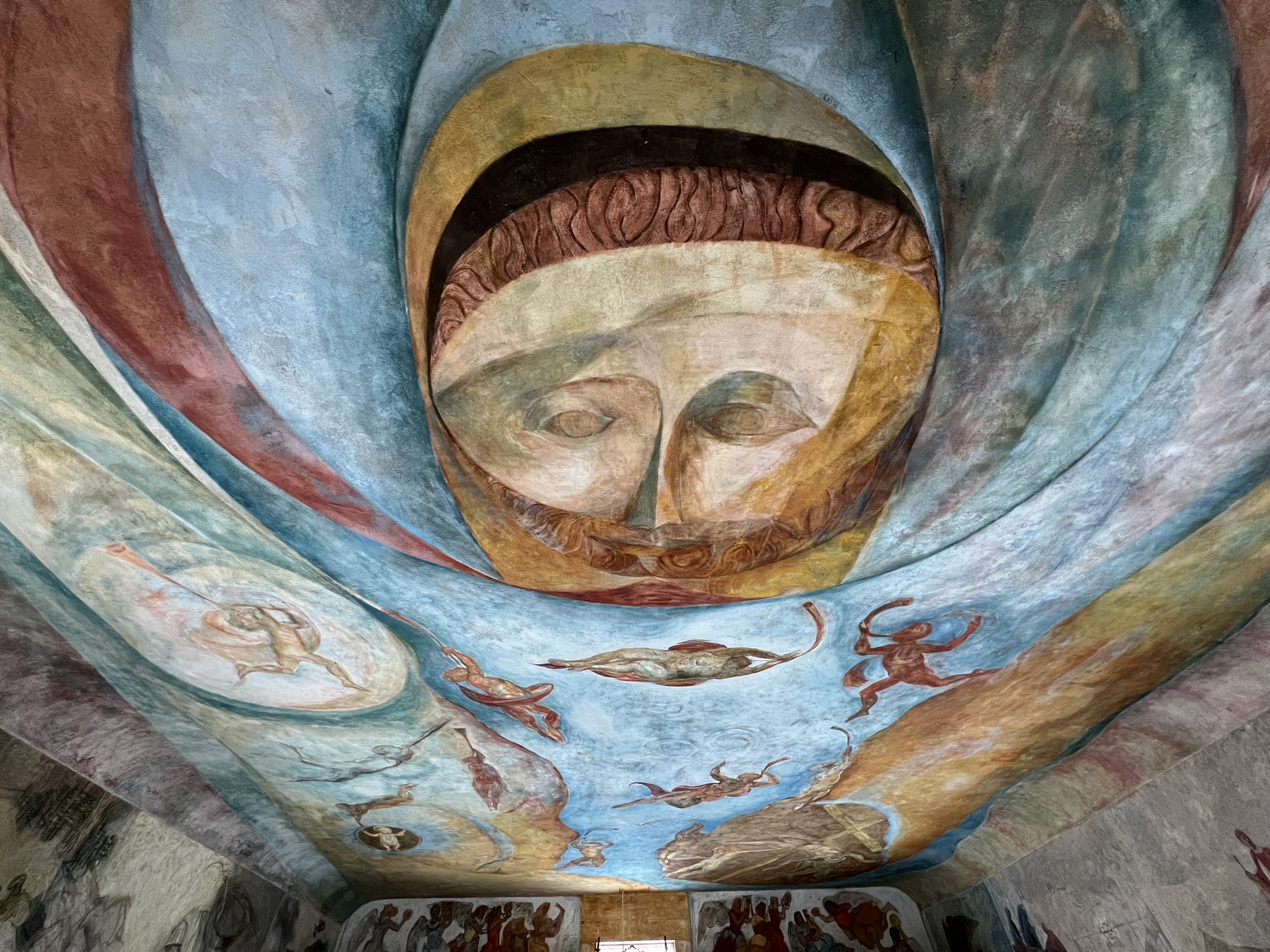
When people enter the meetinghouse today, they might not notice at first the original box pews, the choir loft with pump organ, or the stairs leading up to the pulpit because from floor to ceiling in every direction are brilliantly painted murals. Depicting mostly biblical scenes, these murals were painted into wet plaster, a technique called fresco that is closely associated with Renaissance Italy and works like Michelangelo’s Sistine Chapel ceiling.
The meetinghouse’s fresco murals were painted between 1952 and 1956 by 13 artists associated with the Skowhegan School of Painting and Sculpture, where the fresco technique was taught. Several of the artists later gained national recognition, among them Ashley Bryan, who would eventually settle in Maine and become one of the state’s most beloved artists (see Ashley Bryan).
South Solon Meeting House is open to the public and is still being used for community events. The building, which is on the National Register of Historic Places, and its frescos, are under the care of the Solon Historical Society.
Author: Stephanie Bouchard