Slate
Slate Quarry in Monson, Maine, 2025. Photo: CastIronSeasoner, Wikimedia.
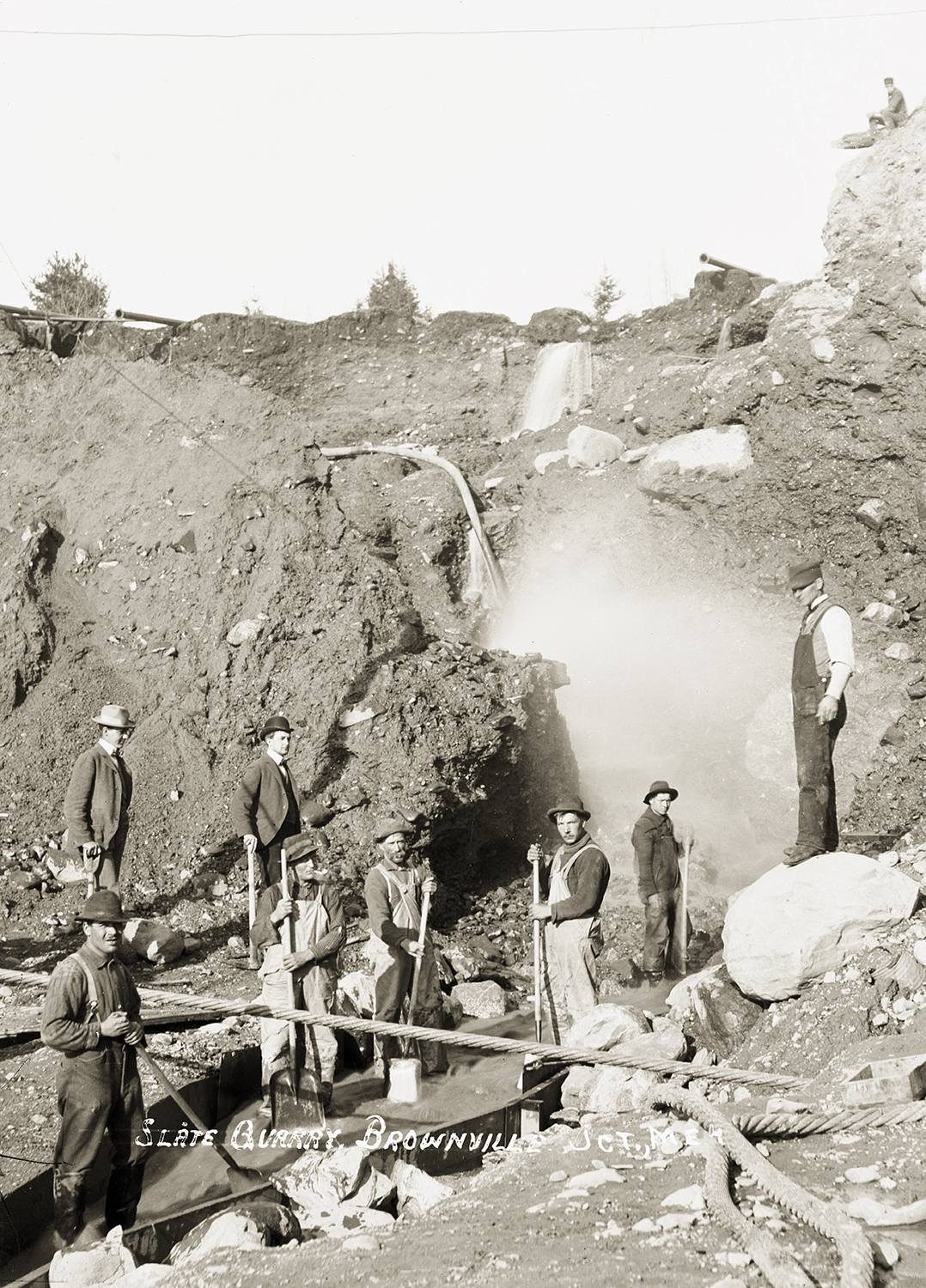
Maine's forests, granite, and coastal waters are well known, but the state's slate quarries also played a vital role in its economic and industrial history. Maine slate, quarried primarily across the Central Maine Slate Belt especially in the towns of Monson and Brownville, beginning in the 1870s, became one of the state's most valued building materials.
Slate is a durable metamorphic rock that splits naturally into thin, smooth layers. Its strength and resistance to weather made it an ideal choice for roofing, flooring, blackboards, monuments, and architectural details. Maine's dark gray and black slate earned a reputation for exceptional quality and was shipped across the United States for use in schools, churches, public buildings, and homes.
The discovery of commercial slate deposits in Monson in 1870 transformed the region into a thriving quarrying center. The industry attracted skilled workers from Wales, Scotland, Finland, and Sweden, whose knowledge and craftsmanship helped establish Maine as a leader in slate production. Improved rail transportation, including the Monson Railroad, enabled the shipping of slate from the quarries to national markets.
Although the slate industry declined during the twentieth century, its legacy remains visible throughout Maine. Historic quarries, restored buildings, and monuments continue to showcase the beauty and durability of this remarkable stone. Monson also remains home to one of the nation's few active producers of natural roofing slate.
As Maine celebrates its 250th anniversary, slate stands as a reminder of the state's industrial heritage and the generations of quarry workers whose skill helped build communities both in Maine and across America.