Shoe Manufacturing
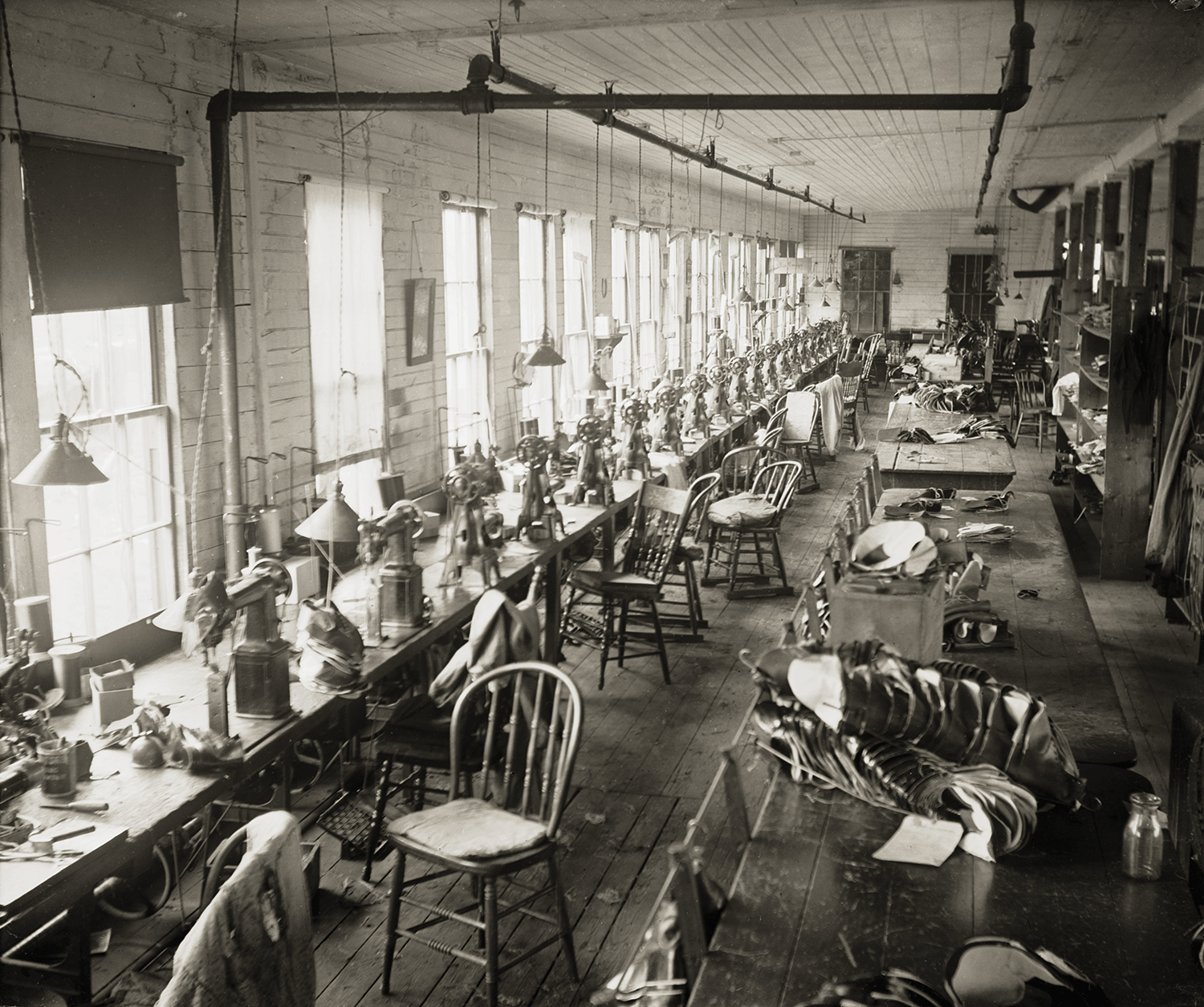
Springvale Shoe Works, Springvale Me. 21. Photo: Penobscot Marine Museum.
To trace the origins of Maine's shoemaking industry, you have to look beyond the factory floor to the shaded canopies of the eastern hemlock trees that grew abundantly in Maine forests. The bark from those trees once served as a prime source of tannins used to convert raw animal hides into leather durable enough for shoes, boots, and other everyday goods.
By the early 19th century, this natural resource had helped support a robust tanning industry in what is now Maine. During that period, shoemaking was still practiced primarily by individual craftspeople, either working from small shops or traveling from town to town, measuring customers' feet and making shoes to suit their needs.
The transition toward factory-based production began slowly. The first shoe factory of record in Maine is generally credited to A. P. White, who employed 17 workers at a shoemaking operation in New Gloucester in 1844. From that modest beginning, shoe manufacturing spread into dozens of Maine communities after the Civil War. Lewiston and Auburn became especially important centers, but shoe shops and factories also appeared in places such as Farmington, Norway, Norridgewock, Skowhegan, Dexter, Freeport, and Westbrook.
Maine's contributions to American footwear can be seen in the brands and styles that became recognized far beyond the state. G. H. Bass began in Wilton in the 19th century and helped popularize the penny loafer through its Weejuns. Sebago carried Maine craftsmanship into loafers and boat shoes. Dexter grew from a central Maine factory into a nationally known company. Eastland, Quoddy, and Rancourt became associated with casual leather shoes, moccasins, and handsewn construction. L.L.Bean, arguably Maine's most recognizable brand, was founded on a single product: the Maine Hunting Shoe, later known as the Bean Boot.
Opportunity in the shoe industry attracted generations of new workers to Maine, especially French Canadians from rural Quebec. But factory work was physically demanding, with long hours and low pay. In some factories, workers sought union recognition and organized for better wages and working conditions. These tensions sometimes led to conflict with factory owners, including the 1937 shoe strike in Lewiston and Auburn, one of Maine's best-known labor disputes, which involved more than 4,000 workers.
Measured by employment, Maine's footwear industry reached its statewide height in the 1960s, peaking in 1968 with nearly 27,000 workers. The decline that followed was steep, as changing consumer tastes, automation, consolidation, and overseas competition reduced the number of shoe jobs in Maine.
But the story of Maine shoemaking is not one that has ended with decline. L.L.Bean continues to make its Bean Boots in Maine. New Balance maintains a major athletic-footwear manufacturing presence in central Maine. In Lewiston, workers at Rancourt, Quoddy, and MaineMoc continue the tradition of handsewn footwear, while Origin USA in Farmington has added a newer chapter to Maine's footwear story with its line of locally made boots. While the scale of the industry has changed, its foundation remains the same: skilled Maine workers making quality footwear with pride and care.