Shipbuilding
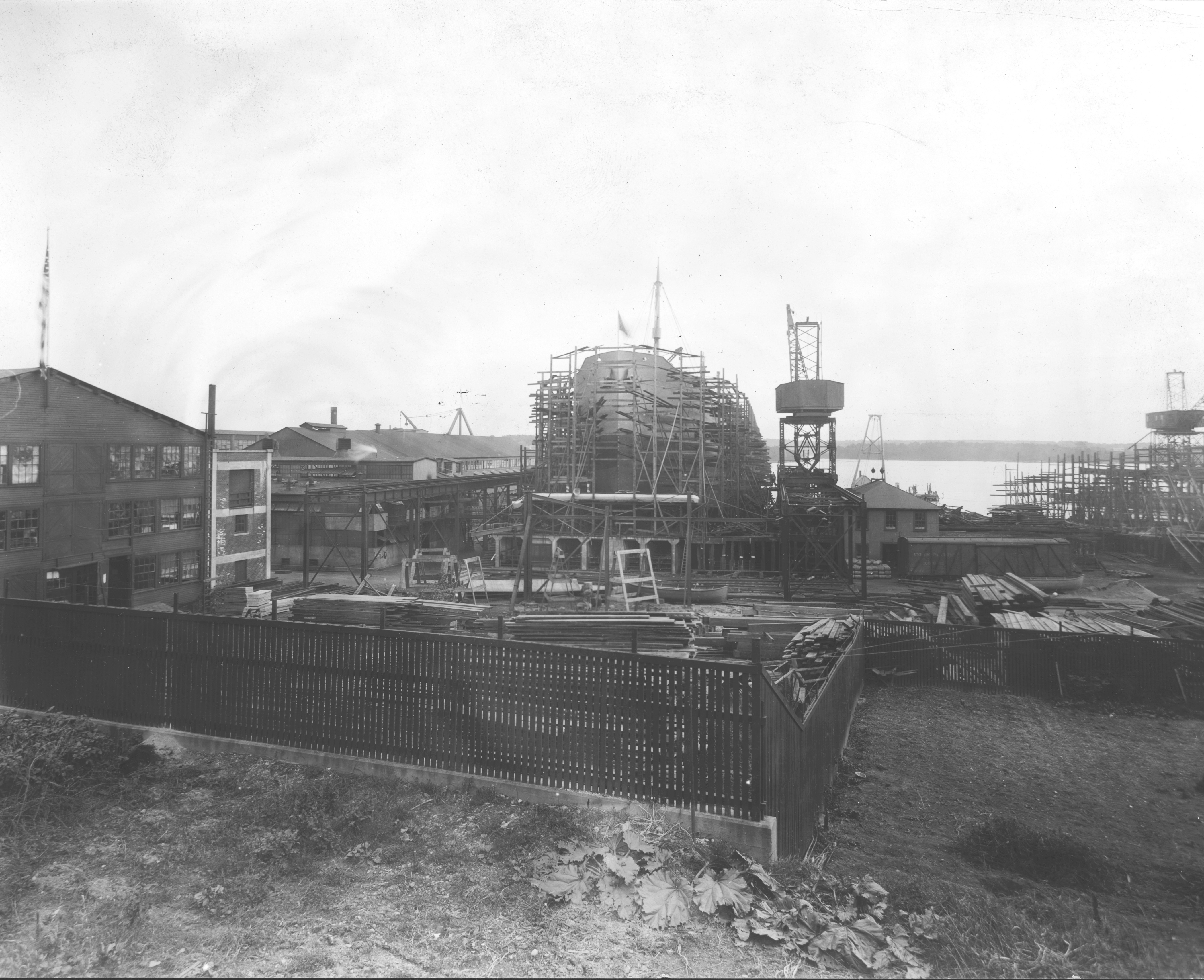
Camden Drydock & Shipbuilding Co. with Ship GATHERER in floating drydock, Bark-3 AUTOCRAT and Bark-3 JOHN CAMPBELL alongside. Photo: Penobscot Marine Museum.
The first English-built ocean-going sailing ship. The speed record–setting clipper Red Jacket. Some of the largest wooden sailing vessels ever built. Stealth destroyers that patrol oceans around the world. They all have one thing in common: They were built in Maine.
Since 1607 when the British at Popham Colony harvested local timber and began constructing the 30-ton pinnacle Virginia, Maine has been associated with shipbuilding, and not just as a place where ships are built. During the colonial years and into the 1800s, Maine’s extremely tall and straight pines were prized for creating masts.
Beginning in the mid-1600s, shipyards big and small sprang up along the coast and even inland along tidal rivers, in places such as Bath, Damariscotta, Hallowell, and Portland. But it was during the 1800s that Maine dominated the country’s shipbuilding industry, peaking at producing one-third of the country’s total shipping capacity.
With the transition from wood vessels to steel, Maine’s powerhouse combination of timber, deep water access, and a skilled workforce was not enough to keep the state at the top of the field. While some yards began building with steel, the majority of the state’s wooden shipbuilders shuttered. At the industry’s peak, Bath, the City of Ships, had 22 shipyards one after the other along its riverfront. By the mid-1920s, none were operating in the city.
While shipbuilding was at an all-time low in Maine, World War II brought it back with a roar. Bath Iron Works, which had gone out of business in 1925 and was repurposed as a builder of yachts after being purchased at auction in 1927, produced a destroyer every 17 days between 1943 and 1944. In South Portland, two shipyards employed about 30,000 people who, working around the clock, built 244 Liberty ships between 1942 and 1945.
Today, Maine’s shipbuilding tradition lives on in vessels that navigate the world’s waterways. Bath Iron Works continues to launch sophisticated naval vessels from the Kennebec River in Bath, while smaller yards design yachts that are nearly works of art and construct the maritime industry’s workhorses: tugboats, ferries, and fishing vessels.