Rufus Porter
Photo: Rufus Porter Museum
Rufus Porter, dubbed the “Yankee da Vinci” may be most commonly known as a painter, but his travels and inventions make him one of Maine’s most notable historic figures.
Porter was born in West Boxford, Massachusetts, in 1792, to a family of farmers. His family sold their land and moved to Maine (Pleasant Mountain Gore, now part of Denmark) when he was nine. As a teenager, after a stint at Freyburg Academy, he was apprenticed first to a shoemaker and then to a house painter, but neither trade stuck. During the War of 1812 he painted gunboats and drummed for the Portland light infantry, then meandered through work that included sleigh painting and teaching drumming before striking out as a traveling artist.
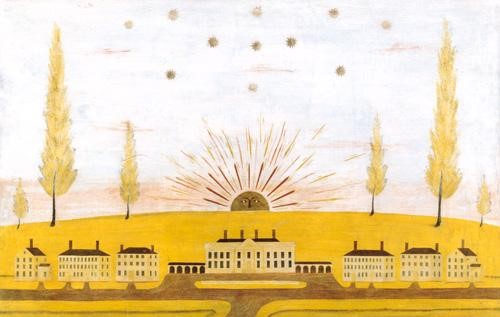
For nearly forty years starting in the 1820s, Porter walked and rode a circuit through New England, New York, and down the mid-Atlantic coast, painting quick, inexpensive portrait miniatures and, increasingly, elaborate landscape murals directly onto the walls of farmhouses, inns, and taverns. He developed techniques — stencils, and a portable camera obscura of his own design — that let him produce a detailed mural in a fraction of the time it would normally take. He published his inventive methods, first in an 1825 how-to book and later in magazine columns. He's associated with more than 160 surviving wall murals, scattered across houses from Maine to Virginia; one now hangs in the Smithsonian's Renwick Gallery.
Over his lifetime Porter is credited with dozens of inventions and mechanical improvements — a revolving rifle mechanism he sold outright to Samuel Colt for $100 (who used it to help build the Colt revolver), a rotary plow, a portable camera obscura, a revolving almanac, and a series of increasingly ambitious but dubious airship designs meant to ferry passengers across the country. His talents, unfortunately, did not include business, and he tended to jump from one idea to the next, rarely filing a patent.
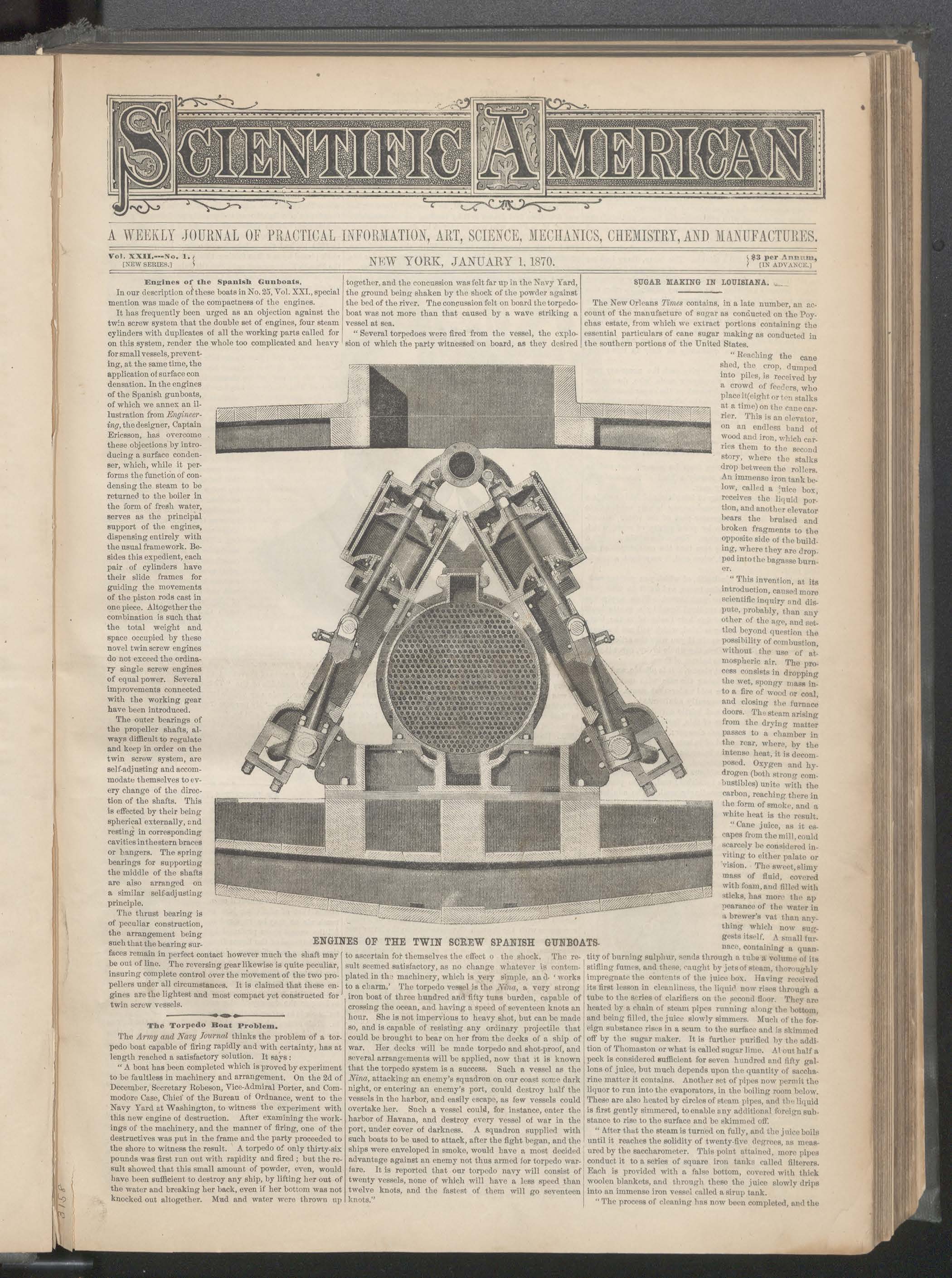
In 1845 Porter founded Scientific American, aimed at ordinary inventors and mechanics rather than academic scientists. He sold the publication in less than six months but stayed on as editor for another year and a half. Porter continued contributing the occasional article throughout his life, and the magazine remains in production today.
You can learn more about Rufus Porter and see some of his incredible art at the Rufus Porter Museum, open seasonally from June through October.