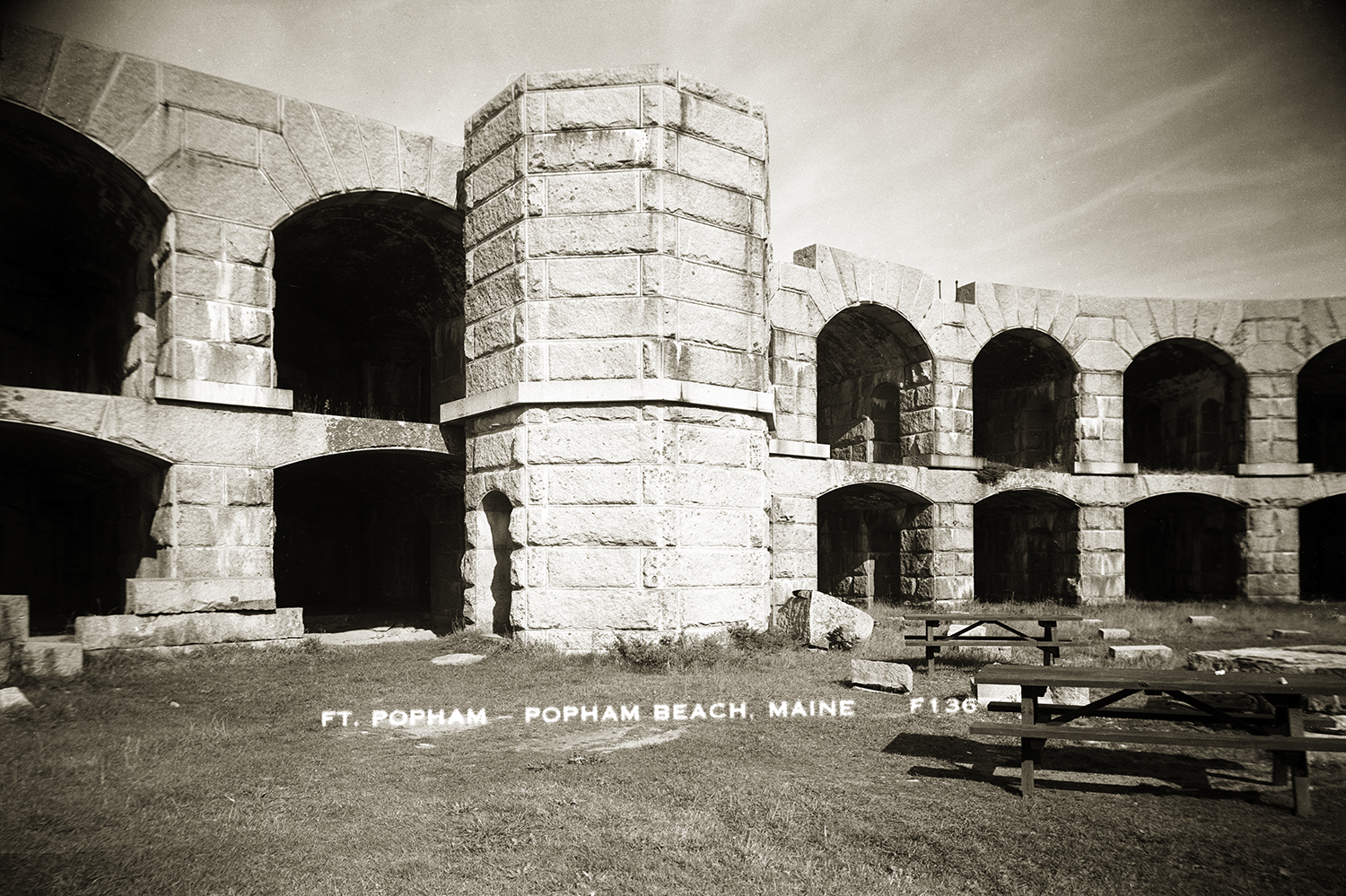
Popham Colony
Pier ruins at Popham beach. Photo: Penobscot Marine Museum.
In 1607 at the mouth of the Kennebec River on Hossketch Point, a group of 100 English colonizers led by Captain George Popham established a fragile foothold settlement 13 years before the Pilgrams landed in Plimouth. The Popham Colony was the first organized attempt by the English to establish a colony on the shores of what is now known as New England. Abandoning the colony in 1608 to return home to England, the settlers constructed the Virginia, a 30-ton pinnace and the first ship ever built in North America.
But Popham was not the first European colony in New England. The French arrived earlier with a brief settlement on an island in the St. Croix River, further up the Maine coast around 1604. Although Popham was the first claim of possession of what was then called Northern Virginia by the English, the actual founding of a "New" England was by Pilgrims who established the first permanent settlement in Massachusetts Bay thirteen years later.
The failure of the Popham Colony to endure has rendered it a nearly forgotten historical footnote, although the lessons learned here contributed directly to the success of other colonial settlements. In the 1990s archaeological investigation confirmed the location of the fort, and the site is listed in the National Register of Historic Places.