Mount Kineo
Photo: Maine Office of Tourism
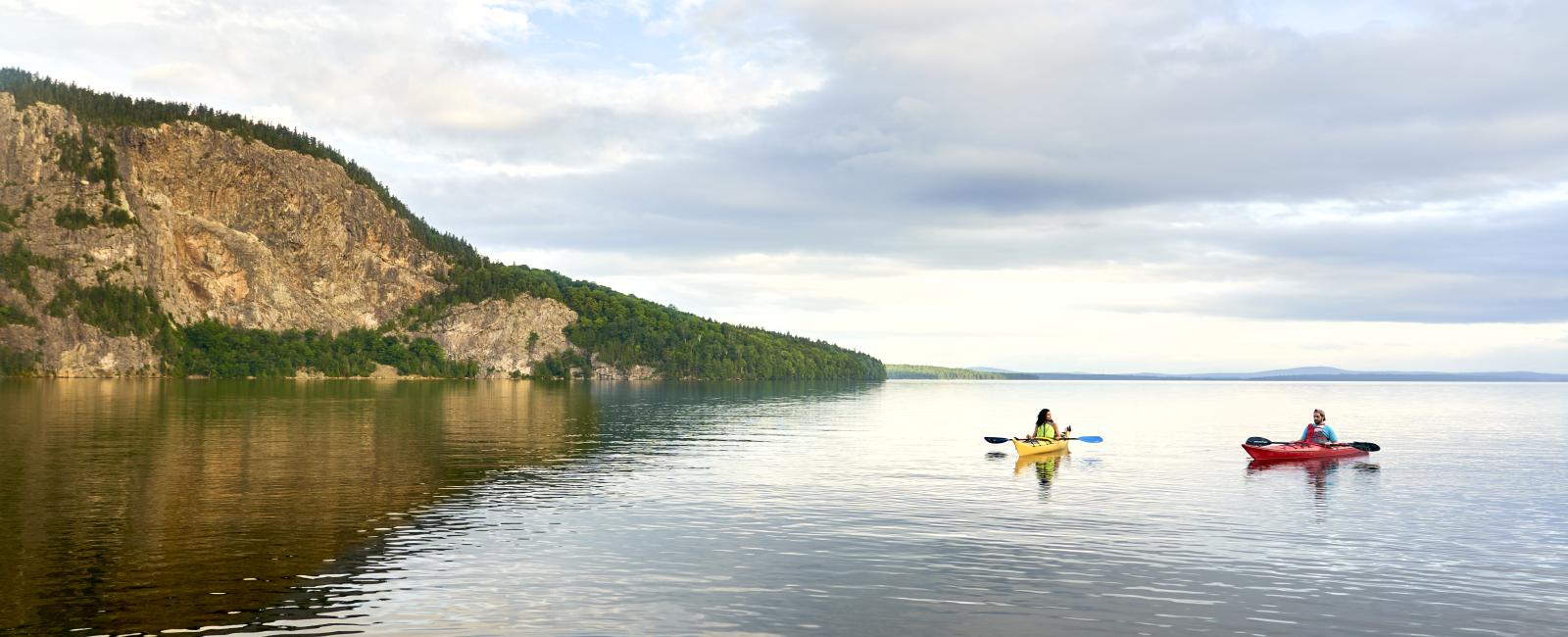
With sheer cliffs rising nearly 700 feet seemingly straight out of the waters of Moosehead Lake is Mount Kineo, whose volcanic rock was valued by Indigenous peoples for thousands of years.
While Maine is often associated with granite mountains, Mount Kineo is composed primarily of rhyolite, a volcanic rock that formed about 400 million years ago. Chemically and minerally similar to granite, rhyolite is every bit as tough as granite but is so fine-grained that when struck it naturally breaks into razor-sharp flakes. Indigenous peoples used them as cutting tools for slicing and scraping and as arrowheads.
Given its qualities, Mount Kineo’s rhyolite became one of the Northeast’s most important sources of tool stone. Through Indigenous trade networks, raw stone made its way across what is now New England and even to the Canadian Maritimes.
Once discovered by settlers, Mount Kineo developed into a different kind of resource: recreation. In the 1800s, a series of large resort hotels were erected along Mount Kineo’s lake shoreline. While the various iterations of the Mount Kineo House no longer exist today, the nine-hole golf course – believed to be the second oldest in New England – still does.
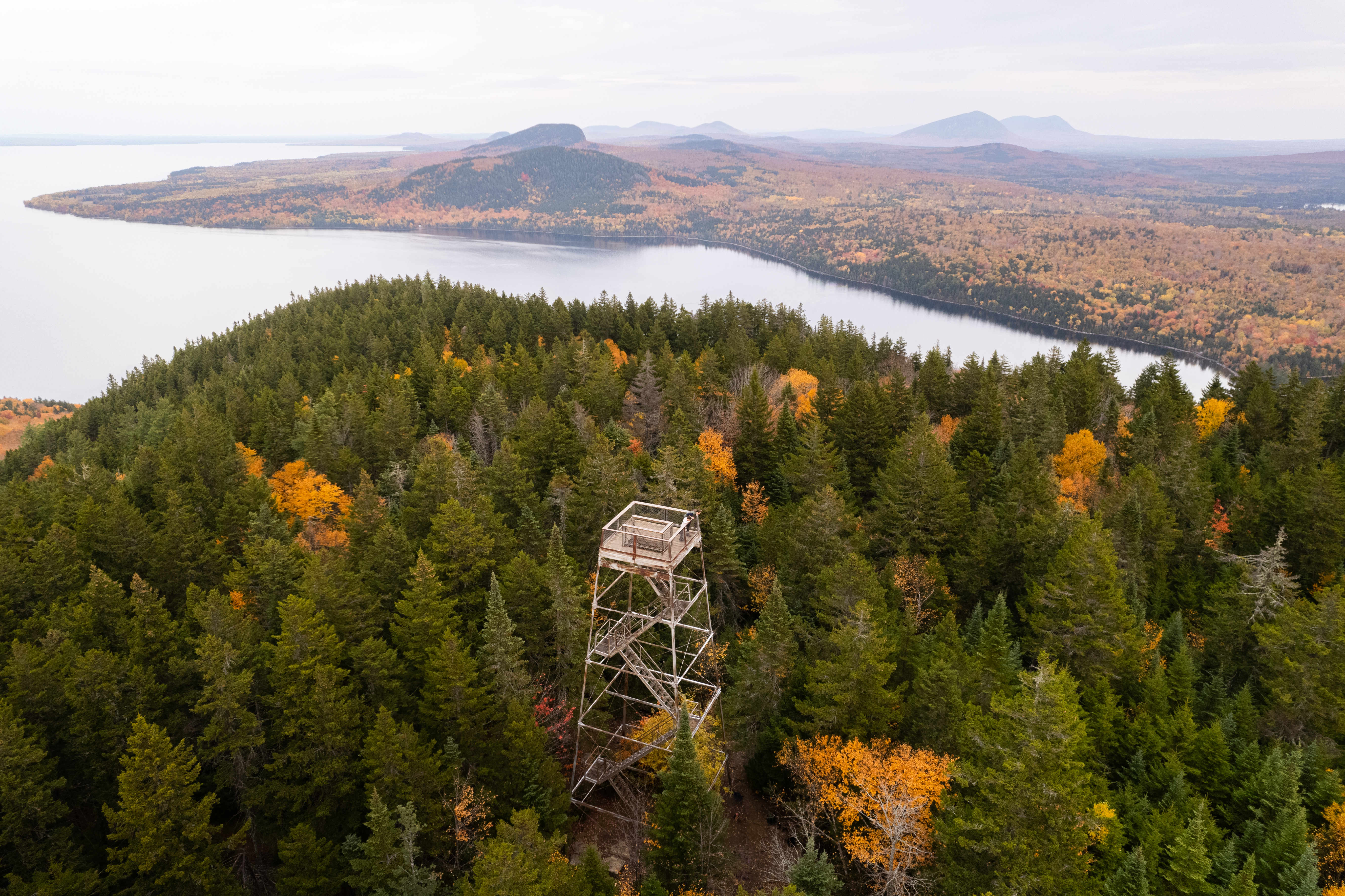
No longer the wilderness resort that it was before cars became the preferred mode of travel, Mount Kineo’s dramatic beauty still draws visitors. Today it is protected as part of a state park. Although connected to the mainland by a narrow isthmus, there are no public roads into the state park. Visitors mainly access the park by boat, but in the winter, if the lake is adequately frozen, it’s possible to walk, ski, snowmobile, or snowshoe there.
Author: Stephanie Bouchard