Moose
Maine Office of Tourism
On a summer day in 2018 during Skowhegan’s Moose Festival, 1,054 people gathered at the fairgrounds and set a new Guinness World Record for the most people moose calling simultaneously. The sound of hundreds of men, women, and children mimicking a moose call was more than a display of Maine humor: for generations, the moose has served as one of the state’s defining symbols.
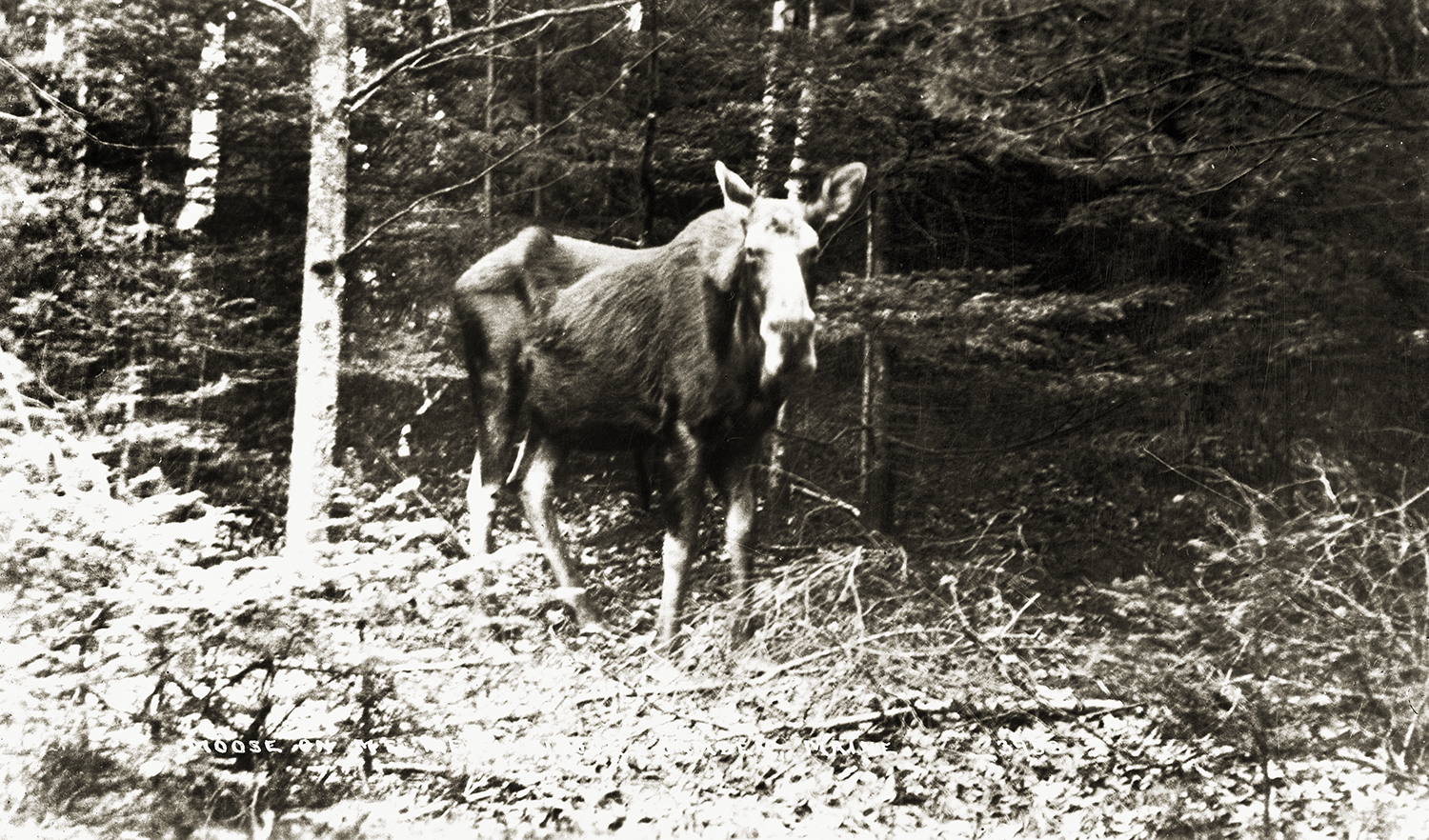
Scientists believe that the modern moose, a relative of deer, evolved during the last ice age, about 500,000 years ago, adapted for deep snow and cold. Before large-scale European settlement, moose were abundant across much of what is now Maine and northern New England and were and still are an important part of Wabanaki life and culture. In fact, the word “moose” comes from an Algonquin word meaning “bark stripper.”
With expanding agriculture and settlement, logging and land clearing, and unrestricted hunting, moose populations in Maine declined significantly – by some accounts to as little as 2,000 by the early 1900s. In order to protect the herd, the state banned moose hunting beginning in 1935.
Today, the moose population in Maine is estimated at 60,000 to 70,000 animals – the highest moose population in the lower 48 states. But new threats have emerged with the changing climate, with the biggest threat being winter ticks. These attach by the thousands and can threaten the life and neurologic function of moose. Calves are particularly vulnerable to winter ticks; they are the leading cause of death for moose less than one year of age.
Maine’s current moose management plan is a combination of long-term scientific monitoring, population management, and climate-related research. Central to that plan is carefully managed hunting permit allocation. The state reopened moose hunting on a limited basis in 1980, each year allocating a specific number of permits based on the herd’s condition and population trends. The annual moose hunting lottery has become a festive event, held each year at a different location, with food, entertainment, and, of course, a moose calling contest.
Author: Stephanie Bouchard