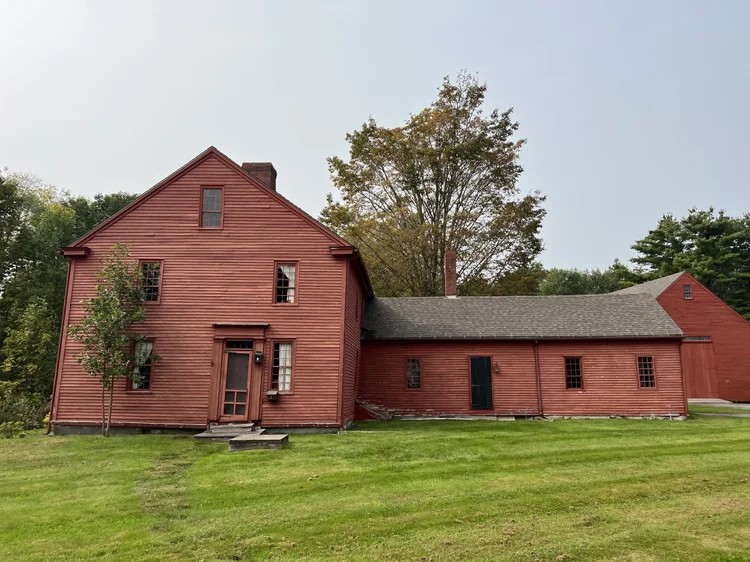
Major Reuben Colburn House
Photo: Maine Preservation
Major Reuben Colburn and his family were one of the early settlers in Gardiner, where he was granted 250 acres of land. In 1763 he constructed a sawmill, gristmill, brickyard, and boatyard along the Kennebec River followed in 1765 by the 2 ½ story timber frame home we know today.
A decade after settling in what is now Pittston, Colburn met with George Washington and was a critical part of planning an expedition of the Colonial Army through the Maine wilderness to seize the heavily fortified city of Quebec from the British. It was the Colburn house where the stage was set for the disastrous Arnold Expedition.
Ten ships from Massachusetts carried 1,100 soldiers from Maine, Massachusetts, New Jersey, Pennsylvania, and Virginia to Colburn’s property along the Kennebec. Among them were Aaron Burr, Henry Dearborn, Daniel Morgan, and Colonel Benedict Arnold. Upon arrival, food, supplies, and equipment were transferred to 220 batteaux that Colburn and his shipyard craftsmen had managed to build in just two weeks. He also supplied additional food, supplies, maps, and shared reports from a scouting party of both colonists and Wabanaki tribal members he had sent up the river in advance of the march.
From financing the construction of the batteaux, a group of men to accompany the expedition to make needed repairs, the food and supplies, Colburn amassed significant expenses that were never reimbursed by the government – with the exception of the 20 pounds George Washington provided in advance of the journey. This debt led to his financial ruin, but through subsequent years of hard work and his many industries, he slowly rebuilt his family wealth, and his descendants inhabited the house for more than 100 years.
The State of Maine purchased the Colburn House in 1972, and it is now operated as the Colburn House State Historic Site. Listed on the National Register of Historic Places, the home is also a contributing building within the Arnold Trail to Quebec Historic District. Unfortunately, years of deferred maintenance has led to the closure of the building’s interior to the public since 2019. The site is one of Maine Preservation’s Most Endangered Historic Properties.