Maine's Swedish Colony
Historic postcard street view in New Sweden. Photo: Stockholm Historical Society
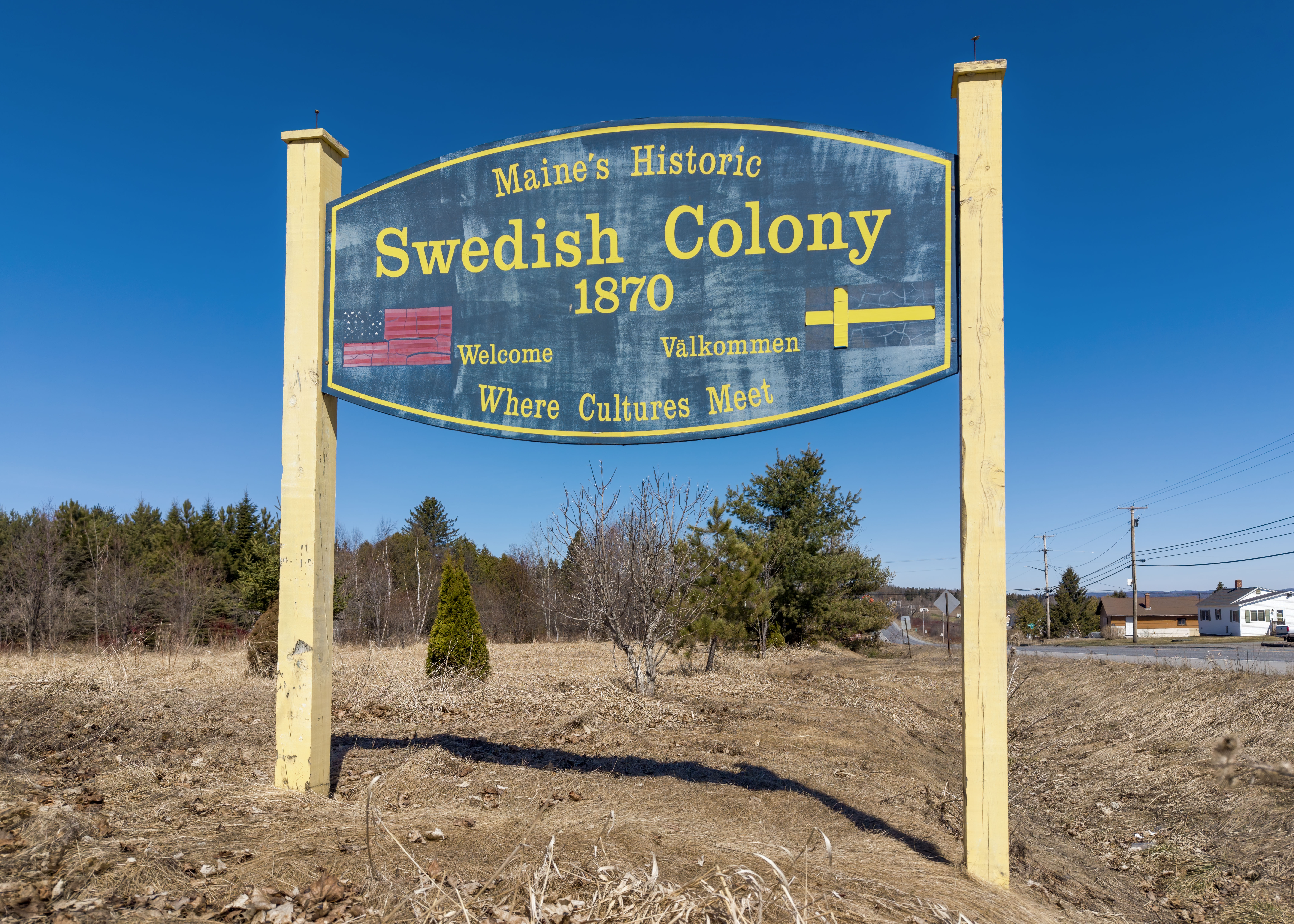
New Sweden is a small town in Aroostook County, founded in 1870 as a planned colony of Swedish immigrants — and it stands out as one of the more unusual experiments in American settlement history: a state government deliberately recruiting settlers to help populate its more remote and northern border.
The colony was the brainchild of William Widgery Thomas Jr., a Maine diplomat who had served as U.S. consul in Sweden. After spending so much time in Sweden, falling in love with the country, Thomas firmly believed that these Scandinavian farmers, accustomed to harsh northern climates, would succeed where earlier attempts to settle the remote Aroostook wilderness had struggled. He managed to convince Governor Joshua Chamberlain and the legislature that a state-sponsored settlement of Swedes would be the best way to help settle the northern woods. Thomas personally traveled to Sweden to select and organize colonists, then leading them, in one coordinated group, across the Atlantic and into the Maine woods. On July 23, 1870, 51 men, women, and children arrived at what was then unbroken forest, marked only by a few surveyed log cabins, and set about building a town that did not yet exist, under a name — New Sweden — chosen before a single tree had been cut.
The colony grew through continued immigration and expanded into neighboring townships, some of which still carry Swedish-inspired names — Stockholm, Westmanland, and Woodland — a unique instance of an entire cluster of towns being named for the homeland of their founders. Settlers brought Swedish farming techniques, Lutheran church traditions, and building styles adapted to brutal Aroostook winters, cultivating crops (notably potatoes, still central to the region's economy) and establishing sawmills and small industries.
That Swedish character still persists to this day. Descendants of the original colonists still live in the region, and the community maintains its heritage through institutions like the New Sweden Historical Society and the Nylander Museum in Caribou. New Sweden also holds an annual Midsommar festival, celebrating the Swedish midsummer tradition with music, food, and dancing.
Today, New Sweden remains a striking anomaly on the American map: a town whose existence was not the product of gradual settlement, but of a single deliberate act of engineered migration. Plan a visit to the New Sweden Historical Museum, open seasonally.