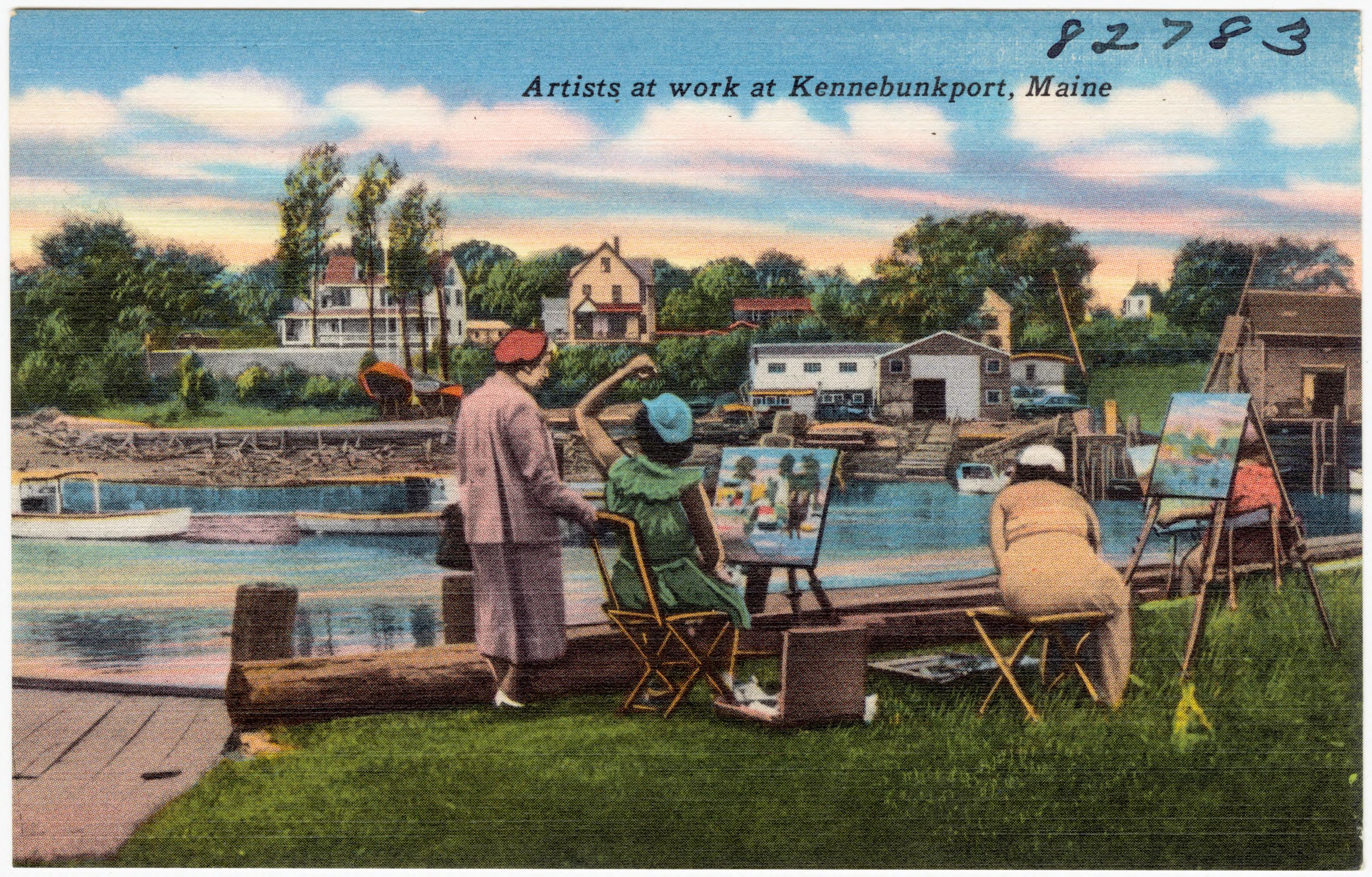
Maine's Artist Colonies
Photo: Penobscot Marine Museum
In 1858, Aaron Draper Shattuck, an artist from New York, caught a ride out to Monhegan Island with a lighthouse inspector sailing a schooner on his rounds of the Maine coast. Associated with the influential nineteenth-century Hudson River School of landscape painting, Shattuck was interested in sketching Monhegan’s landscape.
When he returned to New York and his studio to paint, “On the Maine Coast” – which may be one of the first landscapes of the island painted by a professional artist – he helped introduce Monhegan to his artist network. As word spread among artists of Monhegan’s beauty, more painters found their way up the coast to the island, and by the late 1800s, it had gained a reputation as a seasonal artist community.
But Monhegan Island wasn't the only place on the coast to attract artists to spend the summer teaching, painting, and selling their art to tourists and seasonal residents. Among the locations most strongly associated with Maine’s artist colonies is Ogunquit, where a mix of scenery, social opportunities, and plentiful summer lodging made it a hotspot for artists from the late 1800s through the early 1900s.
While the Great Depression marked the beginning of the end of the most vibrant period of Maine’s coastal art colonies, Maine is still recognized as a place that draws artists. The state is home to renowned artist residencies such as the Skowhegan School of Painting and Sculpture and Haystack Mountain School of Crafts, nationally and internationally known artists, and dozens of museums and galleries where contemporary works hang beside early paintings of the same scenic landscapes that first drew artists here.
Author: Stephanie Bouchard