Maine in World War Two
Ship launching in Portland, August 16, 1942. Photo: Library of Congress.
From Victory gardening and darkening windows with blackout curtains along the coast, Maine, like the rest of the country, made an all-out effort during the war. Part of that effort – albeit a reluctant one at first – was a network of POW camps in mostly remote locations in northern and central Maine that housed thousands of German POWs.
With so many Mainers working in wartime manufacturing or serving abroad, the state’s ramped up agricultural production and logging operations needed to support the war effort did not have enough local laborers. Logging companies, farmers, and the state’s leadership lobbied to bring POWs to the state.
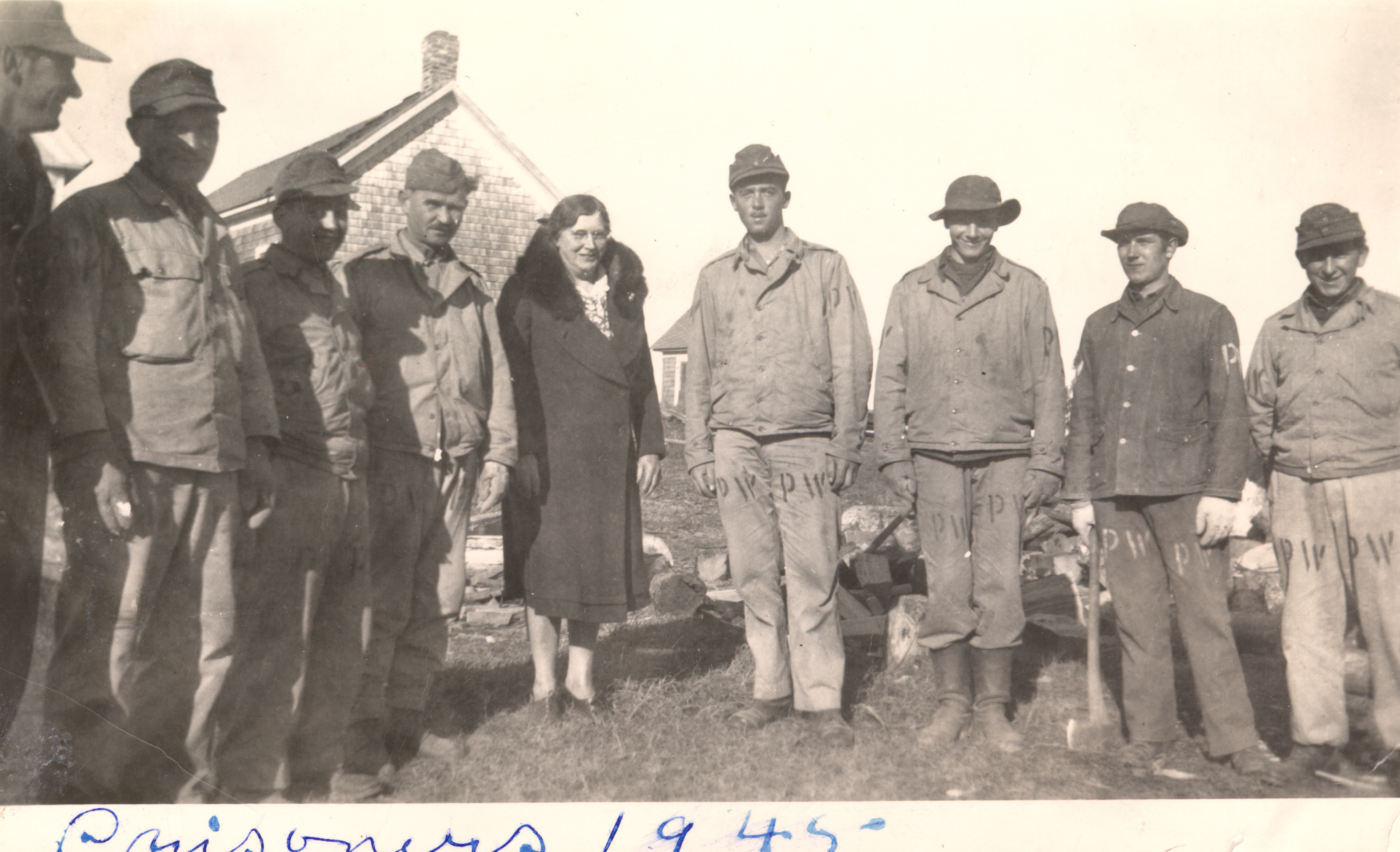
While thousands of Mainers temporarily moved to cities like Bath and South Portland to weld and rivet steel ships, German POWs used axes and saws alongside Maine and Canadian loggers to fell and cut trees for pulpwood, harvested ice on Spencer Lake, and with Maine farming families hand-picked row after row of potatoes at Aroostook County farms.
Having the enemy in their midst was nerve-wracking at first, but quickly, Mainers, and the POWs, realized they were safe with each other: a German soldier saved the life of a girl who fell off a moving tractor; a farmer’s wife ate with the German POWs to reassure them the soup they were being served wasn’t poisoned; German soldiers learned the shovels they were handed were for digging a cesspool rather than their own graves.
The POW camps were one of countless ways the war touched Maine. As thousands of Mainers served overseas, communities across the state did what they could to pitch in. They collected old stoves, engines, bed springs, pipes, and ammunition shells from World War I – whatever scrap metal they could find to be melted down. They patrolled the coast in airplanes and boats keeping watch for German U-boats. And they played baseball with Black soldiers living in boxcars who were sent to Maine to guard railroad bridges.
Life gradually returned to normal after the war ended. People could fill their gas tanks again, drink as much coffee as they wanted, and returned to wearing nylon stockings. The German POWs returned home, the camps they lived in destroyed or repurposed. The largest camp, at the former Houlton Army Air Base, is now Houlton International Airport, and the land taken from the Passamaquoddy Tribe for the Indian Township camp has been reclaimed by the tribe.
While the war changed Maine, Maine also changed some of the German POWs who lived and worked here. Some former prisoners kept in touch with Maine families and returned to visit. And when one prisoner, who once tried to escape into the Maine woods, returned to the state to tell his story, he did so as an American citizen.