Maine in World War One
High-speed Automatic Receiver, Otter Cliffs Radio Station, Mount Desert Island. Photo: National Archives.
World War I, a colossal war that redrew political boundaries around the world, raged from July 1914 until November 1918. Modern science generated deadly new weapon technology, which, along with war-related disease, killed more than 10 million people. The United States entered the conflict in April 1917 and in 18 months of fighting, lost over 116,000 Americans, including more than 1,000 Maine soldiers and sailors.
At first, President Wilson adopted a policy of neutrality, but many Americans sympathized with the Allies and profited by selling them supplies. Mainers mobilized to support the Allies as soon as the need and opportunity arose. By November 1914, only months after the first shots were fired, Maine farmers volunteered to help feed Europeans who had lost their livelihoods and homes during the war's first battles. Simultaneously, Maine industries won contracts to supply the Allied Forces, and community groups organized to help wounded French soldiers.
When the United States declared war in April 1917, the federal government began to organize agricultural supplies and labor to meet the needs of American troops. Locally, Maine chambers of commerce, boards of trade, and businesses coordinated with the state and national government to organize farmers. Some businesses offered workers land and seed, while railroads gave cash prizes to producers of the largest crop yields.
The results in Maine were dramatic. With increased production of potatoes, beans, wheat, and oats, Maine's cultivated acreage jumped from 33,091 to 81,111 acres in just a year's time. To meet the growing labor needs on the larger and more numerous farms, Maine established farm labor agencies that arranged to move workers where they were needed.
Maine factories sent machines, parts, and raw materials to England and Russia for the manufacture of shrapnel, shells, and explosives. Maine mills turned out cloth, canvas tents, trench shoes, and other army supplies. Shipbuilders in Bath, Kittery, and smaller ports along the coast built submarines and ships. This industrial activity sparked additional contracts with suppliers, such as logging companies. Much of the work supporting the Allies was underway before America entered the war, as shuttered mills, factories, and shipyards from a recent economic slump reopened. Even though more than 35,000 Maine people left the mills, factories, and farms to join war efforts, the state's overall employment actually increased by more than 13,000 people who joined the work force to fill these wartime orders.
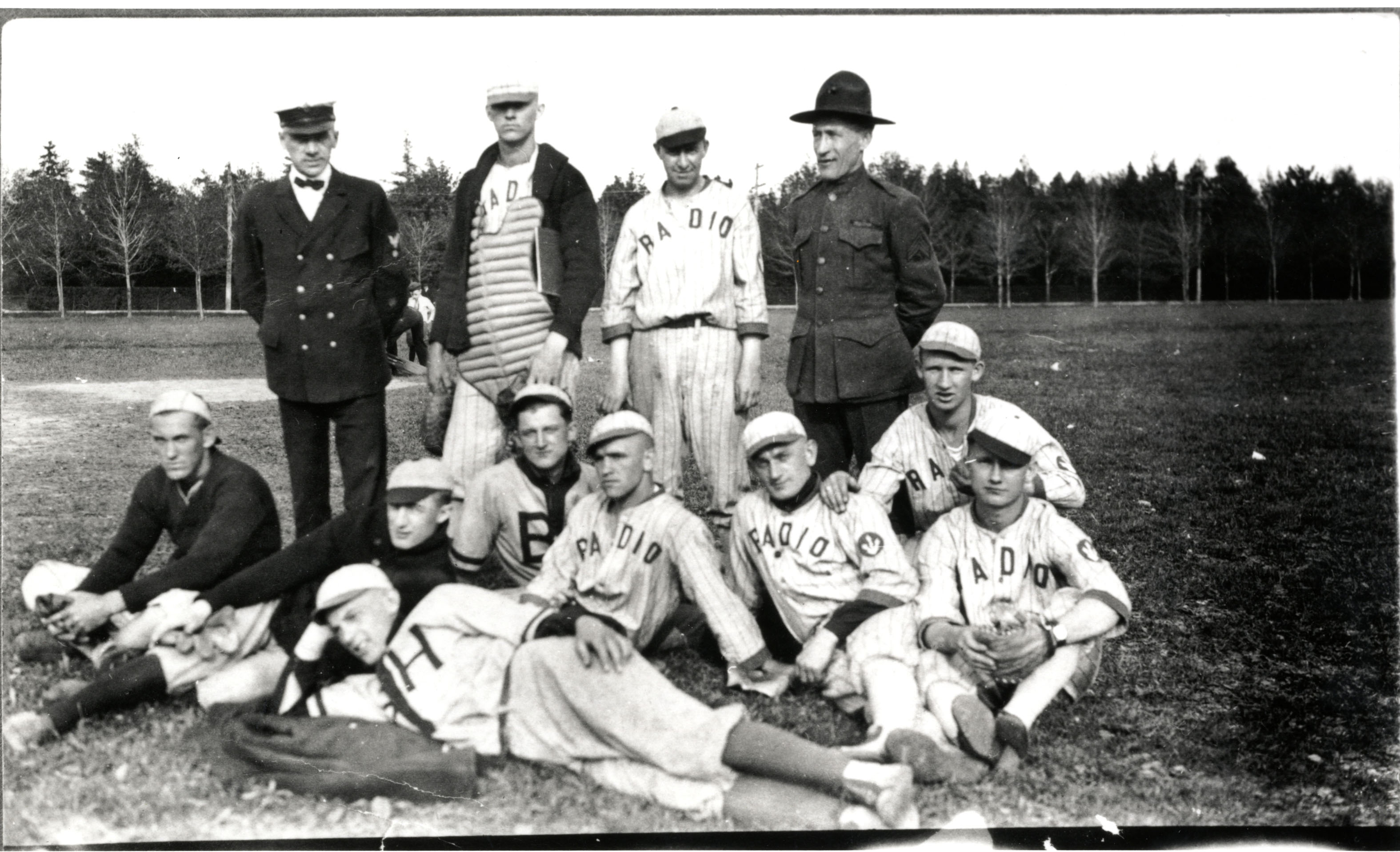
At Otter Cliffs on Mount Desert Island in Acadia National Park, the United States Naval Radio Station was established in August 1917. It was determined that due to the rural nature of this location and its proximity to Europe, the coast of Maine was the ideal spot for wireless transmission. The Otter Cliffs was one of two receiving stations for wireless communication; the second at Belmar, New Jersey. The Maine station was constructed and designed by Alessandro Fabbri, who received a Naval Cross for his work. The station operated until 1935 when it was replaced by a new station on the Schoodic Peninsula.
During World War I, over 35,000 Maine men and women served in the Army and National Guard; the Navy and Naval Reserve; and the Marine Corps. Other Mainers held support roles in humanitarian organizations such as the Red Cross. In all, 1,026 Mainers lost their lives on the battlefield or to disease.
With the same patriotic fervor as Maine's response to a call for troops in the Civil War, Maine soldiers and sailors joined the armed forces in 1917-1918 to fight in aid of America's European allies against Germany. Mainers also provided vital support to the United States and the Allies through war-related industries, like shipbuilding, munitions, textiles, and agriculture, while purchasing more than $100 million in war bonds and donating bandages, books, and other comforts of home to the troops. The war itself may have been "over there," but its effects were found throughout the state of Maine.