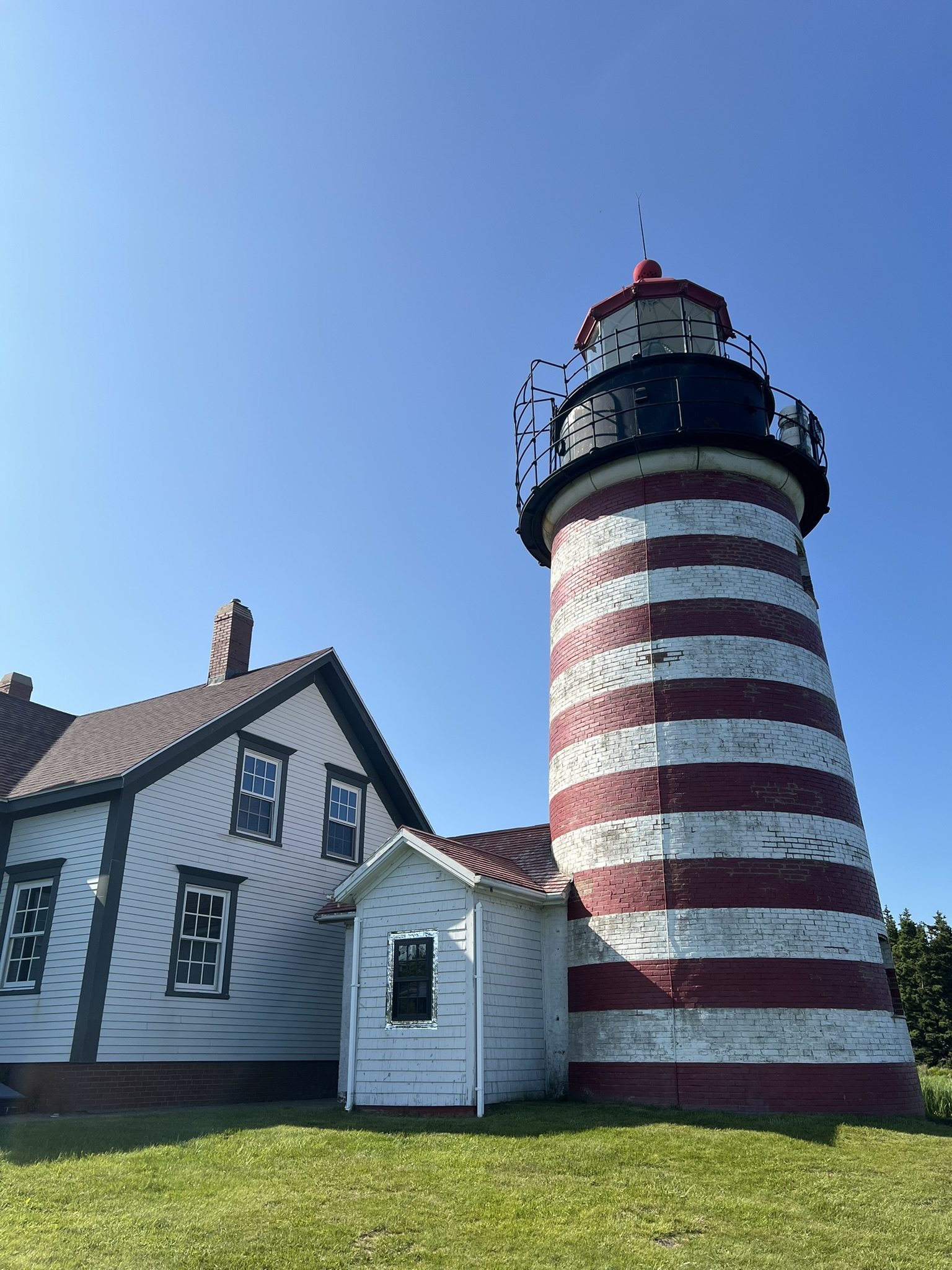
Maine Lighthouses
Photo: Jamie Walter
With its red-roofed keeper’s house and conical white tower perched atop a rocky promontory, Portland Head Light is one of the most recognizable lighthouses in the United States. Thousands of people visit it from all over the world, but its 80-foot tower is closed to the public except for once a year.
On a single day in September, thousands of people climb the narrow and winding stairs of more than a dozen lighthouse towers along Maine’s coast and offshore islands during Maine Open Lighthouse Day. It is a rare opportunity to access some of the most dramatic views on the coast and to recognize that Maine’s lighthouses are not just picturesque scenes.
Since January 10, 1791, when Portland Head’s 16 whale oil lamps were first lit, Maine’s lighthouses have warned mariners away from disaster. For generations, they were maintained by resident keepers who cleaned lenses, trimmed wicks, and refilled lamps, and sometimes rescued mariners wrecked in violent storms.
Electrification and automation in the twentieth century eliminated the need for resident light keepers. Modern technology, though, has not changed the role of the state’s lighthouses. Many of Maine’s surviving lighthouses remain active U.S. Coast Guard aids to navigation. And even with GPS, electronic charts, and radar, mariners still find reassurance in the familiar beam of a lighthouse emerging through darkness or fog.