Maine Humor
Wicked Good Band performing at the Yarmouth Clam Festival. Photo: Wicked Good Band.
In a performance at the Lakewood Theater in 1983, Tim Sample tried to explain Maine humor to his audience. It isn’t the kind of humor seen on television, he explained in a folksy cadence, where a stand-up comedian tells a joke and the audience laughs, and tells another joke and the audience laughs again. Rather, he said, sliding his hands into the pockets of his suspendered slacks, “A lot of this is going to go right over your head.”
Everyone can laugh along with a Maine humorist playing up the Down East accent, the deadpan delivery, the understated “You can’t get there from he-ahs.” But when the Wicked Good Band sings about precision black fly drill teams, it’s not the image Mainers are laughing at; it’s the very real misery and absurdity of being chased across your own front lawn by a swarm of tiny bugs.
The style of humor recognized as unique to Maine can be traced to Charles Farrar Browne. Born in 1834 in Oxford County, he was living in Ohio when he began writing social satire under the guise of Artemis Ward, a character he portrayed as an illiterate showman with “Yankee common sense.”
From the page, Browne took Artemis Ward to the stage of the lecture circuit and was nearly an instant sensation. His in-character comedic monologues are recognized today as a forerunner of stand-up comedy and inspired his friend Mark Twain’s own performance style.
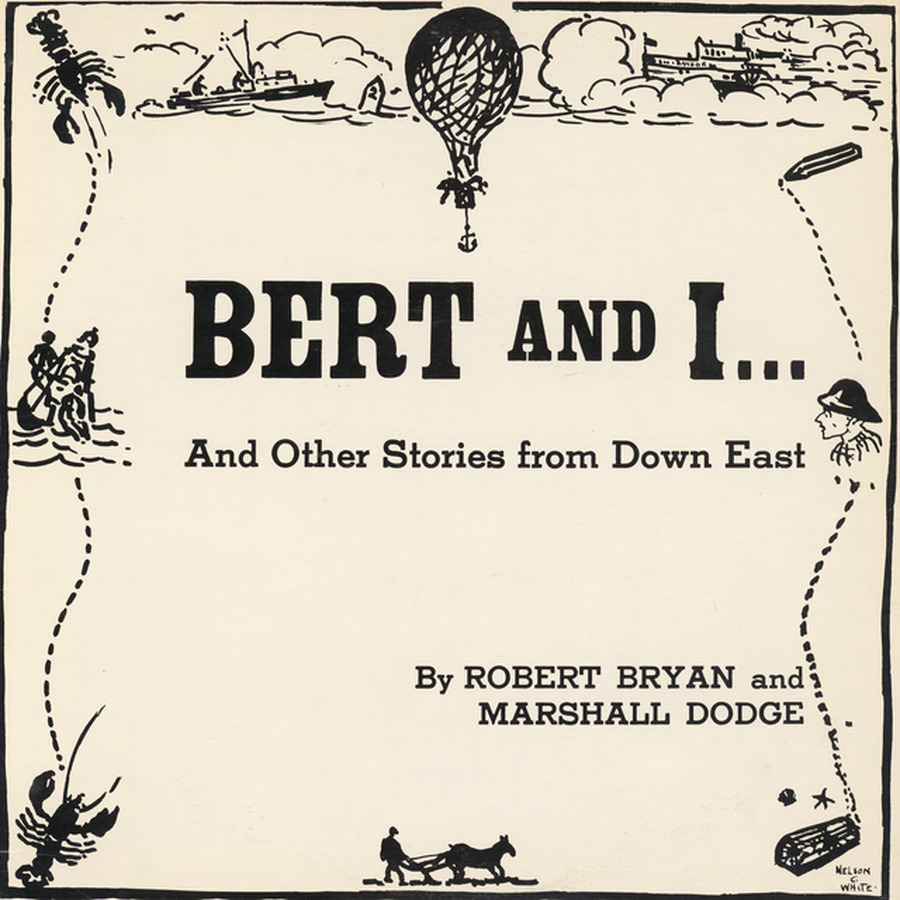
But it wasn’t until the 1950s that Marshall Dodge and Bob Bryan distilled a distinctly Maine sensibility into the “Bert & I” recordings. In their “Which Way to Millinocket?” the duo created one of the most enduring scenes in Maine humor: A local trying to provide driving directions to a tourist.
Maine humorists have built on the template they established. Tim Sample emerged as the foremost interpreter of that heritage, bringing it to an even larger audience through his “Postcards from Maine” television segment on CBS, which ran for over a decade.
Today, Maine humorists such as Bob Marley and Donny Pelletier are evolving that tradition, but it’s not only comedians who are its keepers. It resides with the two friends jawing over the back of a pickup truck about the traffic jam of four cars at the main intersection in town; the Maine Cabin Masters ribbing each other about having to salvage and reuse bent nails; and the neighbors raising their voices to be heard over the roar of their snowblowers, recounting the wicked pissah of a snowstorm 20 years ago.
Author: Stephanie Bouchard