Maine in the Civil War
20th Maine Gettysburg Flag. Photo: Maine State Museum.
After the Revolution itself, the Civil War (1861-65) was the conflict of greatest importance in sustaining and shaping the nature and future of the United States of America. Maine's contributions to that war were profound. The state itself, resolutely anti-slavery after its admission as a free state in 1820 as part of the Missouri Compromise, sent over 70,000 men to fight for the Union. Out of a population of 630,000, in per capita terms the largest proportion of recruits in any state's population. Out of that number, about 9,400 were killed or died, 5,820 were discharged for illness or injury, and 616 were listed as missing in action: some 14 % of all recruits. By comparison, in World War II about 2.5% of all national recruits became fatalities.
Maine men served in every major battle fought by the Army of the Potomac and suffered accordingly. The 1st Maine Heavy Artillery, at the siege of Petersburg in1864, had the highest single-battle casualty rate of any Union regiment: 632 men killed or wounded out of 900. Maine soldiers captured seven Confederate battle flags in the field, and two Maine men won medals of honor for their part in those captures. For years the captured flags were proudly displayed in the State House, until they were returned to the southern states in 1927 as a gesture of national reconciliation.
Maine's outstanding hero, Brvt. Major General Joshua Chamberlain may have saved the Union army at the Battle of Gettysburg by his regiment's relentless and outnumbered defense of Little Round Top against repeated Confederate attacks that otherwise might have turned the Union's exposed left flank and endangered the whole Union army. Chamberlain's bravery and numerous wounds were acknowledged when Lieut. Gen. Ulysses Grant gave Chamberlain command of the Union troops at the ceremony of Confederate surrender at Appomattox Court House.
Other Maine men with nationally distinguished Civil War service include Hannibal Hamlin, Abraham Lincoln's Vice-President; Oliver Otis Howard, commander of the Union 11th Corps, leader of the Freedman's Bureau after the war, and founder of Howard University; and William Fessenden, chairman of the Senate Finance Committee and Lincoln's Secretary of the Treasury.
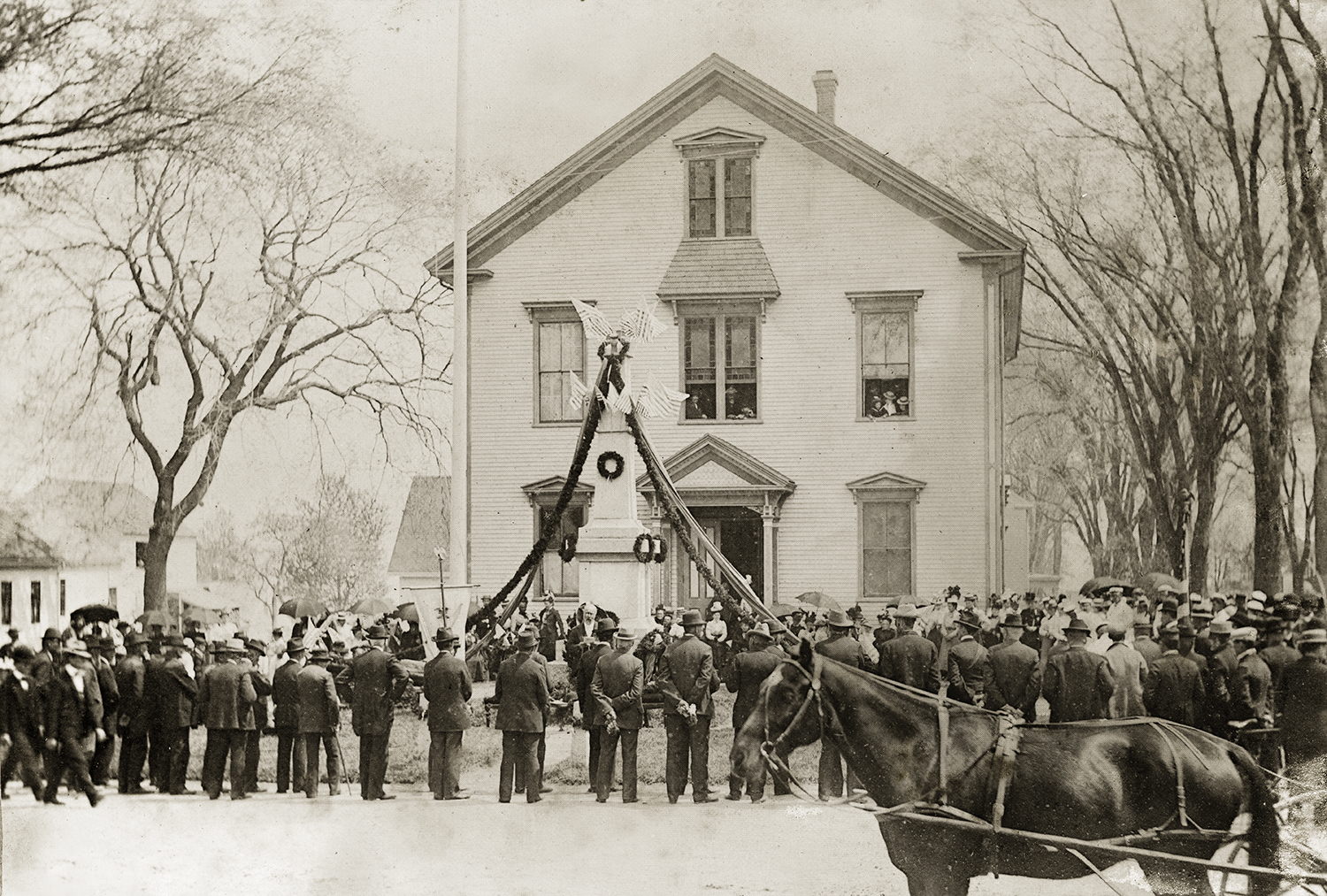
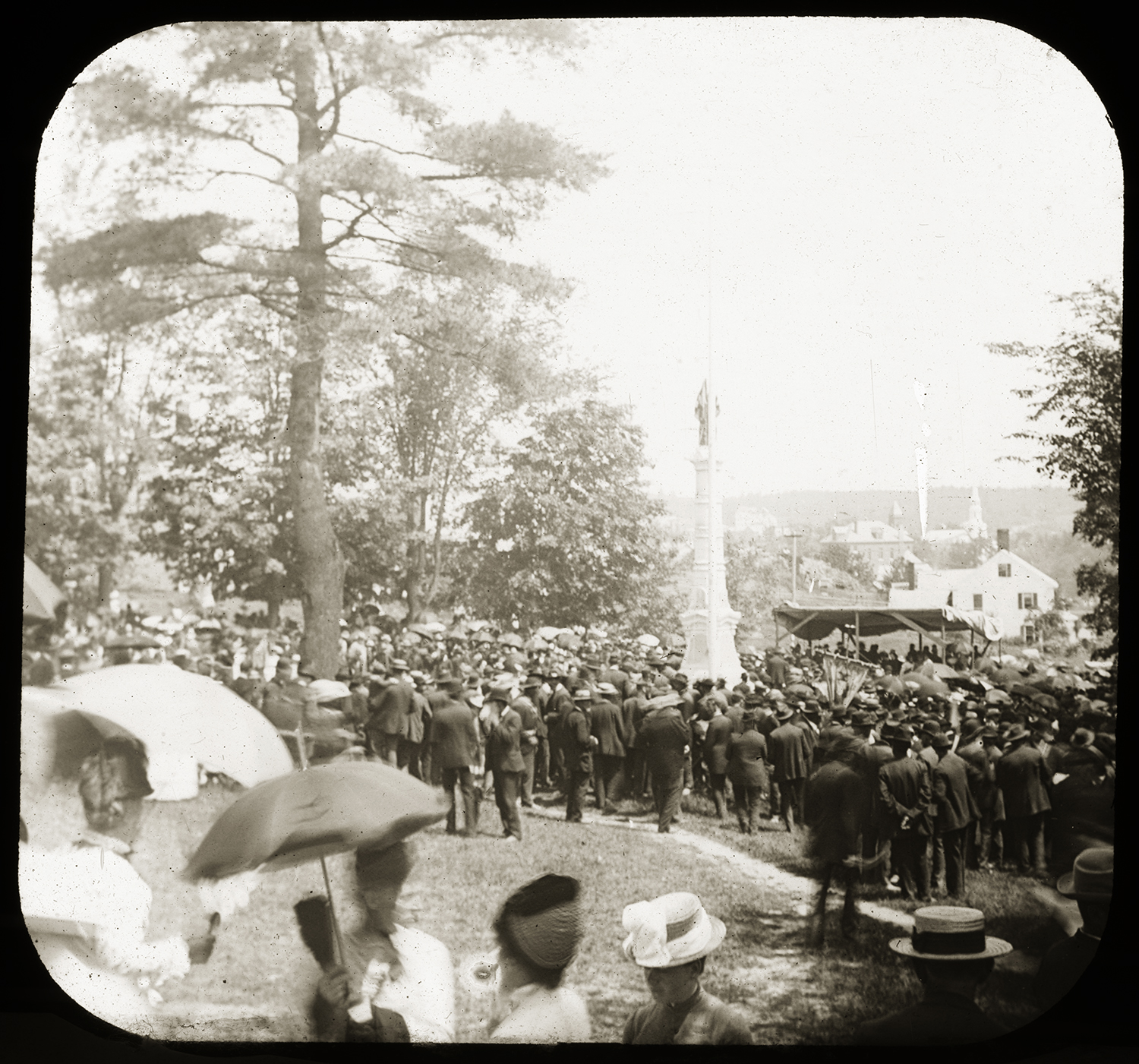
Civil War veterans dominated public life in Maine for almost 50 years, from the close of the War until the advent of World War I. Chamberlain was elected as the state's governor for four terms. The legislatures, Granges, Lodge Halls, and religious establishments were filled with and guided by the veterans. The first federally supported veteran's home, the Togus National Home for Disabled Volunteer Soldiers, was founded near Augusta in 1866 and had nearly 3,000 residents by 1904. Approximately 150 public Civil War monuments and memorials were erected across the state.
The Maine State Museum has the state's largest and arguably most important collection of Civil War materials, from the pistol that Chamberlain captured at Gettysburg to nearly 150 regimental and Civil War military flags, including the flag of Chamberlain's 20th Regiment, and fragments of the 16th Regiment's flag that was deliberately torn into pieces by its soldiers who, facing Confederate captivity, could not bear to see the symbol of their country and their service fall intact into enemy hands.
Naturally there are scores of stories preserved with these relics. One of the most interesting is that of Private Daniel Webster Marston, who, at the tender age of 13, enlisted as a drummer in Maine's 9th Infantry Regiment, with his father, also called Daniel. When Daniel, the father, was promoted to be a captain in Maine's 16th Regiment, he tried for a year to get his son transferred out of the 9th to be with him, and the transfer was approved just before the Batlle of Gettysburg. A slight logistical interruption prevented the Marstons from reaching the regiment and taking part in the battle, where the 16th Regiment was largely destroyed. Happily, both of the Marstons survived the war.
Maine Voices from the Civil War, by Laureen Labar (Maine State Museum)