
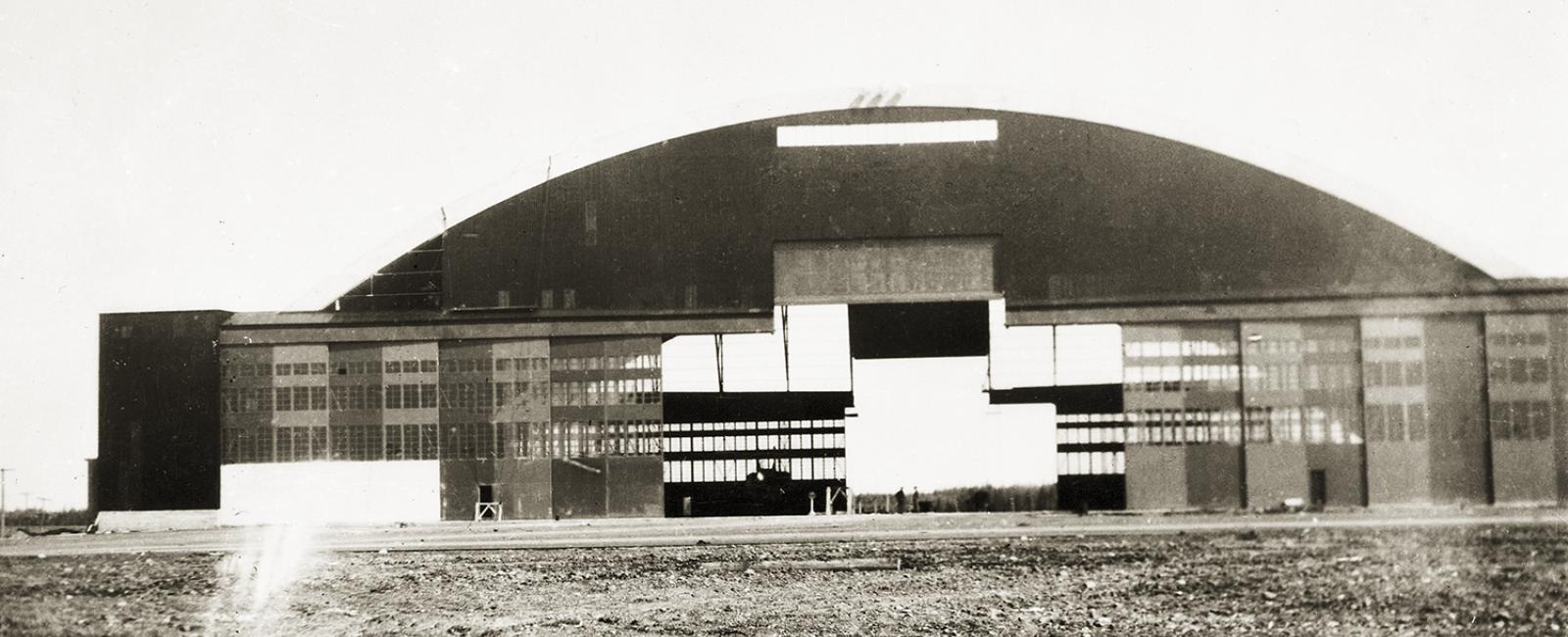
Loring Airforce Base
Penobscot Marine Museum
From 1956 until its closure in 1994, Loring Air Force Base was protected by a highly trained security force. Before drones and thermal cameras, sentry dogs and their handlers patrolled the base day and night, protecting one of the nation’s most strategically important Cold War bases, home to a cache of nuclear weapons and a fleet of ready-to-launch B-52 bombers.
Finding itself in a standoff with the Soviet Union after World War II, the United States wanted to find a location from which its long-range bombers could reach Europe and the Arctic more quickly. It found that location within the forest and potato fields of Aroostook County, near the Canadian border.
Construction of the base began in 1947, and what was built wasn’t just hangars for airplanes and weapons depots. The base became a city unto itself, with neighborhoods, schools, a hospital, grocery store, bowling alley, and movie theater, and even a man-made ski hill complete with a lift and lights for night skiing.
Through its four decades of operation, Loring became an economic engine for Aroostook County, employing thousands of military personnel and civilian workers while supporting their families and surrounding communities. But it was more than an economic powerhouse: The intermingled lives of the civilians and military personnel formed a tight community with a shared purpose. In 1994, that community was dismantled.
With the Cold War at an end, Loring was no longer needed, and the base was closed. It was a devastating emotional and economic blow to the surrounding communities, but efforts to redevelop the base began immediately. In the decades since, those efforts have had their ups and downs, with challenges coming from being a Superfund site and its remote location making it more difficult to attract and keep businesses.
Today, 4,700 acres of the former base is protected as the Aroostook National Wildlife Refuge, while much of the remaining property has been redeveloped as the Loring Commerce Centre, home to an active airport, aviation and manufacturing businesses, and a museum. In 2025, the site of the base’s sentry dog cemetery was secured for permanent preservation. It is undergoing a volunteer-led major restoration.
Author: Stephanie Bouchard

