Katahdin Iron Works
Passenger rail cars sit waiting at the depot at Katahdin Iron Works. Photo: Penobscot Marine Museum.
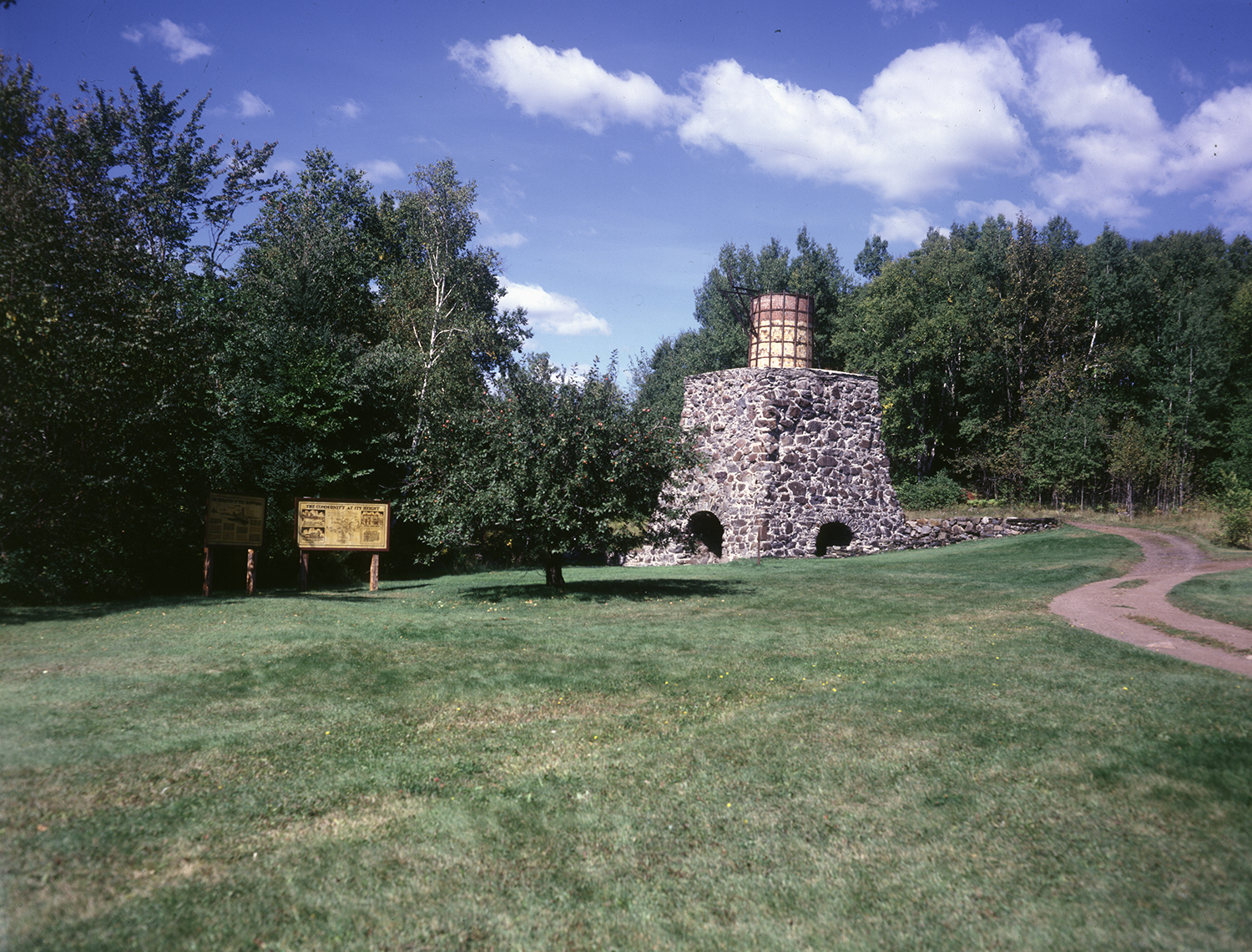
While the kilns are cool and the mine quiet, the site of Katahdin Iron Works was once the bustling site of iron production and home to more than 200 families. This ore mountain, long used by the Abenaki for orange, yellow, and red iron oxide pigments for paint, was identified in 1843 as limonite gossan by white settlers. Soon after, roads, and a company town popped up, including the American Lumber Company sawmill, a store, town hall, school, and hotel. A 55-foot-high blast furnace and eighteen stone beehive kilns converting wood to charcoal helped produce around 2,000 tons of pig iron annually.
The limonite gossan became the primary source for mined ore in 1845, but demand fluctuated until the ongoing Civil War required increased production by 1863. By 1881 the Bangor and Katahdin Iron Works Railway was built, and the boardinghouse was refurbished and rebranded the Silver Lake Hotel to attract tourists. After hurricane winds produced a fire that badly damaged the production plant, it was rebuilt in 1885 and began selling high quality iron for railroad car wheels and cruiser engines for the United States Navy. However, production ceased in 1890 when it became economically unfeasible.
While railroad service was discontinued in 1922, postmistress Sara Green continued to operate a flange wheeled automobile over the abandoned tracks until they, too, were removed in 1933.
Today, Katahdin Iron Works is a Maine state historic site. The blast furnace and one of the beehive charcoal kilns have been restored, but foundations are all that remain of the sawmill and once bustling village. The site is listed on the National Register of Historic Places and includes Gulf Hagas, a National Natural Landmark.