John Alfred Poor & Henry Varnum Poor
In 1834, a native of the tiny western Maine town of Andover saw Maine’s future when he witnessed the first steam locomotive in New England pull out of Boston. Thirty-seven years later, an obituary in the New York Times called John Alfred Poor “the father of the railroad system in Maine.”
Poor was a 26-year-old lawyer practicing in Bangor when seeing that locomotive planted the seed of an idea: An inland rail connection between Montreal and Portland could bring new economic opportunities to Maine. By 1843, he was actively lobbying Portland and Canada about his idea. A harrowing winter journey in 1845 from Maine through the White Mountains to Montreal to convince the Canadians not to partner with Boston landed Poor in bed for two months with frostbite and pneumonia, but it also brought about the realization of his dream: construction of the Atlantic & St. Lawrence Railroad began the following year.
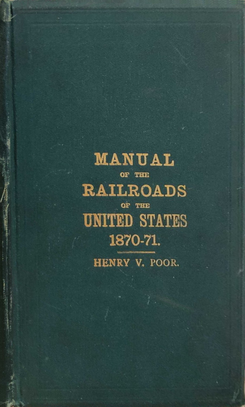
With the railroad underway, Poor and his younger brother Henry threw themselves into the railroad business. John opened the Portland Company, a locomotive foundry situated between Fore Street and the Fore River, and established Henry as the manager and editor of the American Railroad Journal after purchasing the publication in 1849.
While Henry turned his enthusiasm for railroads into a financial analysis industry that eventually became Standard & Poor’s, his brother kept building out his dream of connecting Maine to the wider world. He spent his final years promoting the European and North American Railway, dying just weeks before it connected Bangor with Saint John, New Brunswick.
Today, the Atlantic & St. Lawrence no longer runs through Portland, but several of the buildings from John Poor’s Portland Company are still standing along the Fore River in Portland, the company name painted prominently on the red brick.