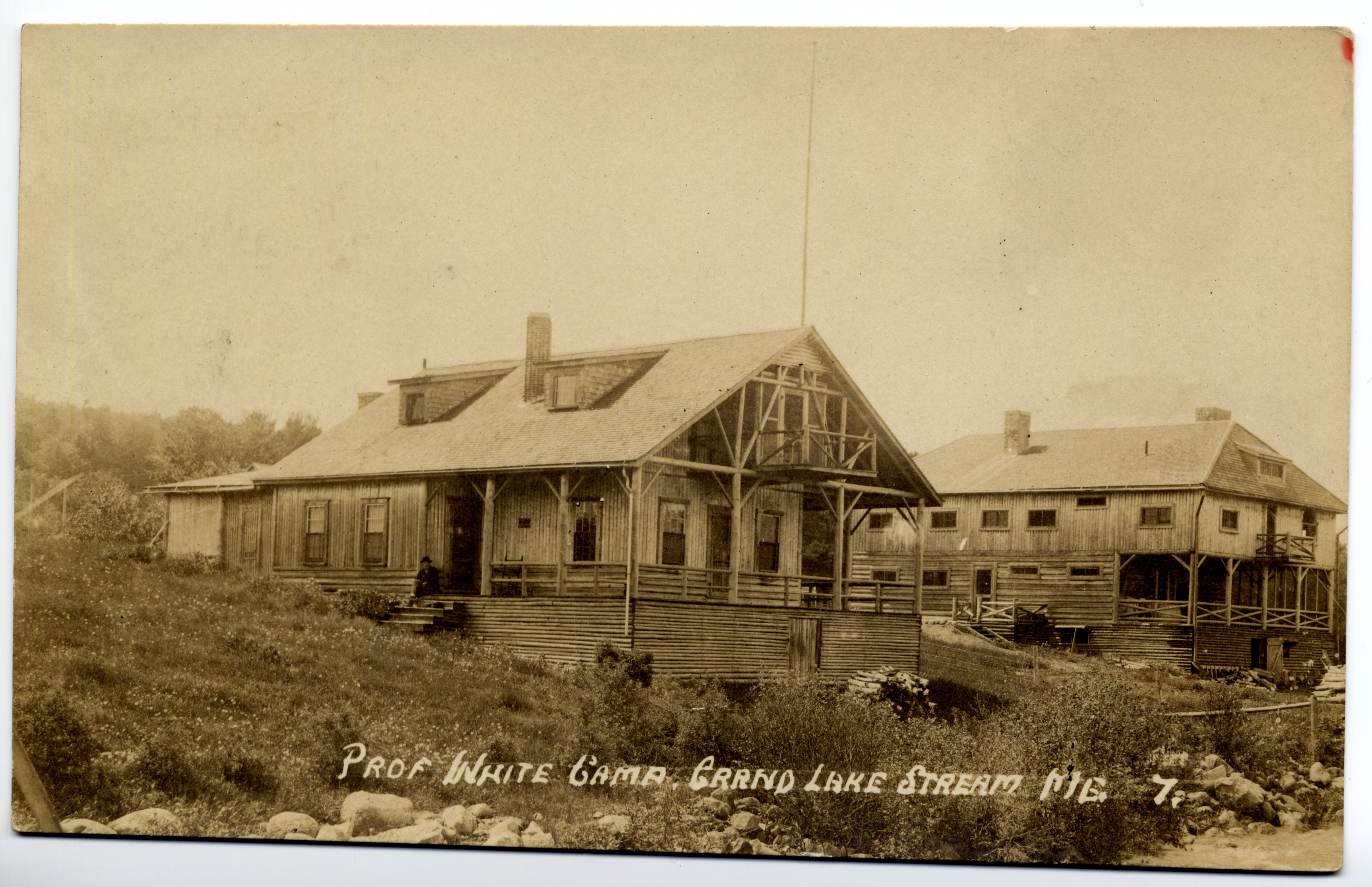
Historic Sporting Camps
Sporting camp near Ashland. Photo: Raphael Tuck & Sons.
In the late nineteenth century, stories of fishing so good in the wilderness of Maine it couldn’t possibly be true were passed word of mouth through the hunting and fishing circles of the urban northeast and in articles in sporting magazines such as Forest and Stream. Then as now, the promise of a 10-pound brook trout was enough to send anglers racing to the nearest train station to secure tickets to a sporting camp in the Maine woods.
Nestled along remote lakes and rivers, sporting camps sprang up across Maine, but particularly throughout the interior of Maine, beginning in the late 1800s. Most camps were built with logs and clustered near the water around a main lodge where “sports” as the guests were called, gathered for bracing meals and to outdo each other with tales of their adventures, which were often led by guides.
These camps, even the more “luxurious” were primitive, with no running water or indoor plumbing, and with much of the ingredients for meals coming from the camps themselves: caught in nearby waters, hunted in the surrounding woods, and grown in their gardens.
Maine had hundreds of sporting camps by the early 1900s, but the Great Depression, World War II, and changes in how people traveled slowed the demand, causing many to close. But the tradition never went away. Today, dozens are in operation, including a handful that originally opened during the late 1800s boom. Anglers and hunters dominate the spring and fall seasons as they did 150 years ago, but the camps also attract leaf peepers, paddlers, bird watchers, and photographers who can opt for a more “rustic” off-grid experience with outdoor privies or more comfortable arrangements with flush toilets and screened-in porches.
Author: Stephanie Bouchard