Hannibal Hamlin
Colored postcard of the Hamlin homestead. Photo: Collections of Hamlin Memorial Library and Museum.
Hannibal Hamlin was an attorney, politician, and American vice president to Abraham Lincoln. Born in the Town of Paris when Maine was still a district of Massachusetts, Hamlin was a descendent of Plymouth colonists. He studied law under Samuel Fessenden, and after being admitted to the bar, opened his own firm in Hampden.
Hamlin served in a number of political offices over the course of his career, first in the Maine House of Representatives where he helped negotiate the end of hostilities during the Aroostook War. Later, he served in the US House of Representatives and Senate as a Democrat, but his staunch abolitionist sentiments pushed him from the Democratic Party to the Republican Party in 1856.
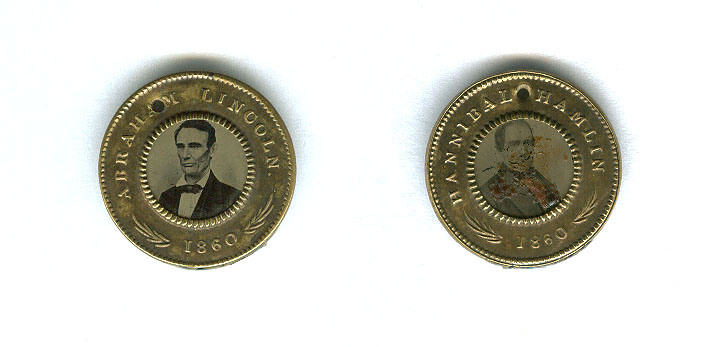
In 1857, Hamlin served Maine as governor, but after about six weeks, he resigned to return to the Senate. In 1860, he was nominated as the Republican party's pick for vice president on the ticket with Abraham Lincoln. They won the election and worked well together, with Hamlin supporting the Emancipation Proclamation.
After his term as vice president, Hamlin continued serving as a senator until 1881, then as ambassador to Spain from 1881 to 1882, and subsequently retired from public service to Bangor. Hamlin purchased the Italianate house that now bears his name in 1851, and he lived there until his death in 1891. The house, located on 5th Street, was added to the National Register of Historic Places in 1979.
Hamlin is remembered today as Maine's only vice president and for his support of abolitionist causes. Towns and parks throughout the country are named in Hamlin's honor, and Maine honors his memory through Hamlin Peak in Piscataquis County, a building at University of Maine at Orono, the Hannibal Hamlin Memorial Library in Paris, as well as a bronze statue in downtown Bangor.