Forts of Maine
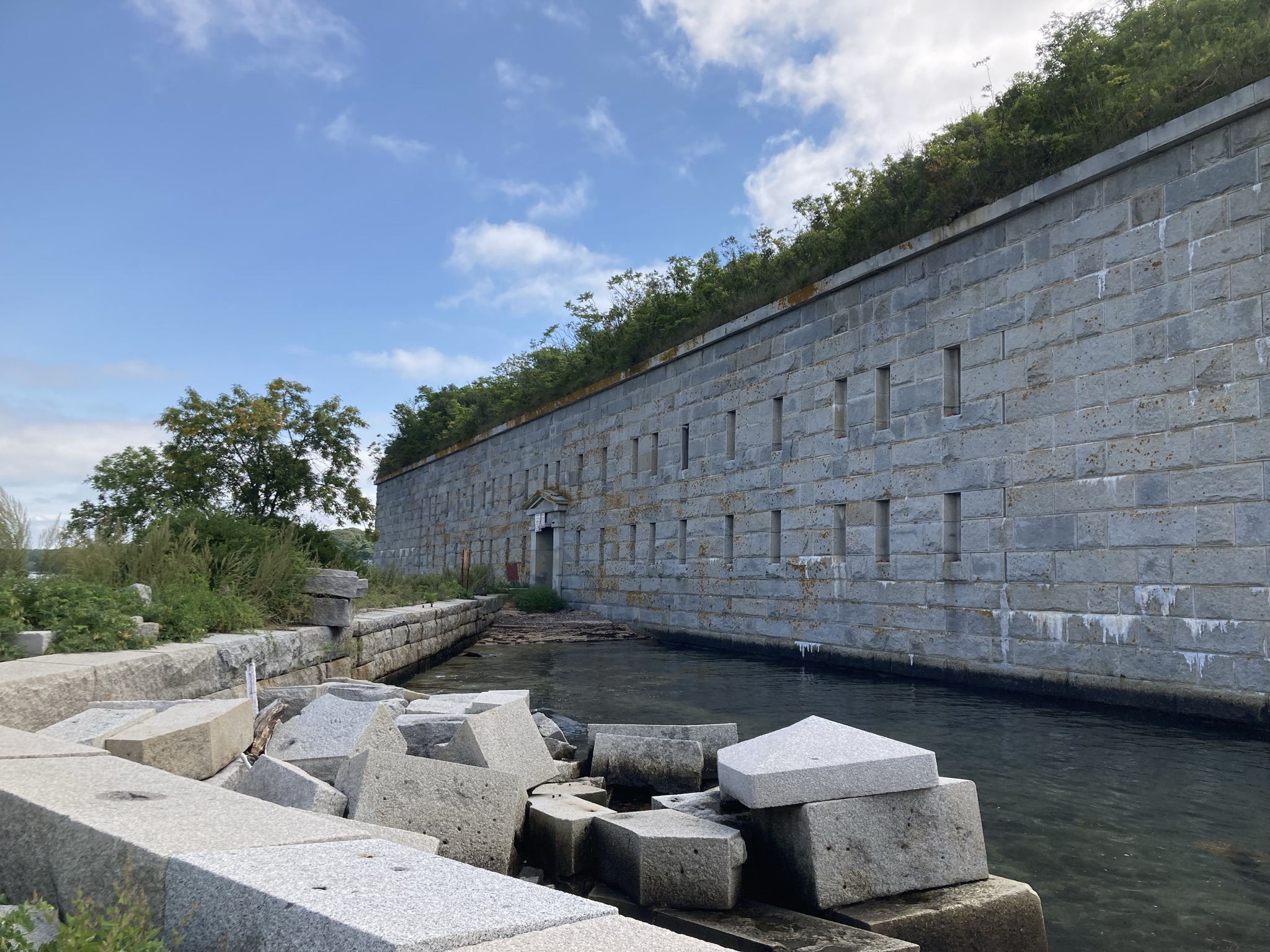
Fort Gorges. Photo: Sarah Hansen
From the 1600s through the early 1900s, forts were built along Maine’s coast and rivers. They served as defense, community centers, and trading posts. Of those that still exist, some are listed on the National Register of Historic Places, some are preserved and open to the public, and others are in disrepair and in need of resources; one is even a luxury housing development. But each stands as a sentinel, inviting new generations to explore and understand Maine’s past.
Among the state’s most notable surviving forts are:
Colonial Pemaquid at the mouth of the Pemaquid River is the site of three forts built between 1677 and 1729. Standing on the site today is a 1908 reconstruction of Fort William Henry, originally built in 1692 and destroyed in 1696.
Fort George, a palisaded earthwork fort built in 1779 by the British during their occupation of Castine. Its grassy outline remains overlooking the harbor today.
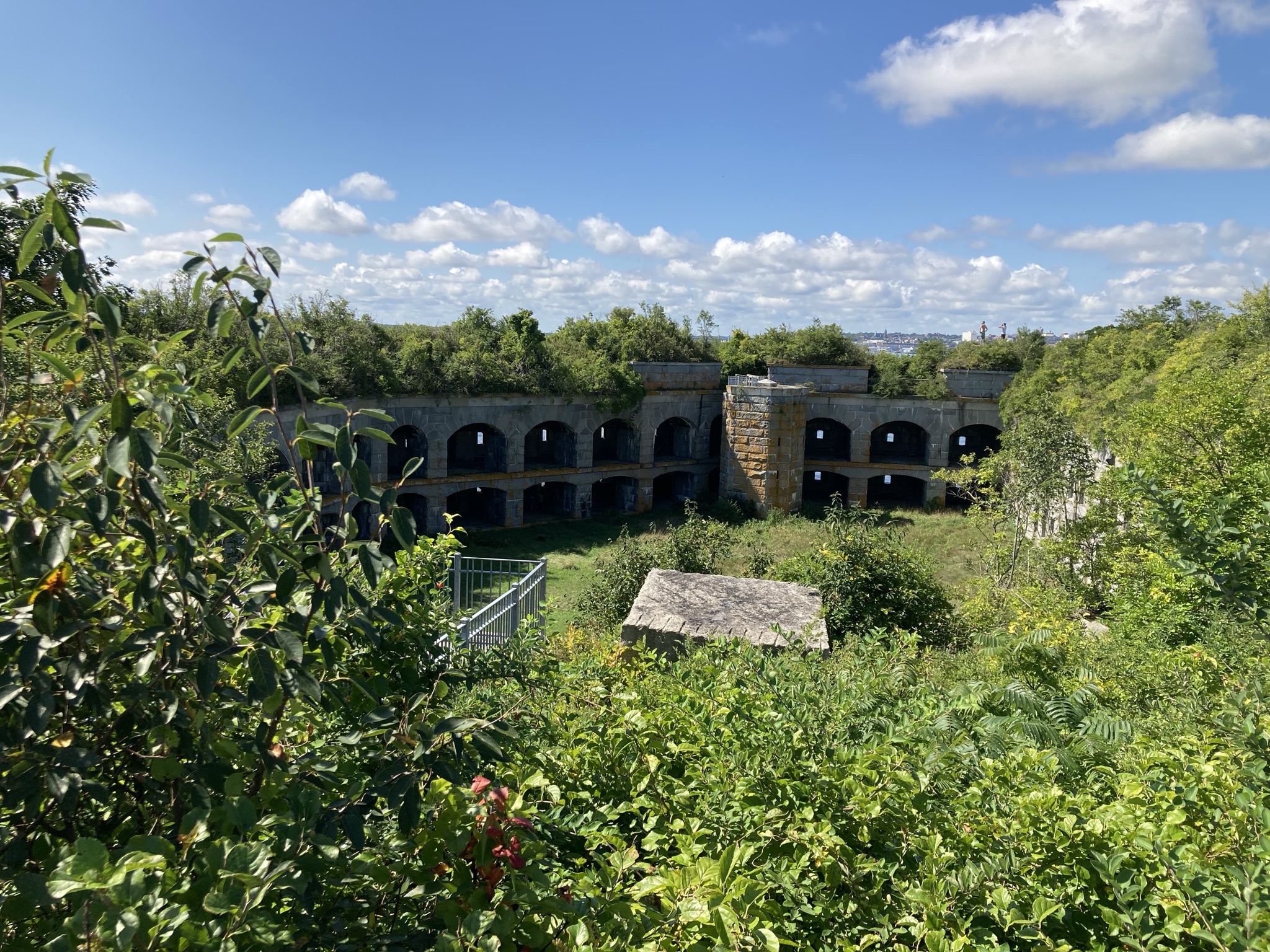
Fort Gorges on Hog Island Ledge in Casco Bay was built in the mid-1800s and never saw action or had troops stationed there. It is owned by the city of Portland. Accessible only by boat, the granite structure has deteriorated significantly. The Friends of Fort Gorges, a nonprofit friend’s group, is committed to working with the City of Portland to support the restoration and preservation of the structure while ensuring access to facilitate its education and cultural potential. They offer guided tours, as do Portland Paddle.
Fort Halifax was once a series of wooden blockhouses built in 1754 along the Kennebec River in Winslow. By the 1900s a single blockhouse remained. It was destroyed in a flood in 1987, but a reconstruction was built a year later using some of the original timbers.
Fort Knox is the first fort in the state built entirely with granite and is considered one of the best-preserved and most accessible forts in the country. Built in the mid-1800s, troops were stationed there but never saw action. Many events are held there today including ghost tours, theatrical productions, and living history activities.
Fort O’Brien on the western shore of the Machias River was built three times between the Revolutionary War and the Civil War and twice destroyed by British forces. Earthworks are all that remain today.
Fort Popham at the mouth of the Kennebec River abuts one of the state’s most visited beaches, Popham State Park. Construction on this granite fort began in the mid-1800s but was never completed even though troops were stationed there.
Old Fort Western was built in 1754 on the eastern bank of the Kennebec River in Augusta as a fortified fur trading post. Today, it is operated as a living history museum.
Author: Stephanie Bouchard