First Parish Church, Portland
April blossoms. Photo: Corey Templeton
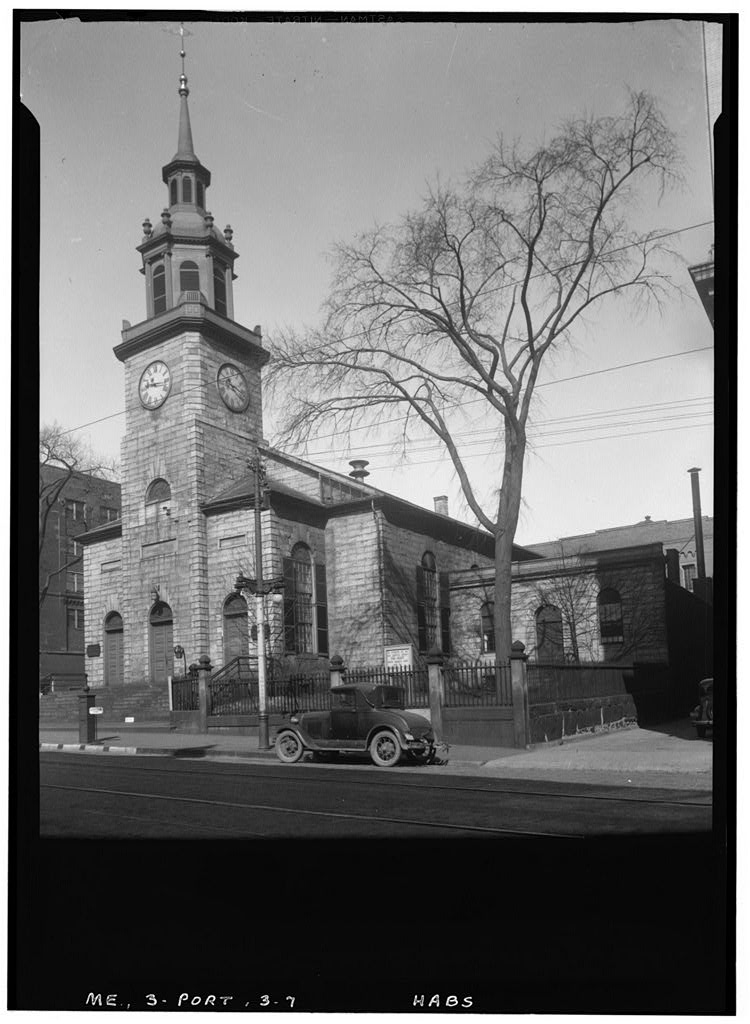
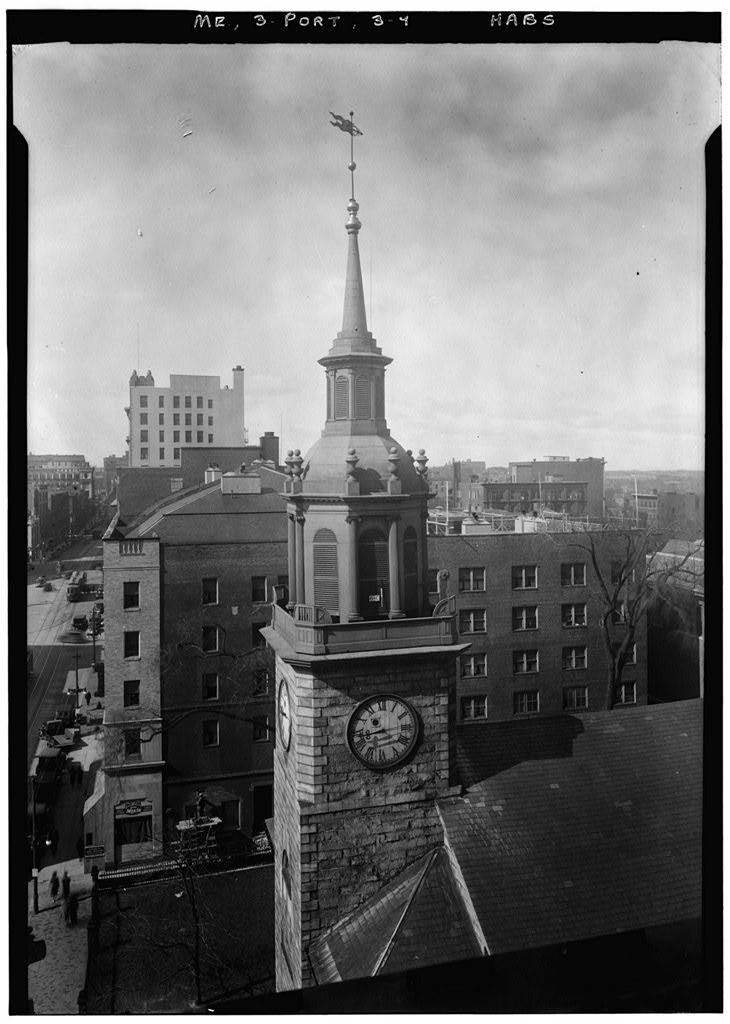
As the oldest place of worship in the City of Portland, First Parish Church stands tall along Congress Street, a wonderful example of Federal period architecture. Construction began on this granite iteration in 1825, replacing “Old Jerusalem,” a wood framed building from c.1740 that served the congregation until 1820. It was in that building where a peace treaty with the Norridgewock Indians was signed in 1749 and where the State of Maine Constitution was drafted in 1819. When the current building was completed in 1826, the Simon Willard clock from 1802 was reinstalled in the tower, along with the 1810 steeple bell. The clock is the last remaining and functioning of its kind.
Surviving the Great Fire of 1866, the church has weathered more than 190 years on the peninsula. When you visit, be sure to look up at the immense 600-pound glass chandelier hanging from the center of the meeting house. You’ll notice a series of cannonballs embedded in the chain. These British cannonballs – evidence of the bombardment of Portland during the Revolutionary War – were discovered when “Old Jerusalem” was demolished to make way for the current structure.
Making your way around the meetinghouse, look for the numbers on the pews. A number of these still have the names of the families who worshiped here, including the Longfellows. Today, all pews are owned by the congregation and are open to all for use.
First Parish Church is still a hub of community activity in Portland, today. As the congregation says, “First Parish, in many ways, is a church of contrasts – we worship in an old, formal building with a commanding mahogany pulpit and fixed pews, and yet we espouse progressive religious ideas of inclusion and service that are on the cutting edge of progressive spiritual practice.”