Fiber Arts
Photo: Bartlett Yarns.
On a weekday afternoon, a group of mostly women sits tucked away in a corner of the dining room of the Commons building at the center of the Pineland Farms campus in New Gloucester. Some of the women are knitting, a couple crocheting, but most are feeding raw wool into spinning wheels as they chat and laugh with their neighbors. These are twenty-first-century fiber artists, but they are using some of the same techniques and tools that generations used before them.
Working with fiber is among humanity’s oldest handcraft traditions. In what is now known as Maine, Wabanaki people have been weaving sweetgrass and brown ash for thousands of years. European settlers brought their own traditions for weaving cloth, knitting garments, and sewing household textiles. Girls were schooled – literally – through making samplers.
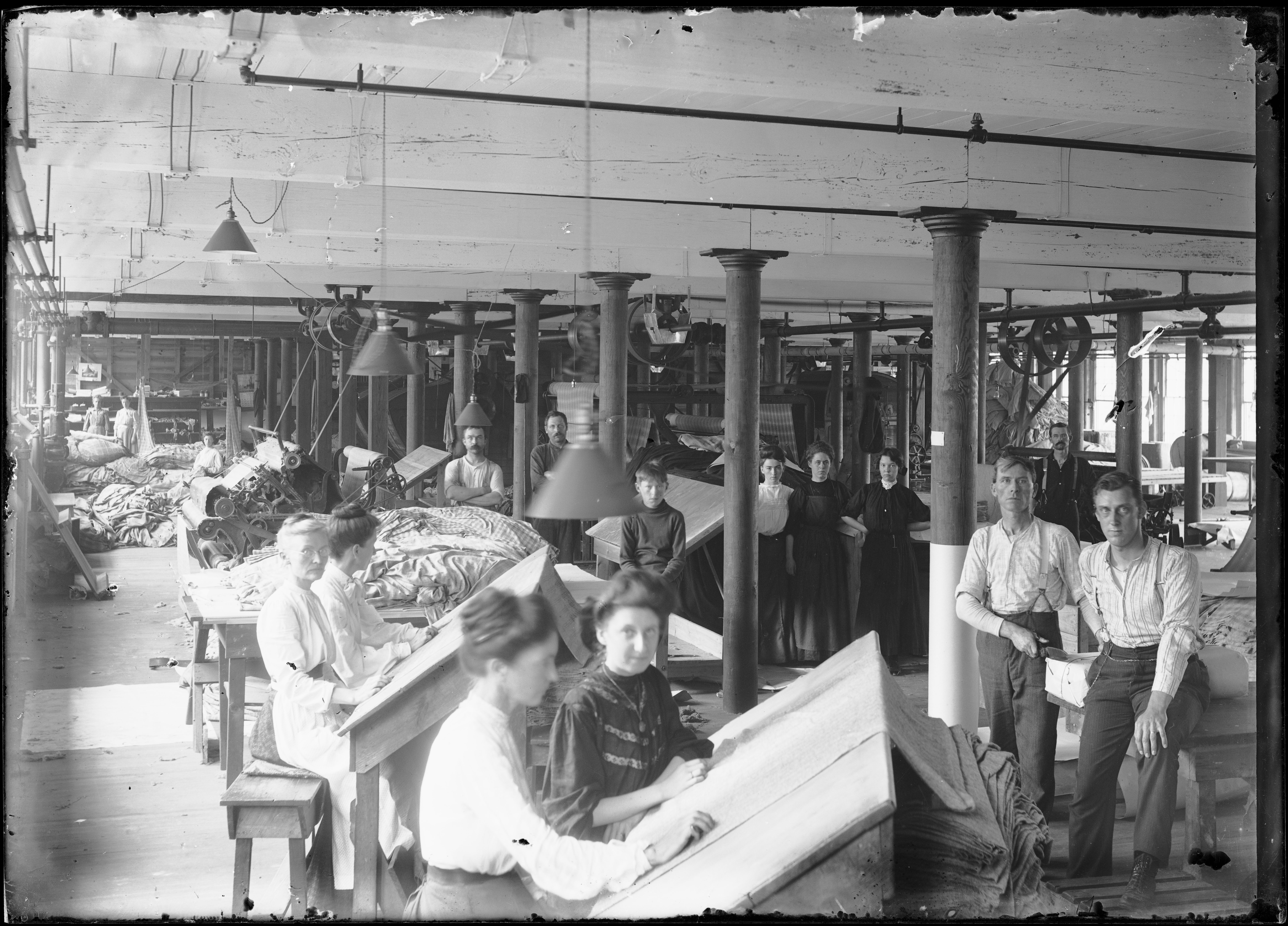
For generations, working with fiber was simply part of daily life. That began to change as textile mills spread across Maine in the 1800s. Many girls took their skills from home into brick factories where fibers floated in the air and the noise from the machinery was deafening.
As commercially made clothing and household linens became commonplace, fewer families needed to make them by hand. Mémères still knitted mittens and snow socks, but knitting, crocheting, quilting, rug hooking, and weaving came to be viewed by many as old-fashioned pastimes.
In recent decades, however, those same traditions have attracted a new generation of makers drawn to the companionship found around spinning wheels, quilting frames, and knitting circles, and to the satisfaction of creating something both practical and beautiful with their own hands.
Author: Stephanie Bouchard