Desert of Maine
daveyni on Flickr
Maine averages more than 40 inches of precipitation annually and several feet of snow each winter, and yet there’s a desert in the state? Technically, no, there is not a desert in Maine. The famed tourist attraction called the Desert of Maine in Freeport is not a real desert – at least as defined by rainfall standards – but an exposed glacial sand deposit left behind by the last ice age.
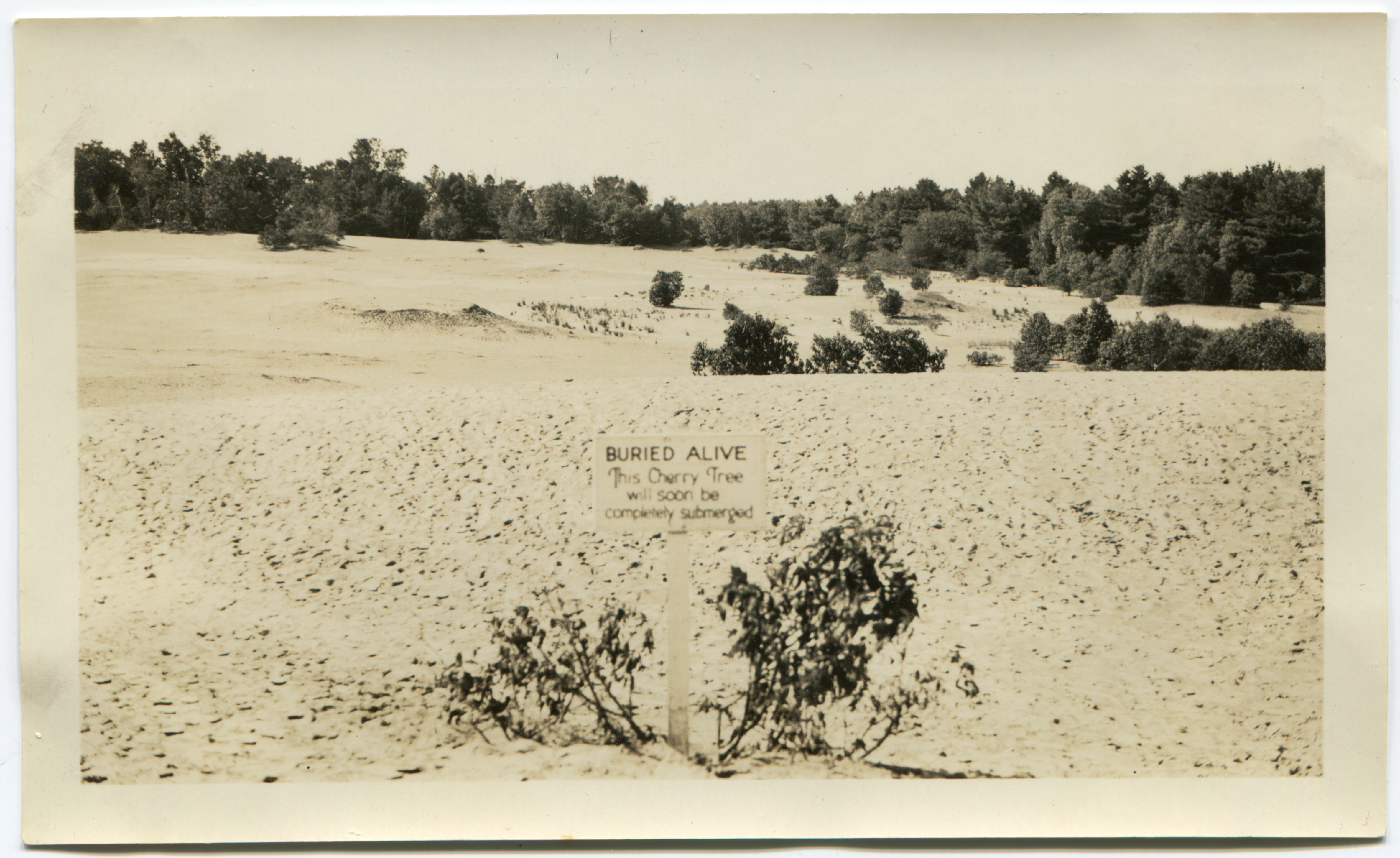
When the Tuttle family began farming the land in the 1800s, they had no idea that their farm was on a glacial deposit. By then, the sand had been covered with topsoil, until, that is, the hundreds of sheep the Tuttles grazed gradually eroded the topsoil and uncovered the sand. It spread, little by little overtaking the pasture and the trees and even, eventually, buildings.
The Tuttles abandoned the property, which was purchased by Henry Goldrup in 1919. He turned it into a tourist attraction. In its early years, it was a bit more kitschy – there was even a cranky camel on-site until her biting and spitting at the tourists got her relocated to a zoo.
The Desert of Maine today has about 20 exposed acres of dunes. While it still maintains its roadside attraction character with mini-golf, campsites, and an electric train to tour the famous sand dunes, it also emphasizes the unusual geology and environmental history that created one of Maine’s strangest landscapes.
Author: Stephanie Bouchard