Canoes
Photo: Maine Office of Tourism
Canoes have been used by people all over the world for centuries, but with over 31,000 miles of rivers and streams, 6,000 lakes and ponds, and 3,500 miles of coastline, Maine is a place built for them.
The canoe tradition in Maine springs from the Wabanaki peoples, who used canoes in much the same way cars are used today. To fish, to hunt, to travel along the coast and throughout their homeland, Wabanaki peoples perfected a canoe made from the bark of birch trees. Traditionally, large sheets of birch bark are hand-sewn with spruce root and a cedar frame is fitted within the hull. Spruce gum is used to seal the seams, and sometimes the exterior is decorated.
The end result is a lightweight boat that moves quickly through all kinds of water, can be portaged over land with little trouble, and is easily repaired with materials gathered from the natural environment. Tipped upside down, it even makes a good overnight shelter.
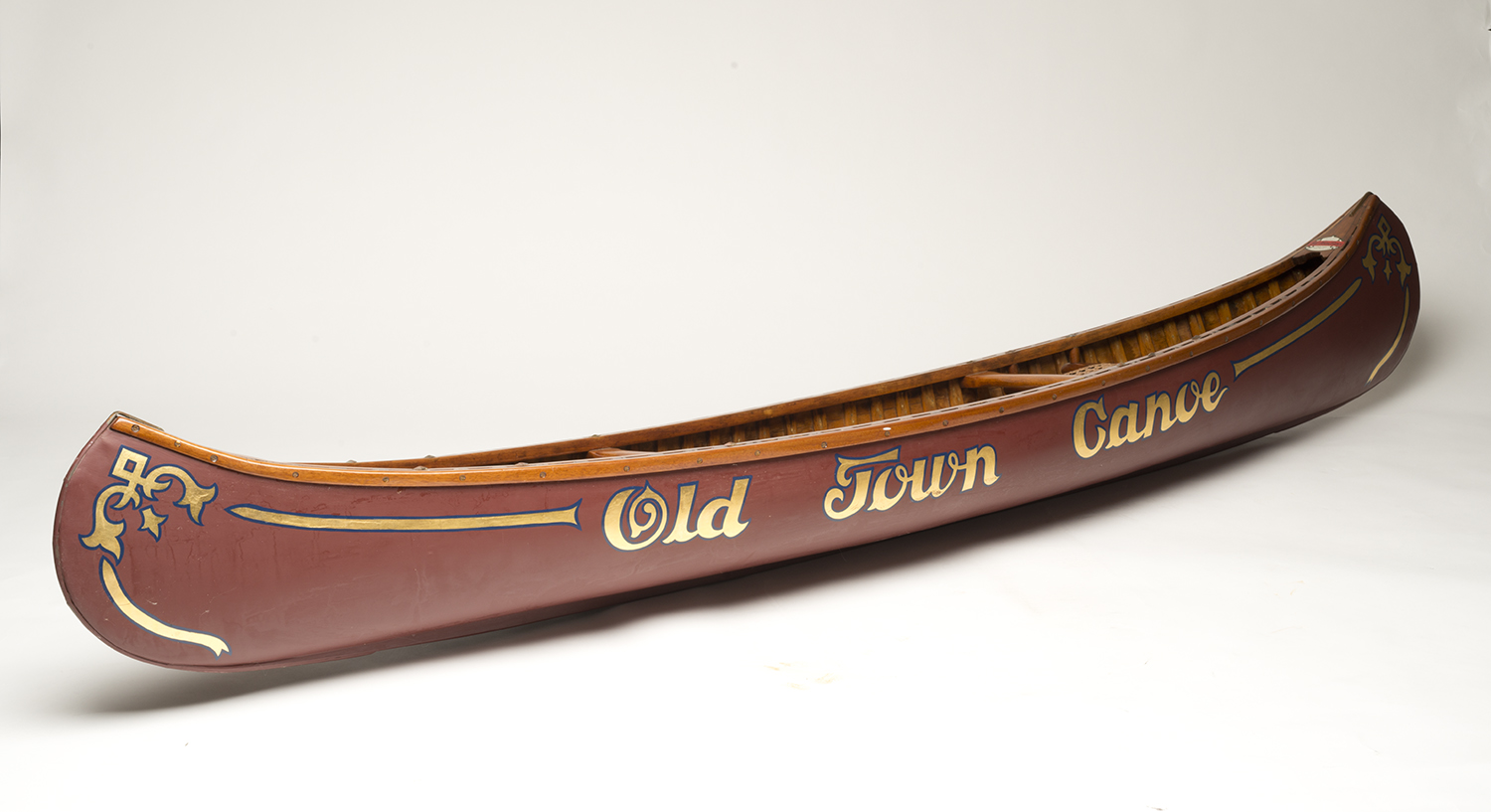
Inspired by this design, a host of commercial canoe makers emerged in Maine, including Old Town Canoe. Founded in 1898, the company employed many Penobscot craftspeople and became one of the country’s best-known canoe manufacturers.
For many decades, the tradition of building birchbark canoes faded as factory-made canoes constructed with a variety of materials, including wood and canvas, aluminum, and advanced composites, became more common. But since the early 2000s, Wabanaki canoe builders have been reviving the birchbark tradition through community canoe builds and workshops. Annual events such as the Thoreau-Wabanaki Trail Festival, which features a birchbark canoe flotilla on Moosehead Lake each July, celebrate and share that living tradition.
Author: Stephanie Bouchard