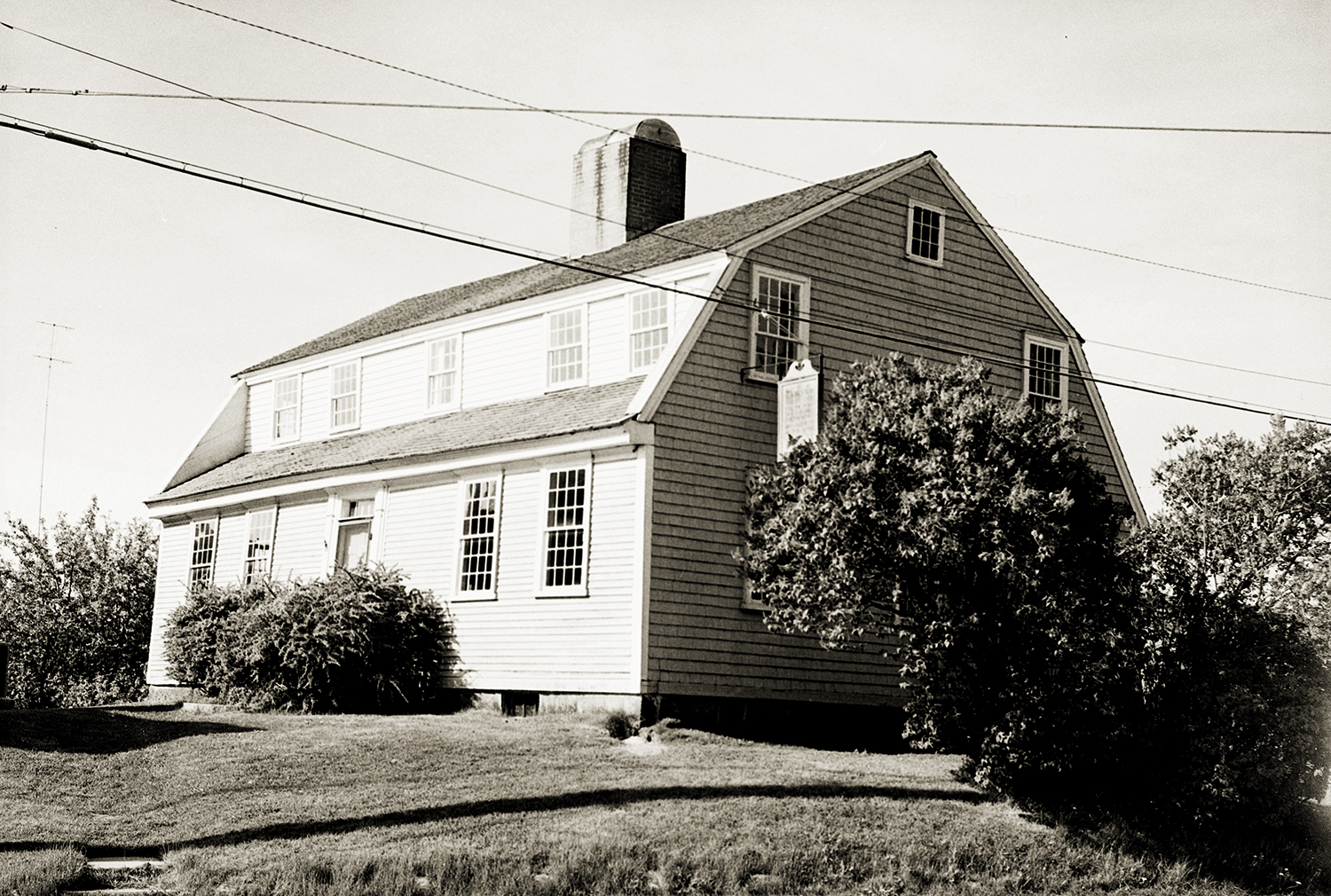
Burnham Tavern
Penobscot Marine Museum
Just off Route 1 in Machias sits the gambrel-roofed Burnham Tavern built in 1770. Within its yellow clapboarded walls, in June 1775, a group of townspeople hatched a plan to rebuff the British and save its community from food shortages.
Less than two months after conflict erupted in Lexington and Concord, the war arrived in Machias by sea. Three ships – two sloops accompanied by the lightly armed H.M.S. Margaretta – carried provisions badly needed by the townspeople of Machias, who were facing running out of food due to the disruption of its usual trading system.
The merchants aboard the ships offered a trade: their provisions in exchange for lumber that could be used for the British army besieged in Boston. With the armed Margaretta anchored close enough to fire into the town, a group of townspeople met in the tap room of Burnham Tavern and devised a plan for capturing the British ships.
With pitchforks, scythes, and a few muskets, townspeople and members of militias from the surrounding area succeeded with their plan (see the Battle of Margaretta). Emboldened by their success, they then refitted and used the captured vessels to intercept and capture additional British supply ships.
Burnham Tavern is one of the few surviving Revolutionary-era buildings in eastern Maine and is on the National Register of Historic Places. Since 1910, it has been preserved and maintained by the Hannah Weston Chapter of the Daughters of the American Revolution. While it is most celebrated today for its role in the early days of the Revolution, it has also served other purposes over time, including as a hub for surgical dressing work during World War I. It is open to the public July through September.
Author: Stephanie Bouchard