Black Guards of Maine
Soldiers in truck, North Yarmouth, 1942. Photo: Maine Historical Society.
Dotted along the Grand Trunk Railway Line - once linking Portland to Montreal - at river crossings, trestles, and border bridges from Falmouth to Vanceboro — Black soldiers stood watch, day and night, over some of Maine's vital infrastructure during the Second World War. They have come to be known, in the years since, as the Black Guards of Maine.
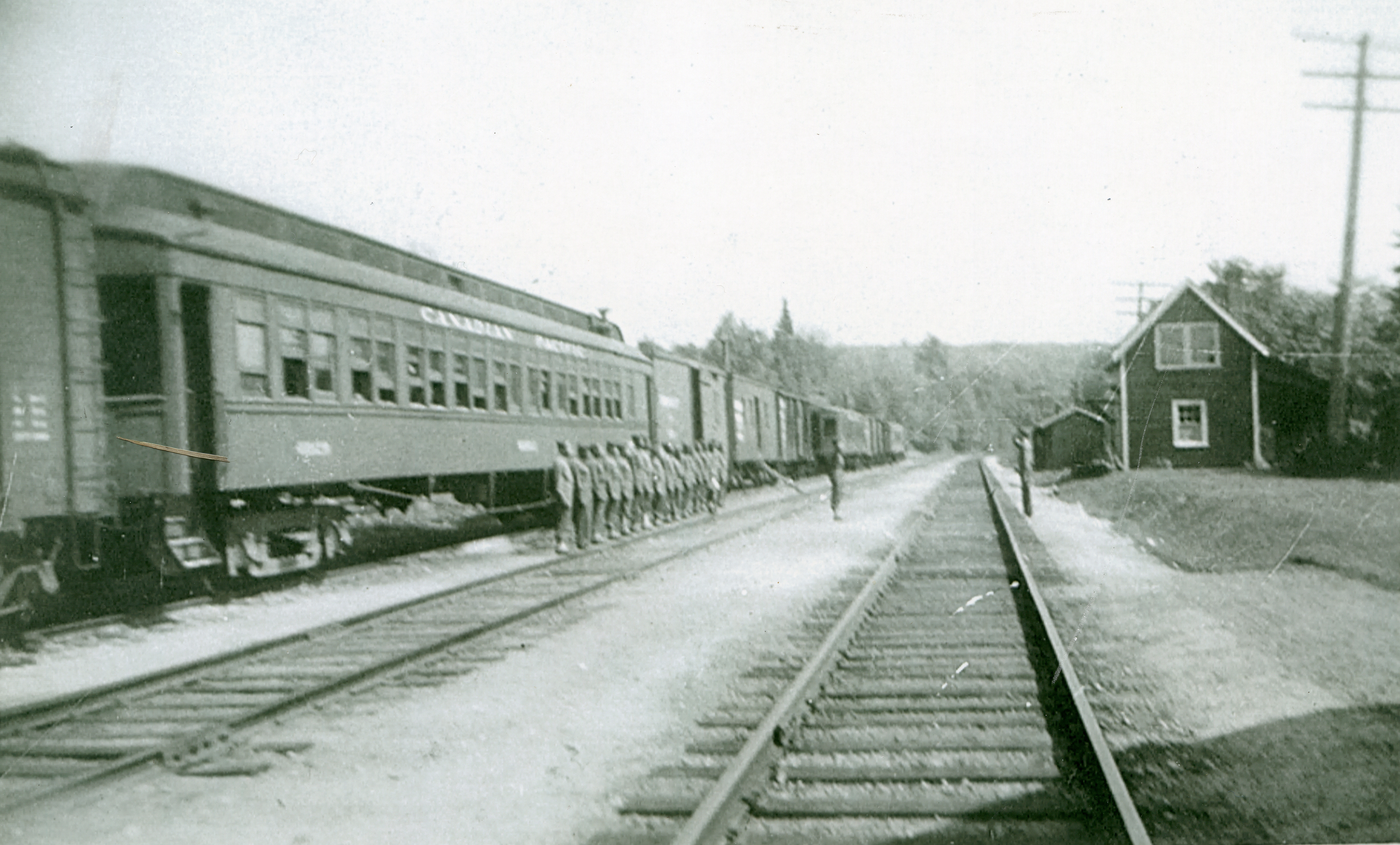
The soldiers belonged to the Second Battalion of the 366th Infantry Regiment, a segregated African American unit out of Fort Devens, Massachusetts, in February 1941 — ten months before Pearl Harbor. Their assignment: to guard the Grand Trunk Railway's bridges and border crossings against sabotage. The fear of attack wasn’t unfounded. During the First World War, a German agent had attempted to destroy the international railroad bridge at Vanceboro, and with war raging in Europe, the Army worried that Maine's rail links to Canada - vital for both freight and as a fallback if East Coast ports were immobilized – could make an attractive enemy target.
The first soldiers arrived in North Yarmouth in January 1941, and from there members of the battalion fanned out across the state in various detachments — sometimes as few as four men to a post — to guard crossings and trestles at places like Falmouth, Morkill, and Vanceboro, twenty-four hours a day.
The living conditions at most spots were stark. Soldiers were often housed directly on the railroad they guarded, living out of boxcars or repurposed cabooses parked beside the bridge, with no running water. At the Onawa Trestle in Morkill, roughly sixteen guards lived this way, one boxcar doing double duty as their kitchen.
Isolation bred closeness among the men, and, in places, unlikely bonds with the surrounding community. In Falmouth, several of the soldiers joined a local baseball team competing in the Portland Victory League. Families near North Yarmouth's Grand Trunk bridge remembered the young guards fondly, describing them in later interviews as polite and well-mannered neighbors who stopped by for water and conversation. In Morkill, by contrast, the soldiers mostly kept to themselves, isolated on the tracks well outside town.
But the racism followed the Black Guards north. Many of the men had grown up in the Jim Crow South, and Maine was not free of hostility – political figures in some communities like Orono and the editor-in-chief of the Penobscot Times, John Coghill in Old Town used their influence to publicly condemn and have Black detachments removed from postings near their towns. The soldiers served their country while still living on duty and off, inside the same segregated military and society.
The 366th's Maine assignment ended in 1945. For decades afterward, the story of the men who'd guarded Maine's bridges went largely unrecorded outside the memories of the small communities where they'd been stationed. That began to change through oral history projects and family research - notably Dr. James Pratt's research into his own father's service as a Black Guard at Vanceboro - and through the Maine Historical Society. Explore this history through author and artist Asata Radcliff’s exhibition “A Convenient Solider: the Black Guards of Maine” on Maine Memory Network. These individuals service connects Maine to the nation’s wartime defense, while highlighting the often-overlooked presence and experiences of Black soldiers during World War II.