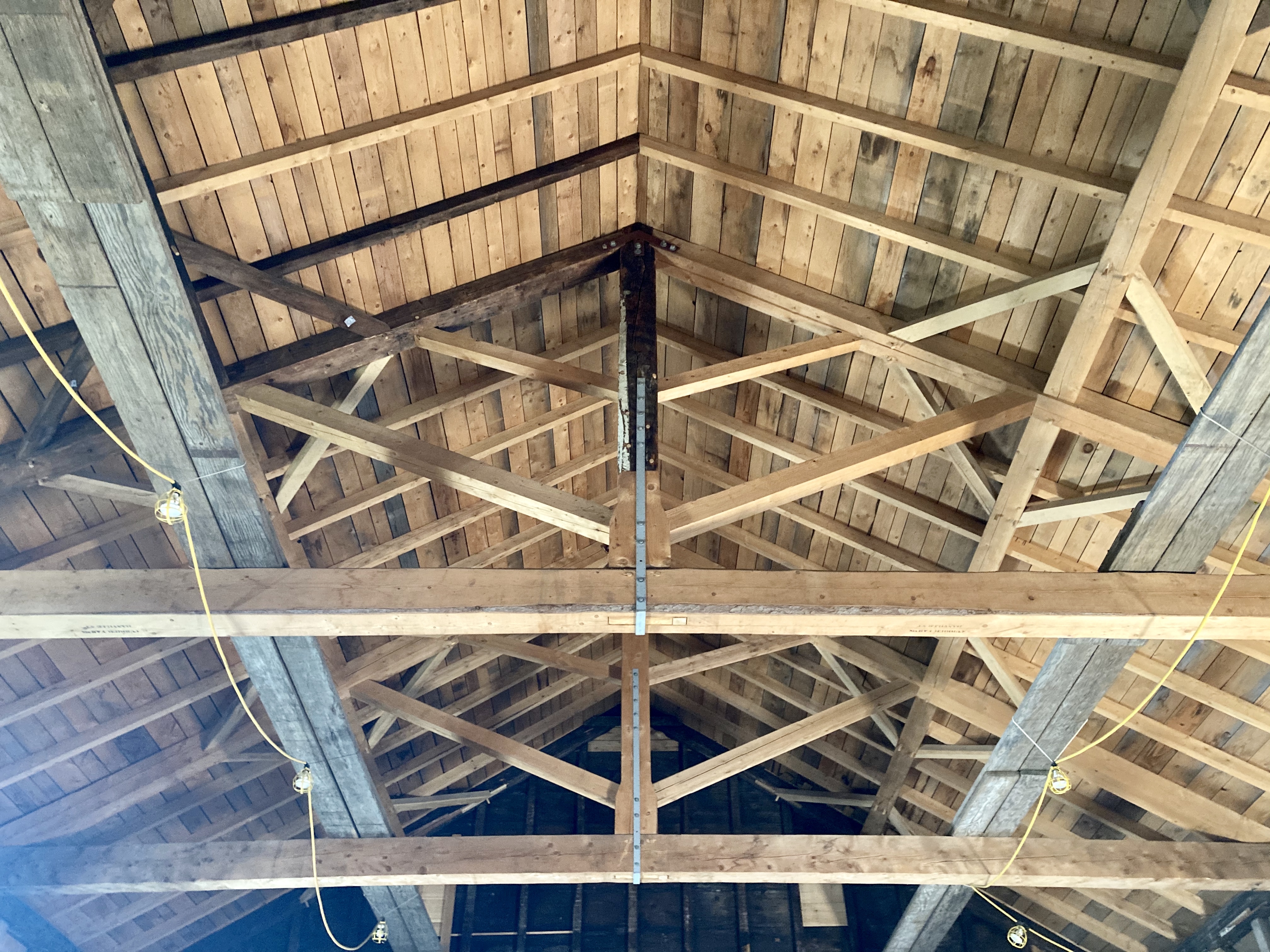
Abyssinian Meeting House
Photo: Dugan Murphy, 2021
In Portland’s Great Fire of July 4-5, 1866, the city lost approximately one-third (1,500) of its buildings, including city hall, all banks and insurance and law offices, and at least eight churches. One of the few buildings it didn’t lose was as much a rarity then as it is today: the Abyssinian Meeting House.
The story goes that as the fire raged, fireman William Wilberforce Ruby – the son of one of the meeting house’s founders – draped its roof in wet blankets, making it one of the few frame buildings that still stands today to have survived the fire.
But the fact that it survived the Great Fire isn’t the only reason for its uniqueness. As the oldest surviving African American church building in Maine, it is also one of the most important vessels of Black history in the state.
In 1828, a group of 22 African American residents and members of Portland’s Second Congregational Church founded the Abyssinian Religious Society after being segregated to specific locations in the church during services. In protest, they formed an all-Black congregation and by 1830 had built the meeting house on what today is Newbury Street.
During its most active years, the Abyssinian Meeting House was a religious home for Portland’s African Americans, as well as a community center, school, and a site of abolitionist organizing. When abolitionist William Lloyd Garrison visited Portland in 1832, he spoke from the pulpit in the meeting house, and in the years leading up to the Civil War, a number of people who escaped from slavery shared their experiences with the congregation. A number of meeting house members and ministers were active in the Underground Railroad but there is only one known reference to the use of the meeting house as a place to hide.
By 1917, the congregation was gone and the meeting house became an apartment building. It was eventually acquired by the city for unpaid taxes. In the late 1990s, a nonprofit organization was formed to save the building. Funds were raised and the meeting house was purchased from the city. In the decades since, the building has been undergoing restoration work and is an active archaeological site, revealing new information about the lives of the city’s nineteenth-century Black population.
Today, the Abyssinian Meeting House is a designated City of Portland historic landmark, listed in the National Register of Historic Places, and included in the National Park Service’s National Underground Railroad Network to Freedom.
Author: Stephanie Bouchard